Water Damage Class 1, 2, 3 and 4: How Restorers Size the Drying Job
BY RESTORATION DOCTOR · NORTHERN VIRGINIA, MARYLAND & D.C.
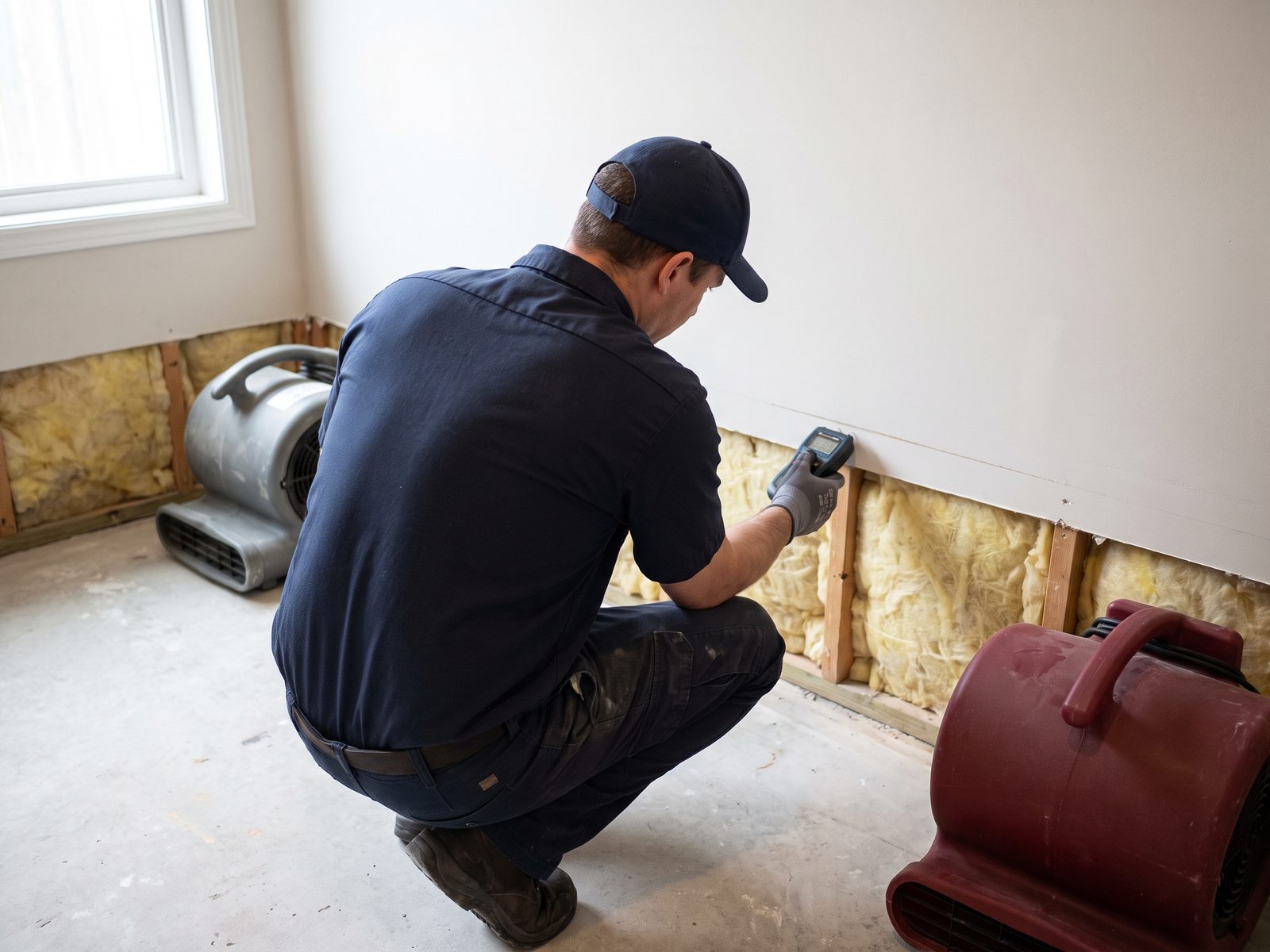
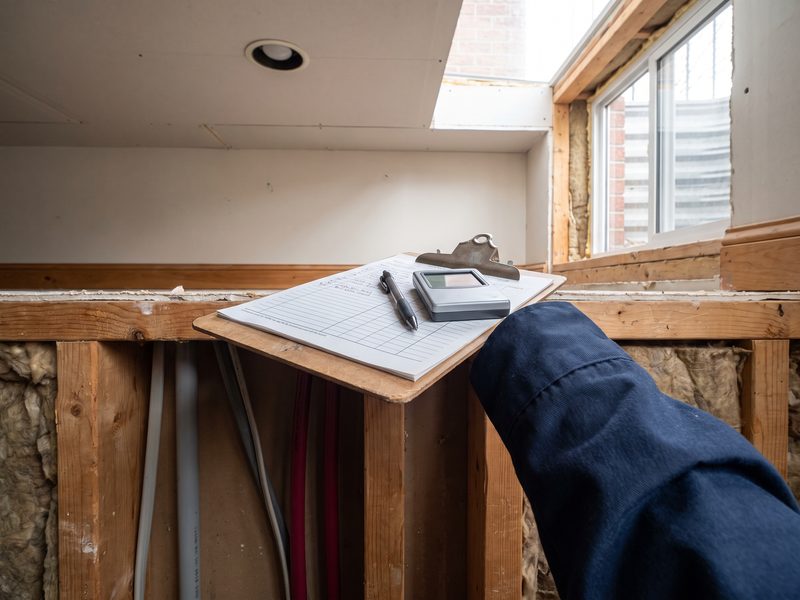
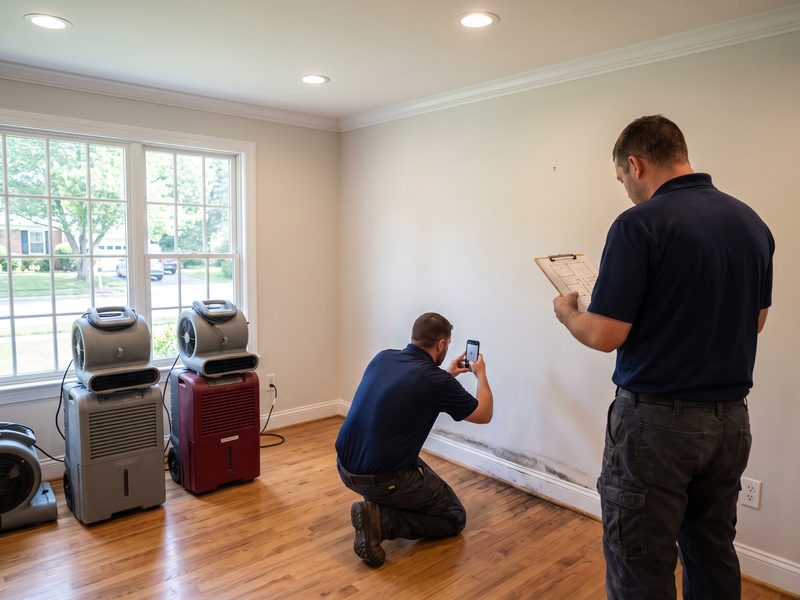
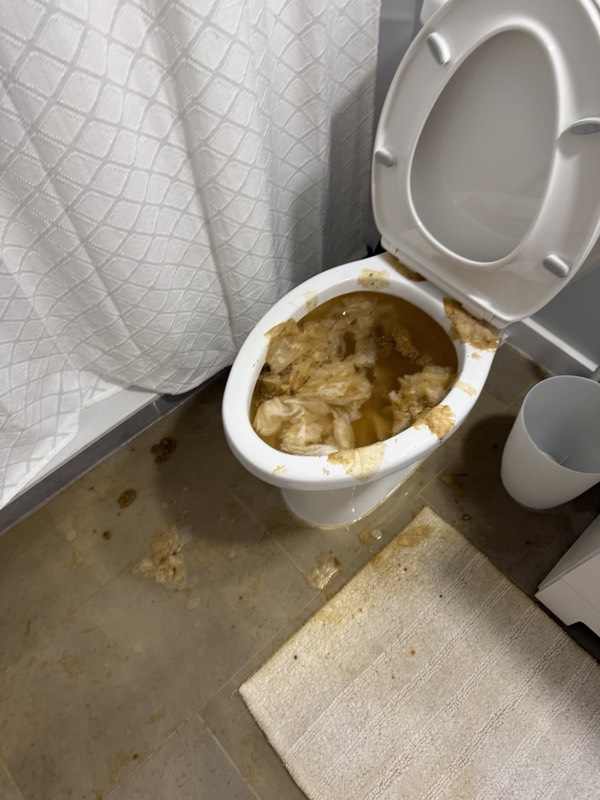
Category tells you how dirty the water is; class tells you how much wet material there is to evaporate from, and it is class that decides the equipment count and the duration. This guide defines all four classes with Northern Virginia room examples, explains why a small Class 4 job can outlast a large Class 2 one, and shows where the class should appear on your paperwork.
Call 1-888-29-FLOODWhat is the class of a water loss, and how is it different from the category?
Water damage class 1, 2, 3 and 4 describes how much wet material a room holds and how quickly that water can evaporate back out. Category describes something else entirely, which is how dirty the water is. Restorers measure it as evaporation load, the share of the room's total surface area including walls and ceiling that is wet porous material. Class answers how big the drying job is. Category answers how safe the water is to touch.
Both numbers come from the ANSI/IICRC S500 standard for professional water damage restoration, and both belong on your paperwork. A clean supply line break is Category 1 water. If that clean water soaks eight hundred square feet of carpet and pad, it is also a Class 2 loss. The two scales move independently, so a Category 3 sewage backup confined to one tiled utility room can still be a Class 1 drying job.
Class is the number that shapes your invoice. It sets how many air movers and dehumidifiers get placed, how long they stay, and how much of the structure has to be opened. Homeowners hear about category constantly. Almost nobody explains class, and class is where the machines and the days come from.
| Class | What it means | A local example | What the drying usually looks like |
|---|---|---|---|
| Class 1 | The smallest evaporation load. Under about five percent of the room's combined surface area is wet porous material. | A tiled powder room in an Arlington townhouse after a toilet supply line lets go. | A couple of air movers and one dehumidifier. Often the shortest job on the schedule. |
| Class 2 | A significant evaporation load. Roughly five to forty percent of the room's combined surface area is wet absorbent material. | A finished Burke basement with carpet over pad after a sump failure. | Extraction first, then heavy airflow at the wall base. Pad is usually removed rather than dried. |
| Class 3 | The largest evaporation load, more than about forty percent of the combined surface area. Usually water from overhead: ceilings, walls, insulation, floors, contents all wet at once. | A Vienna kitchen under a second floor supply line that failed overnight. | The highest evaporation load for the square footage. More air movers, more than one dehumidifier. |
| Class 4 | Wet materials that release water slowly: dense, layered or bound assemblies. | A 1950s Fairfax County rambler with plaster over wood lath. | Specialty drying. Low grain or desiccant dehumidification, drying mats or injection, plus the longest timeline. |
What is a Class 1 loss, and why does it dry so fast?
A Class 1 loss is the smallest evaporation load in the scale, under about five percent of the room's combined surface area. Water touched a limited part of the room, and the materials it touched hold very little of it. Sealed concrete, tile set in mortar, vinyl plank and painted block all behave this way.
Extract the standing water and wipe the surface, and the moisture meter reads down quickly. In that Arlington powder room, the wet area might be twenty square feet of tile plus the bottom few inches of the vanity cabinet. Two air movers and one dehumidifier handle it, and the readings often reach the dry standard inside a day or two.
Class 1 is also the class people misread. The floor looks dry because tile sheds water, while the wet material is the wall cavity behind the toilet or the particleboard under the cabinet toe kick. We pull the toe kick and read behind it before calling anything Class 1.
What is a Class 2 loss, and why is carpet and pad the classic example?
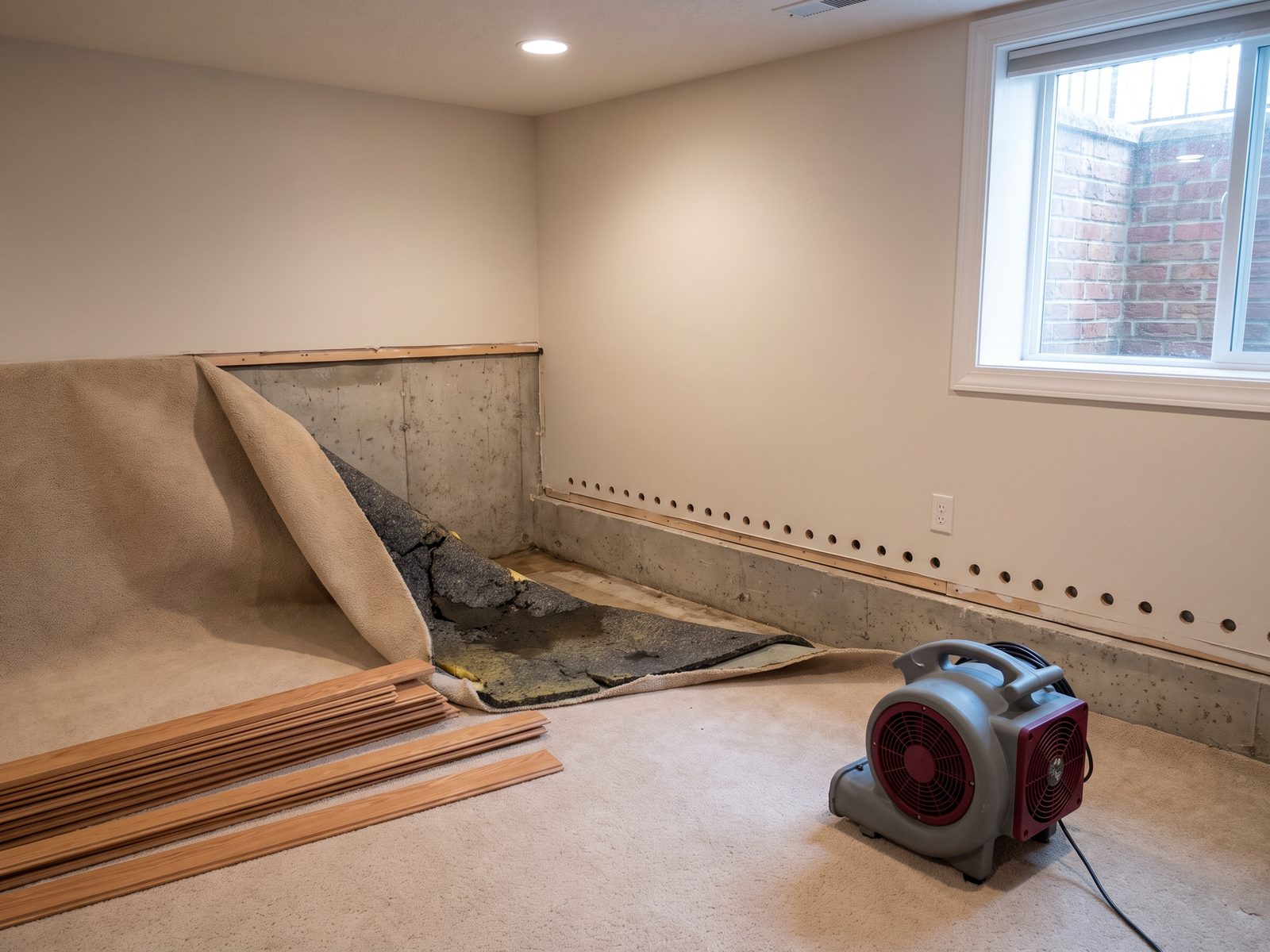
A Class 2 loss means a significant share of the room is wet, roughly five to forty percent of its combined surface area, and the wet materials are absorbent. Carpet over pad is the textbook case, because pad behaves like a sponge laid flat across the floor.
Picture a finished basement in Burke after a sump pump quits during a summer storm. The carpet feels merely damp underfoot. The pad underneath is holding many times its own weight in water, the baseboard is wet, while the drywall has drawn moisture up behind the paint where nothing shows. We pull the baseboard first and take readings at four inches, twelve inches and twenty-four inches up the wall.
That wet share of the wall and floor is what separates Class 2 from Class 1, and it is why crews drill or cut small vent holes behind the baseboard line. Air has to reach the cavity, or the cavity stays wet under a wall that feels dry to the touch.
- The wall base reads wet at twelve inches or higher on a pinless meter
- Carpet pad squelches underfoot after the surface water has been extracted
- Baseboard has swollen, or paint has blistered along the bottom edge
What is a Class 3 loss, and what does water from overhead change?
A Class 3 loss is the largest evaporation load of the ordinary classes, more than about forty percent of the room's combined surface area. Water usually came from above, so the ceiling, the walls, the insulation, the subfloor and the contents are wet at the same time. Every surface in the room has to give up moisture, not just the floor.
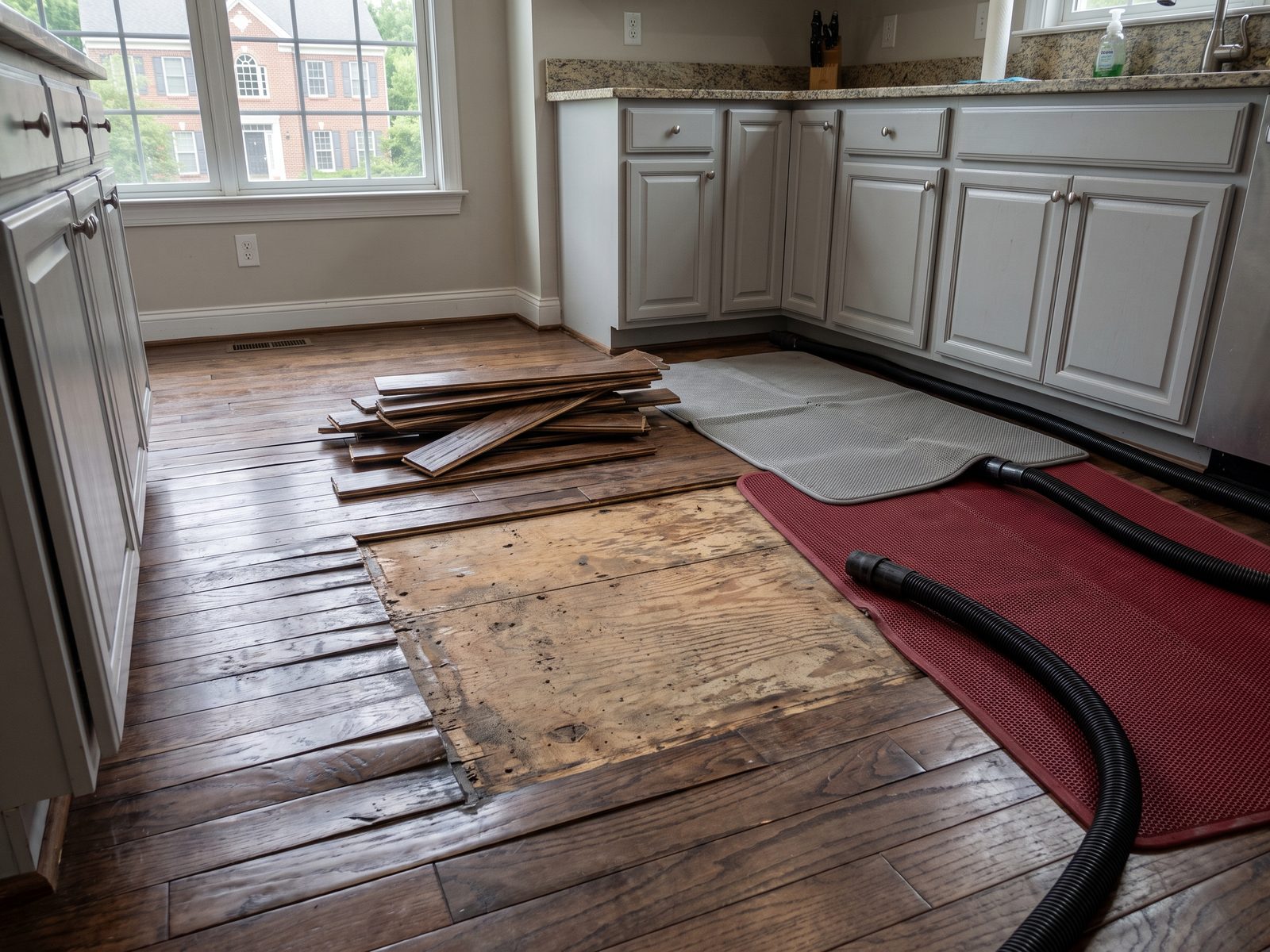
A second floor supply line or a failed water heater pan sends water down through a Vienna kitchen ceiling. Cabinets hold it. Insulation above the ceiling holds it. Engineered hardwood swells at the plank edges, and the plywood subfloor underneath stays wet long after the surface feels dry. That layered floor is a Class 4 problem sitting inside a Class 3 room, and one room carrying both is normal.
Class 3 draws the most air movers, and usually more than one dehumidifier. Ceiling material that has held water for hours is often removed instead of dried. Saturated drywall overhead is a safety problem, and opening the cavity dries it faster than pushing air at a closed ceiling.
What is a Class 4 loss, and which materials put a job into it?
A Class 4 loss involves materials that release water slowly no matter how much air you move across them. The water is bound deep inside a dense or layered assembly, and ordinary air movers cannot pull it out at a useful rate. The class is about the material, not the size of the puddle.
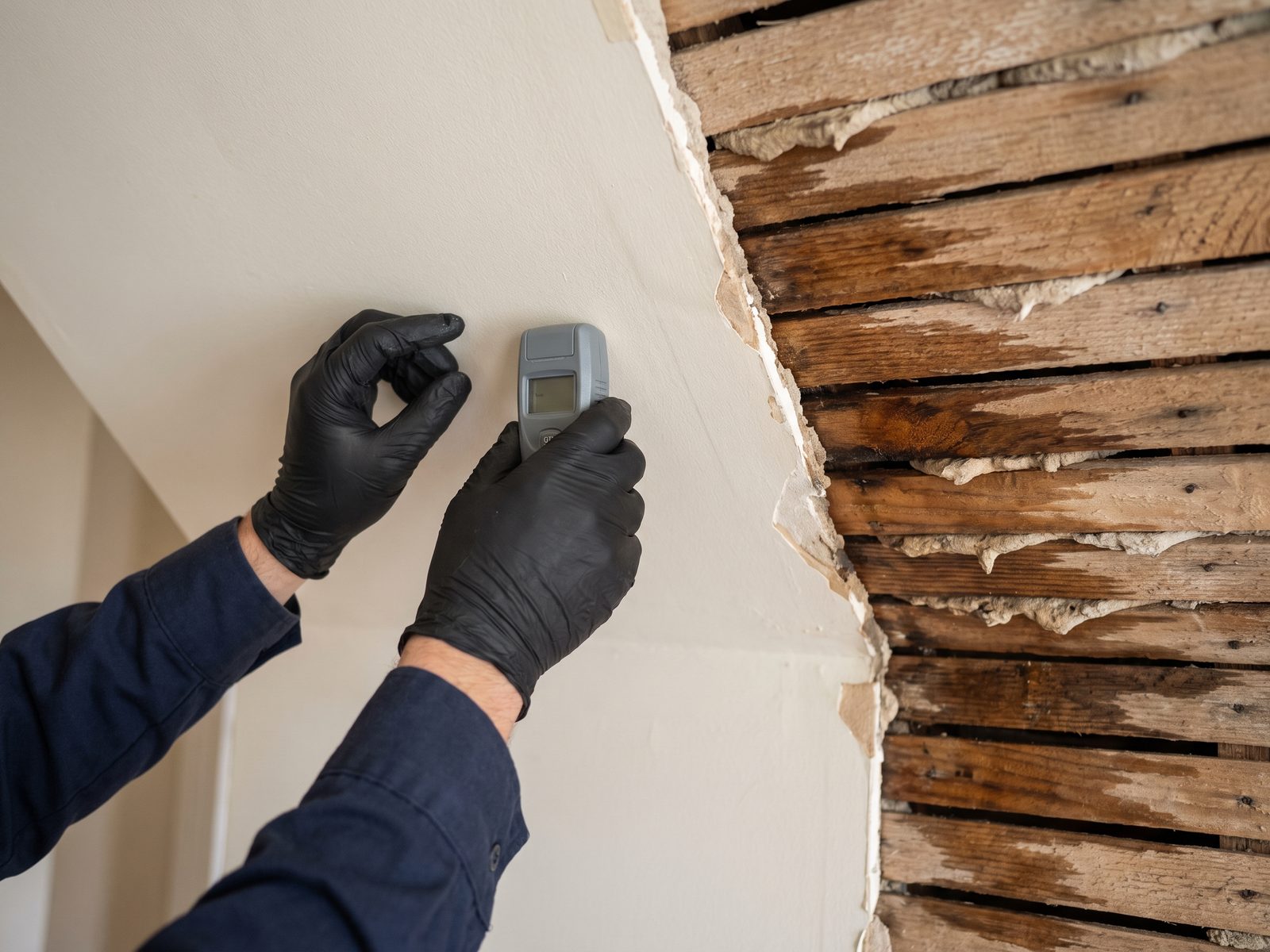
A 1950s rambler in the Mantua area of Fairfax is the local version of this. Plaster over wood lath takes water through the keys, the ridges of plaster that squeezed between the lath strips when the wall was built. The wet wood behind the face is sheltered from every fan in the room. Meters keep reading high at the lath line for days after the plaster face feels dry.
Class 4 calls for specialty drying. That means low grain refrigerant or desiccant dehumidification to push the vapor pressure down, floor drying mats pulling through hardwood, injection systems feeding dry air into a closed cavity, and sometimes controlled removal so the assembly can breathe.
- Hardwood and engineered wood flooring over plywood or over a slab
- Plaster over wood lath, common in older Fairfax County and Alexandria housing stock
- Concrete, brick, stone or lightweight concrete floor toppings
- Dense insulation trapped inside a wall or ceiling cavity
- Crawl space soil under a vapor barrier
How does the class decide how many air movers and dehumidifiers arrive?
The class tells the estimator how much wet surface there is, and wet surface is what the equipment count is built from. On a Class 2 floor, a common starting point is one air mover for every fifty to sixty square feet of wet floor, or one for every ten to sixteen linear feet of wet wall, plus one for each wet inside corner or offset. A Class 3 room needs more, because walls and ceilings are evaporating too. A Class 1 room needs fewer.
Dehumidification is sized from the volume of the space and the class together. The same three hundred square foot room needs far more removal capacity as a Class 3 loss than as a Class 1, because far more water is entering the air every hour. S500 publishes calculation methods for this and every competent restorer runs them, but they are inputs to a judgment call rather than a guaranteed output.
What comes out of that math is a plan, and the plan gets checked daily. If the grain depression between the dehumidifier intake and its exhaust is not where it should be, the crew adds capacity or swaps the machine type. An equipment list that never changes is a sign nobody is reading the meters.
Why can a small Class 4 room take longer than a large Class 2 room?
Because drying time follows the material, not the floor area. A large Class 2 basement is mostly pad and drywall, and both give water up quickly once the air is dry and moving. A small Class 4 bathroom with a mortar bed under the tile and plaster on the walls holds its water in a dense matrix that releases it slowly, one layer at a time.
Vapor pressure is the reason. Water leaves a wet material only when the air touching that surface is drier than the material itself. Dense assemblies resist the exchange, so the crew has to make the surrounding air much drier, which means low grain or desiccant equipment and more patience. Across all classes our average dry-out runs about 4.5 days, and Class 4 rooms sit at the long end of that spread while Class 1 rooms finish well under it.
How does the class change during the job as materials are removed?
The class is not fixed for the whole project. It describes the room as it stands today, so it changes the moment wet material leaves the building. Pull the carpet and pad out of that Burke basement and the Class 2 room becomes a Class 1 room with a bare slab and a wet wall base.
That reclassification should be visible in the file. Equipment counts come down as the evaporation load comes down, and the daily monitoring sheet is where the change gets written down.
It moves the other way too. Opening a ceiling can expose wet plaster behind it, and lifting vinyl can reveal an older floor underneath, so a Class 3 room gains a Class 4 component. What matters is that the change is recorded on the day it happens, with the readings that justify it.
Where do you see the class recorded, and what should it match?
Look for it on the first page of the drying documentation and near the top of the estimate. Most restoration software prints the category and the class in the loss summary, alongside the affected rooms and the date of loss. If a claim is open, your adjuster reads those same two numbers first.
Then check that the rest of the file agrees. The equipment lines should match the class, the affected rooms should match the rooms listed, and the daily readings should show the class stepping down as material comes out. Paperwork that says Class 2 and bills a Class 4 equipment package needs an explanation. There is often a good one, such as a hardwood section inside a mostly carpeted room.
- The loss summary page of the estimate, next to the category and the date of loss
- The first daily monitoring sheet or drying log
- The equipment schedule, where machine types and unit days are listed
- The certificate of completion, which should carry the final readings that ended the job
What should you ask if the equipment count does not match the class?
Ask plainly and early, in writing if you can. A restorer who sized the job properly can answer any of these in a sentence. The goal is not to argue the class down. It is to make sure the class, the machines and the days tell one story an adjuster can follow later.
If you want to read the source material yourself, the standards below are public. S500 defines the classes; the EPA guide covers what happens to materials left wet, and the CDC page covers the health side.
- IICRC S500, the standard for professional water damage restoration: https://iicrc.org/s500/
- EPA, A Brief Guide to Mold, Moisture and Your Home: https://www.epa.gov/mold/brief-guide-mold-moisture-and-your-home
- CDC, mold and your health: https://www.cdc.gov/mold-health/about/index.html
| What you are seeing | What to ask |
|---|---|
| A class is listed but no affected area | Which rooms are in that class, and how many square feet of wet floor and wall does it cover? |
| Equipment looks heavy for the class | Which materials are driving the count, and which of them are slow to release water? |
| Nothing has changed since day one | What have the daily readings been, and what material has been removed since the first visit? |
| The class never changed after demolition | Should the room be reclassified now that the pad and the wet drywall are out? |
| You were told the room needs specialty drying | Which assembly is the Class 4 one, and what equipment does it call for that a standard set cannot do? |