Who to Call First After a Water Leak: Plumber, Mitigation or Adjuster?
BY RESTORATION DOCTOR · NORTHERN VIRGINIA, MARYLAND & D.C.
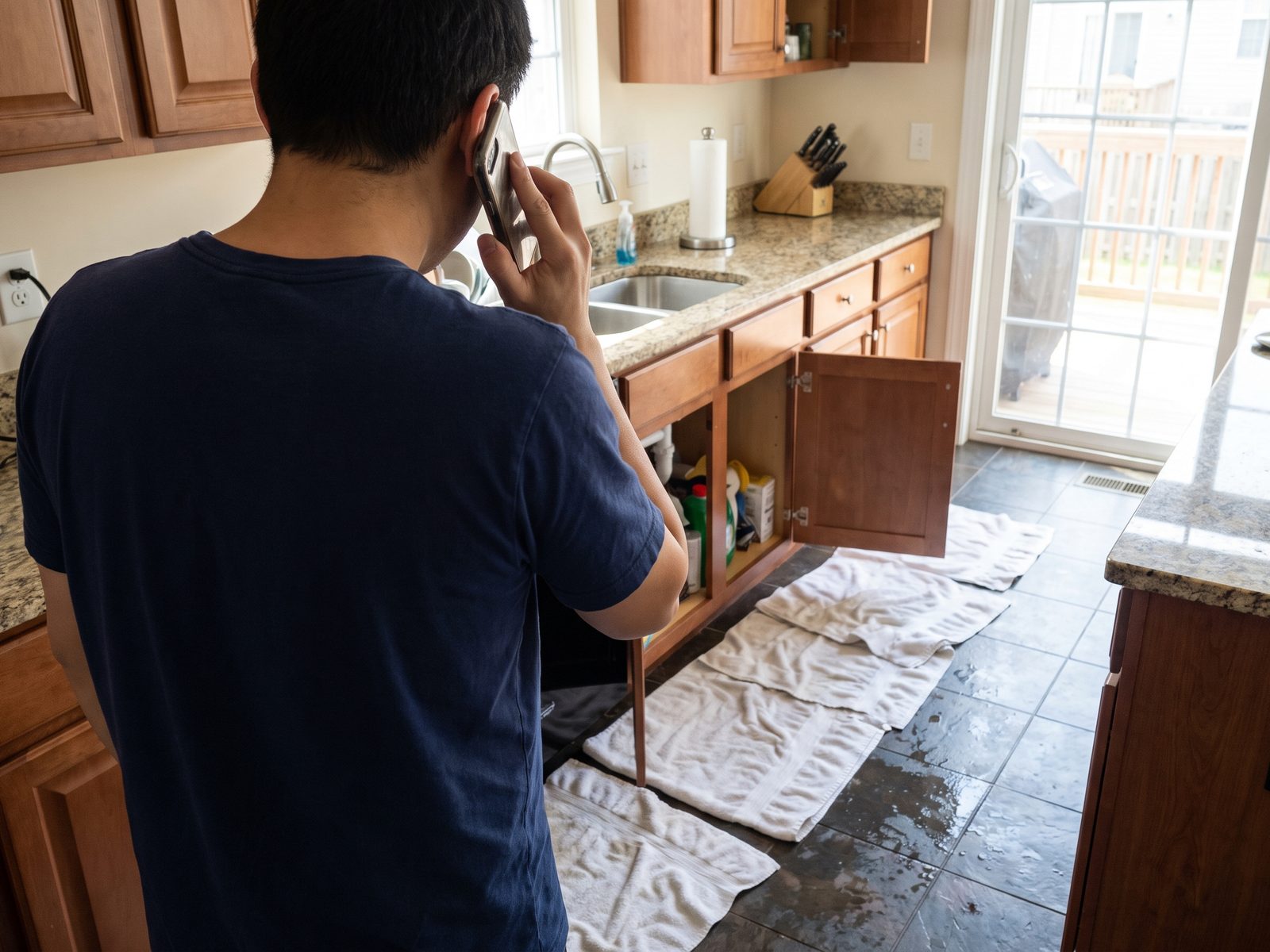
Who to call first after a water leak is the plumber if water is still moving, and the water mitigation contractor within the same hour once it has stopped. Your insurer, a rebuild contractor and any adjuster all come after those two calls, because none of them can shorten the window in which wet building materials stay salvageable.
Call 1-888-29-FLOODWhat are the four roles, and what does each one actually do?
If you are working out who to call first after a water leak, the answer turns on one thing. Call the plumber first if water is still moving, and call the water mitigation contractor first if the water has already stopped. The plumber stops the source, the mitigation contractor stops the damage, and every other call you might make is downstream of those two.
Four separate trades touch a typical water loss, and the names blur together. A plumber repairs the thing that failed. A mitigation contractor removes water and dries the building to a measured standard. A rebuild contractor replaces what had to come out. An adjuster values the loss against your policy. Four skill sets and, in Northern Virginia, almost always four different companies.
That last point catches people out. In Fairfax, Arlington, Loudoun and Prince William, the plumber who repairs your supply line will not own air movers, and the mitigation crew drying your ceiling does not make the pipe repair. We do not make the plumbing repair ourselves. We work alongside plumbing contractors across the region, and when our crew opens a wall and finds the failed fitting, that repair goes back to the plumber rather than onto our invoice. So the practical answer is two calls, not one.
| Role | What they do | When to call | What they do not do |
|---|---|---|---|
| Plumber | Repairs the failed supply line, valve, water heater or fixture and shuts the source down | First, any time water is still running | Extract water, dry the structure, document moisture for a claim |
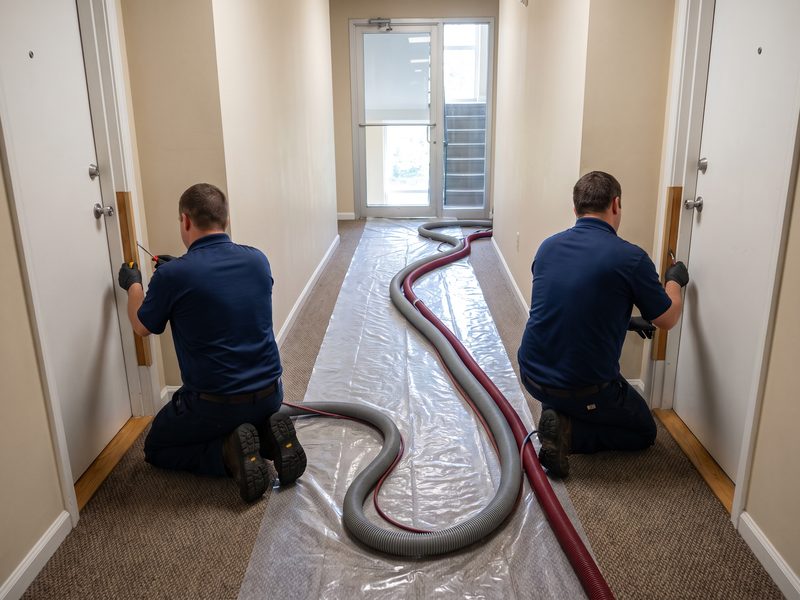
| Water mitigation contractor | Extracts standing water, maps how far it traveled, removes unsalvageable material, sets drying equipment and logs daily readings | Second, ideally within the same hour | Repair the plumbing, decide coverage, do finish carpentry |
| Rebuild or reconstruction contractor | Replaces drywall, insulation, flooring, trim and cabinetry once the structure reads dry | After drying is verified, not before | Dry the building, interpret your policy |
| Adjuster (carrier or public) | Inspects the loss, values it and applies the policy language | Once the source is stopped and you know roughly what is wet | Stop the water, dry the building, perform the repairs |
Who stops the water, and who dries the building?
The plumber stops the water. The mitigation contractor dries the building. Those two jobs almost never live in the same truck, and confusing them is the single most common reason a small loss turns into a large one.
A plumber's work ends at the repair. Once the burst section is cut out and a new one is in, the leak is over, but every gallon that already left the pipe is still inside your floor assembly and wall cavities. Water tracks sideways under laminate, wicks up drywall, and settles in joist bays where nothing looks wrong from the doorway.
Mitigation is the trade that chases it. We pull the baseboard first on an affected wall, because that is where a pin meter tells the truth about the bottom of the drywall. Where the moisture meter reads high behind a cabinet toe kick, that cabinet enters the drying plan whether or not the kitchen floor looked wet. The ANSI/IICRC S500 standard is what this work is measured against. Its published scope covers pre-restoration inspection, psychrometry and project documentation, which is why a real drying job leaves a record of readings rather than an opinion that the room felt dry. That standard also assumes the property owner, not the restorer, is responsible for correcting the source of the intrusion, which is the split described here.
The dividing line is simple. Water arriving is a plumber. Water that already arrived is mitigation. Most losses are both, in that order.
- Water still running or dripping: plumber first, then mitigation
- Water already stopped, or you closed the valve: mitigation first, plumber same day
- Sewage backup: mitigation first for containment, then the drain contractor
- Roof or window intrusion in a storm: mitigation first, roofer after the weather clears
- Appliance line you disconnected yourself: mitigation only, unless the valve leaks
Do you call the plumber or the mitigation contractor first?
Call the plumber first if water is still moving and you cannot stop it at a valve. Call the mitigation contractor first if the water has already stopped, because at that point the only clock still running is the one on your building materials.
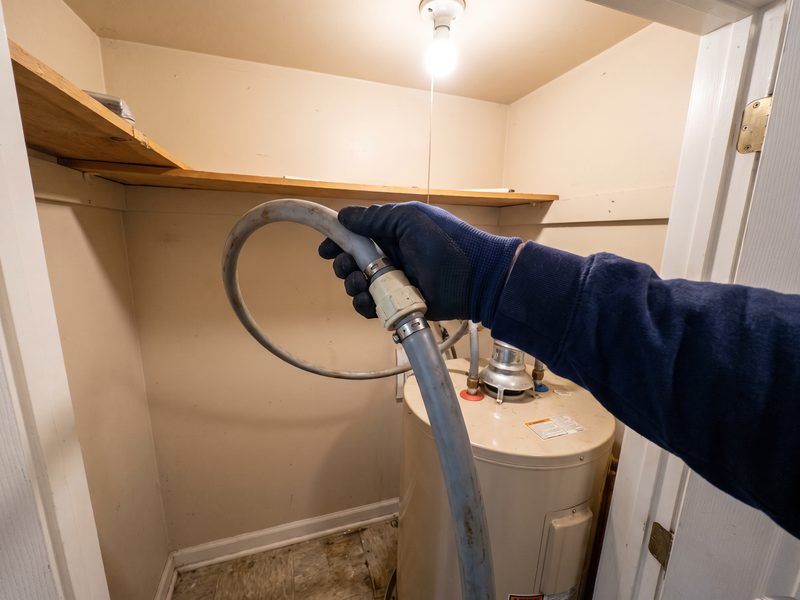
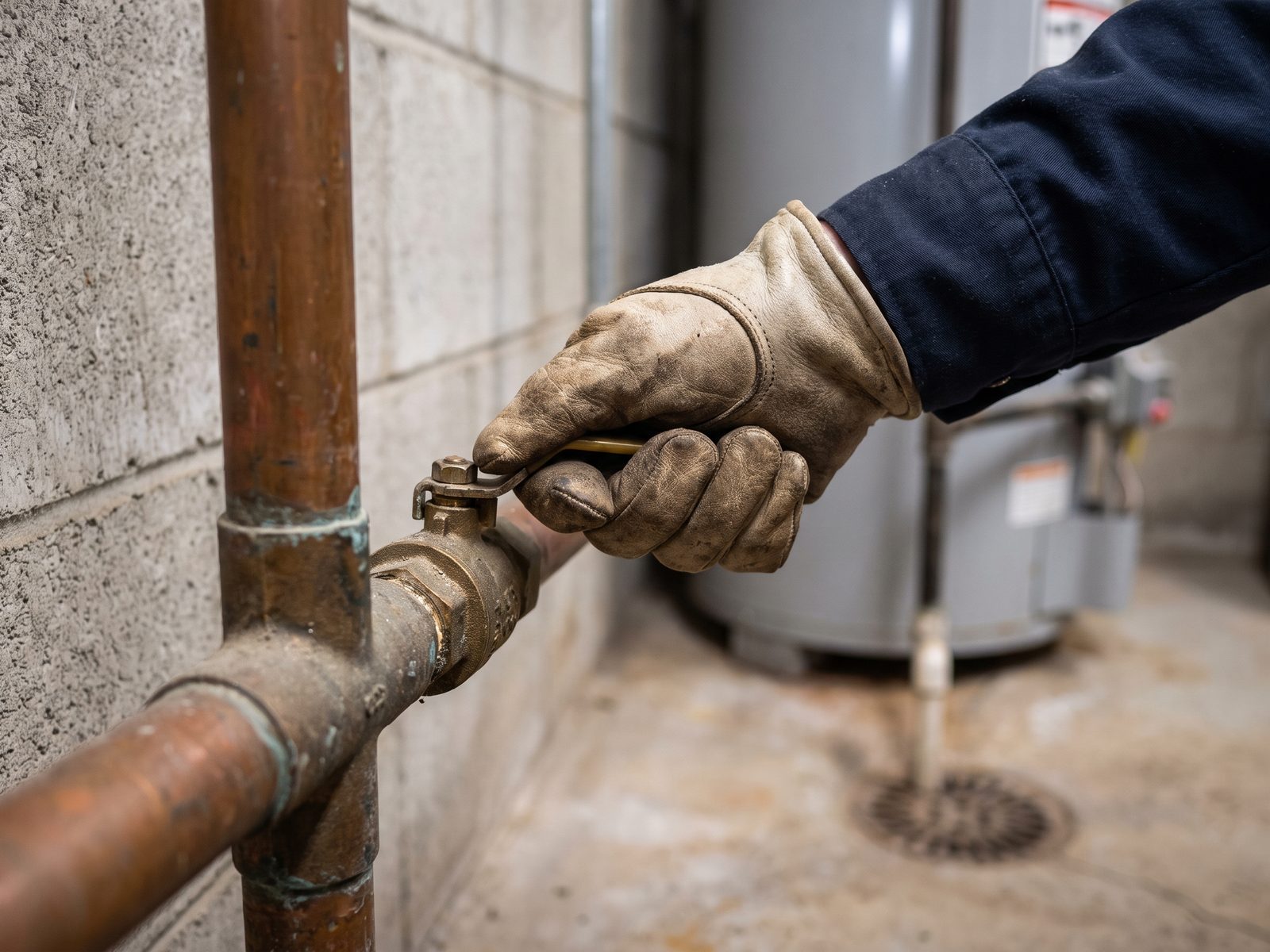
Before either call, find the shutoff. Most fixtures have a local stop valve under the sink or behind the toilet, and water heaters have a cold inlet valve on top. The main is usually where the service line enters the house. Closing the nearest valve that works turns an emergency into a problem, and it lets both trades arrive in either order.
If the valve will not close or you cannot find it, that is a plumber call, and the only case where waiting on mitigation is the right trade. Everything else favors getting a crew moving early. Our own median arrival time across Northern Virginia runs around 47 minutes, and that window matters because saturated drywall and carpet pad stay dryable in place for only so long.
There is no harm in both trades being on site together. The plumber can open a wall where the mitigation technician wants a cavity dried, so one hole does two jobs.
When do you call your insurer, and what do you say?
Call your insurer once the source is stopped and you can describe what is wet. That usually lands third, after the plumber and after mitigation is dispatched. There is nothing improper about a same-day call that follows emergency work rather than preceding it.
What you say matters more than when you say it. Report only facts you can verify: what failed, when you found it, which rooms have visible water, plus that a mitigation contractor is starting emergency drying. Most homeowners policies carry a duty to protect the property from further damage, so mitigating before you reach an adjuster is expected.
Resist the urge to guess at numbers. You do not yet know how far the water traveled, and a figure invented on the phone tends to follow the file around. Have your declarations page open, then ask questions rather than accept assumptions.
- Ask what your deductible is for this type of loss
- Ask whether sudden discharge is handled differently from long-term seepage
- Ask what documentation the carrier expects from a mitigation contractor
- Ask whether you must use a particular vendor or may choose your own
- Ask for the claim number and the adjuster's direct contact in writing
Does calling your insurer commit you to filing a claim?
A phone call and a filed claim are not automatically the same act, but that varies by carrier and by how the call is logged. Ask directly: are we opening a claim right now, or is this a coverage question?
Some carriers record a reported loss as an inquiry that sits on file. Others open a claim as soon as you describe damage. What happens to your policy afterwards depends on your carrier, your policy form and your loss history, and no restoration company can tell you how that will land. Your agent or carrier is the right party for that question.
The sequencing advice holds up either way. Stopping the water and drying the structure are worth doing whether or not a claim is filed, because the alternative is paying for the same drying later with mold remediation on top. If you are unsure about filing, get a written mitigation scope and weigh it against your deductible.
What does a rebuild contractor do that a mitigation contractor does not?
A rebuild contractor puts the house back. A mitigation contractor makes it safe to put back. The handoff happens at a specific, measurable moment: when the affected materials hit documented dry standard.
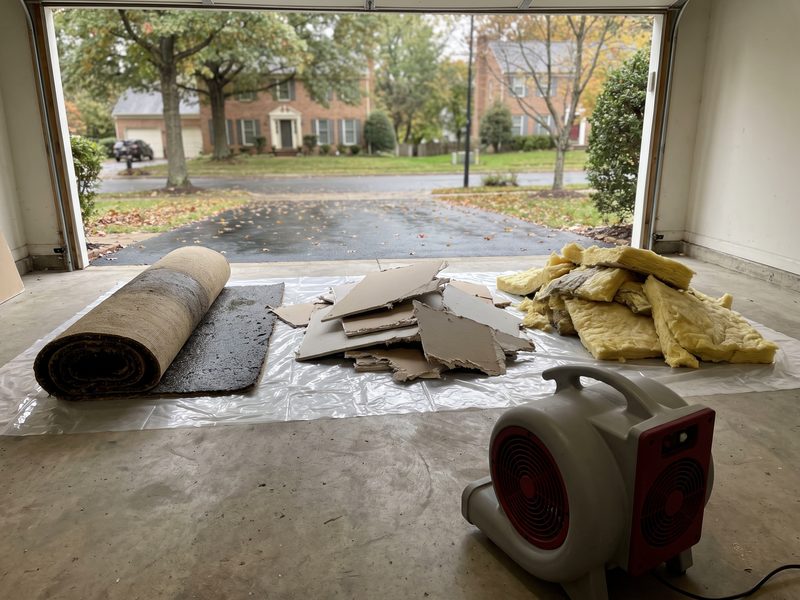
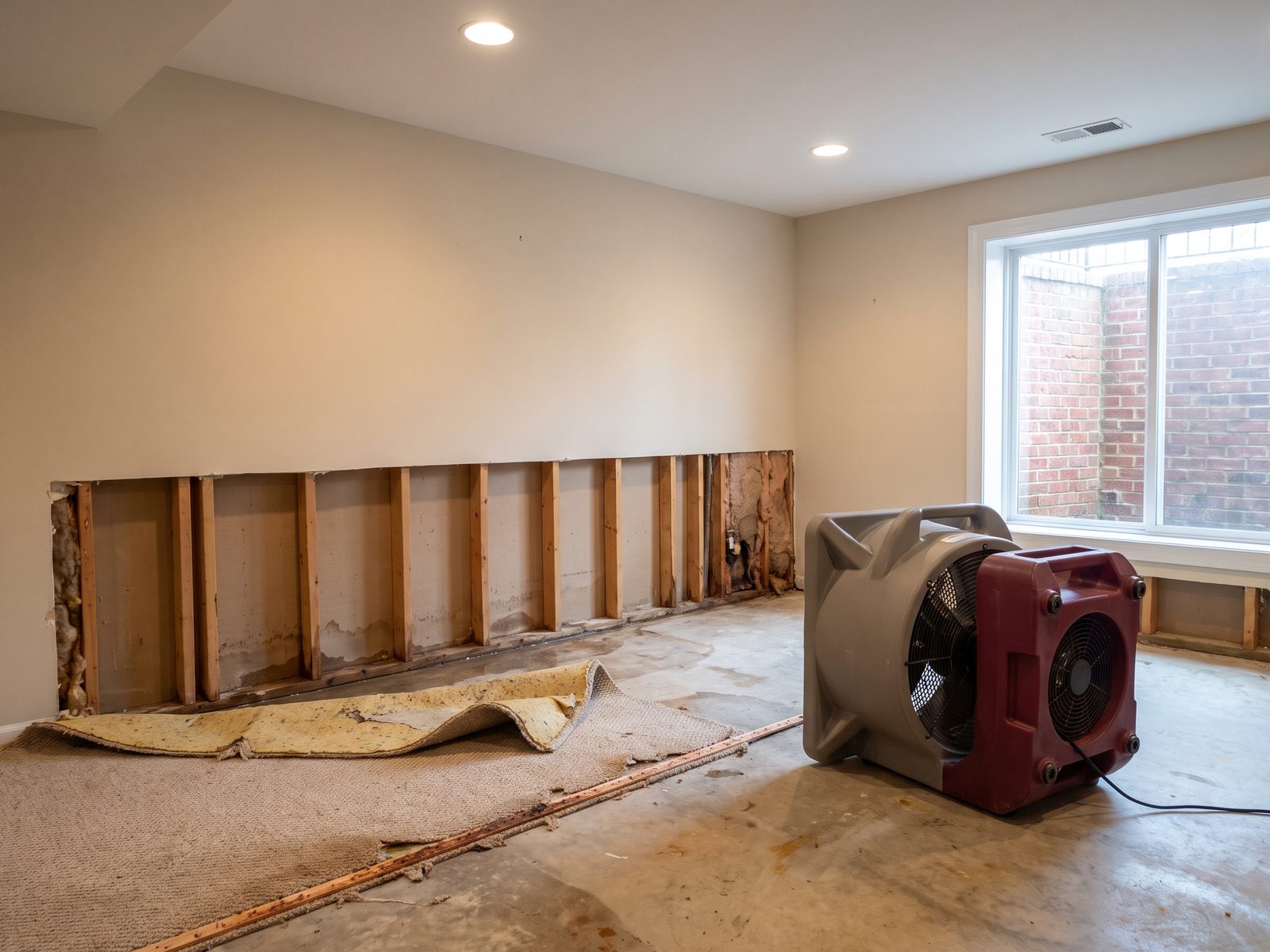
During mitigation, material comes out. A two-foot flood cut removes wet drywall above the waterline, saturated carpet pad goes in a bag, swollen baseboard and warped laminate get pulled, and soaked insulation is bagged because wet fiberglass holds water against the framing. The room ends up looking worse than it did the morning of the leak. That is the correct outcome.
Rebuild starts when drying ends: new drywall, mud and tape, primer and paint, new flooring, replacement trim, plus any cabinetry that could not be saved. Getting this backwards is expensive. Drywall hung over a joist bay still at elevated moisture content holds that moisture in the dark against wood, which is the condition mold needs. The EPA guidance on mold and moisture is blunt about it: fix the water problem and dry materials promptly.
On small losses one company may handle both phases, which is fine as long as the drying is documented separately. On larger losses in older Vienna and Falls Church homes, the rebuild is often a separate general contractor working from the mitigation scope.
When, if ever, is a public adjuster worth involving?
A public adjuster is a licensed professional you hire to represent your interests in valuing a claim, usually paid a percentage of the settlement. They are worth a conversation on large or stalled losses. They are usually unnecessary on a straightforward supply line failure in one room.
Scale is the honest test. If the loss is confined to a powder room and a strip of hallway, the mitigation invoice plus a modest rebuild may not clear your deductible by much, and a percentage fee on that helps nobody. If half a finished basement is wet, contents are involved, the building is a condo with an association policy overlapping yours, or the claim has stalled for weeks, the math changes.
A public adjuster cannot dry your house, so hiring one never replaces the first two calls. In Virginia, public adjusters are licensed through the State Corporation Commission, which also notes that no other kind of adjuster, company or independent, is required to hold a Virginia license at this time. Verify the license of anyone who approaches you after a loss, especially at the door unsolicited.
What happens if you call them in the wrong order?
Calling out of order rarely ruins a loss. It costs days, and days turn a drying job into a demolition job.
The most common wrong order is waiting on the carrier before anyone touches the water. A homeowner reports the loss on a Friday evening, is told an adjuster will call, and nothing happens until Monday. By then the carpet pad has been wet through the whole weekend, and the job that needed extraction and air movement needs flood cuts instead. Water does not pause for a business day.
The second error is rebuild before dry. Someone patches the ceiling because the drip stopped, and four weeks later there is a stain and a smell. The third is calling a handyman for the whole thing. Without moisture meters and daily readings, nobody can prove the structure dried.
| What happened | Why it went wrong | What to do instead |
|---|---|---|
| Waited for the adjuster before drying | Materials stayed saturated and moved from salvageable to replaceable | Start mitigation, report the loss the same day |
| Rebuilt over a wet cavity | Moisture sealed against framing in the dark | Require documented dry readings before a wall closes |
| Called only a plumber | The repair was perfect, the floor assembly stayed wet | Treat repair and drying as two separate calls |
| Called only a mitigation contractor while water ran | The crew arrived to an active leak, which is a plumber's scope of work, not a mitigation crew's | Close the nearest valve, or send a plumber in parallel |
What should you do in the first hour while you are waiting?
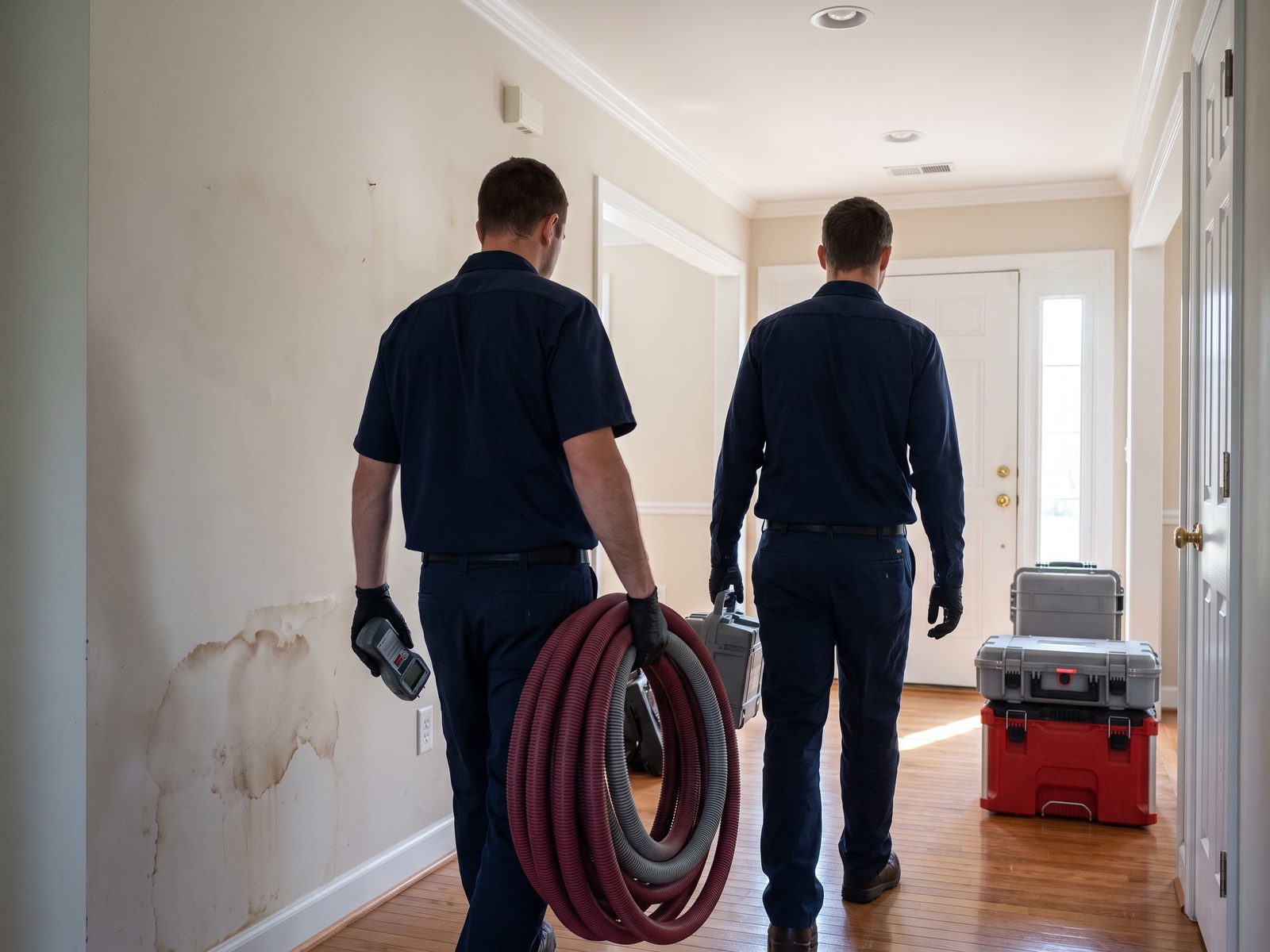
The first hour is about three things: stopping the water, keeping people safe, then recording what the loss looked like before anyone touched it. None of that requires equipment you do not already own.
Safety comes before cleanup. If water is near a panel, an outlet, a light fixture or a running appliance, kill power to that area at the breaker rather than reaching for a switch in a wet room. If the ceiling below the leak is sagging, stay out from under it. If the water came from a toilet trap, a sewer line or a floor drain, treat it as contaminated and leave it alone.
Then document. Photographs and a short video of every affected room, taken before towels and buckets rearrange the scene, are the most valuable thing a homeowner produces.
After that, move what you can. Lift furniture legs onto foil or wood blocks and clear boxes off wet floors. Do not run the HVAC system if water may have reached a return duct, and never point a household fan at contaminated water.
- Close the nearest working shutoff valve, then the main if that fails
- Cut power at the breaker if water is near anything electrical
- Photograph and video every room before you move anything
- Lift furniture legs and clear boxes off wet flooring
- Stay out from under a sagging ceiling; keep children and pets clear
- Leave contaminated water alone until a crew with containment arrives
How do you tell whether this needs anyone at all?
Some leaks genuinely need nobody. A cup of water on a sealed tile floor, wiped up inside a few minutes, is not a water loss. The line sits at whether water reached a porous material and stayed there.
Our rough field test looks at surface, then time, then volume. Water on a non-porous surface, found immediately, in a volume you can dry with towels, is a cleanup. Water that reached carpet, pad, hardwood, drywall, insulation or subfloor, or that sat for more than a few hours, has almost certainly moved somewhere you cannot see.
Two signals override everything else. Contaminated water, meaning sewage, a drain backup or anything that passed through soil, is not a homeowner job at any volume. And a musty smell days after a leak you thought you handled means moisture stayed behind.
If you are unsure, a moisture meter inspection is the cheap answer. It takes minutes to read a wall, and a reading at ambient is a legitimate all clear rather than a guess.
Sources for the standards and guidance named above:
- ANSI/IICRC S500, the water damage restoration standard: https://iicrc.org/s500/
- EPA guidance on mold, moisture and your home: https://www.epa.gov/mold/brief-guide-mold-moisture-and-your-home
- EPA guidance on cleaning up mold in the home: https://www.epa.gov/mold/mold-cleanup-your-home
- Virginia State Corporation Commission on public adjuster licensing: https://scc.virginia.gov/pages/Public-Adjusters