Attic Mold Causes and Removal: A Homeowner's Guide

BYSteve Jafari, General ManagerNORTHERN VIRGINIA, MARYLAND & D.C.
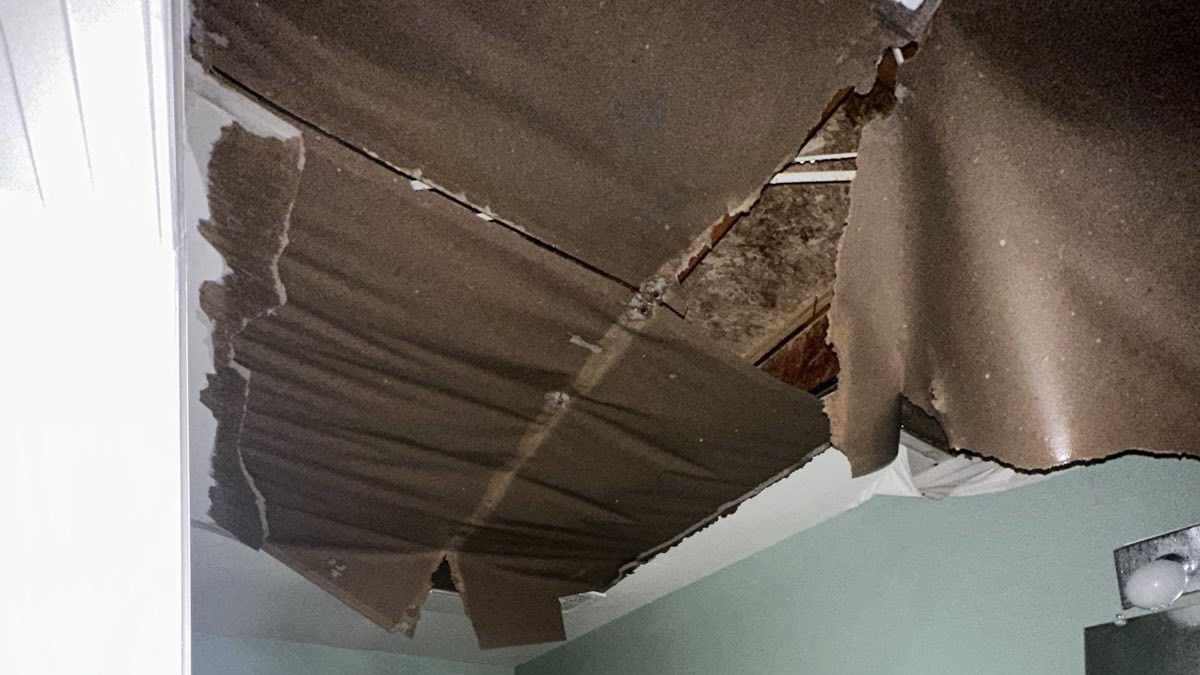
Attic mold causes and removal almost always come down to ventilation, not your roof: blocked soffit vents and bathroom or dryer fans dumping warm, humid air into the attic let condensation feed mold on the underside of the roof deck. Fix the moisture source first, then remediate the affected wood under IICRC S520 principles — containment, controlled removal, and verification. Done in that order, the mold does not come back.
Call 1-888-29-FLOODWhat actually causes attic mold in most DMV homes?
In most Virginia, Maryland, and Washington, D.C. homes, attic mold is a ventilation and condensation problem — not a roof leak. Warm, moist air rises from the living space into the attic, hits a cold roof deck in winter, and condenses into liquid water. That steady film of moisture on the plywood or OSB sheathing is exactly what mold needs to grow. The roof itself is usually intact.
This surprises a lot of homeowners who assume dark staining on the underside of the roof means the shingles are failing. True roof leaks do cause attic mold, but they leave a telltale pattern: localized staining that follows a nail, a vent boot, or a valley, often with a water trail running down a rafter. Ventilation-driven mold looks completely different — it coats broad sheets of the roof deck fairly evenly, usually worst on the north-facing slope, because the whole attic is too humid and that slope stays coldest.
The regional climate makes this worse. Cold, damp winters in the tri-state area create big temperature swings between heated living space and an unheated attic, and humid summers keep attic moisture levels elevated for months at a time. When an attic can't breathe, that moisture has nowhere to go. Understanding the real driver is the entire point of this guide, because you cannot solve attic mold causes and removal by scrubbing wood — you have to cut off the moisture first. Remediation without a moisture fix is a temporary cosmetic improvement, not a repair.
How do blocked soffit vents cause attic mold?
Blocked soffit vents cause attic mold by shutting down the airflow that is supposed to keep the roof deck dry. A healthy attic pulls cool, dry outside air in through the soffit vents along the eaves and exhausts warm, moist air out through the ridge or gable vents. When the intake is blocked, that circulation stalls, humidity builds, and condensation forms on the coldest surface in the space — the underside of the roof.
The most common culprit is insulation. During an energy upgrade or a DIY insulation job, batts or blown-in material get pushed all the way to the edge of the attic floor and smother the soffit openings. Without baffles (also called rafter vents or insulation stops) to hold the insulation back and preserve an air channel, the intake airflow is choked off completely. The homeowner gets a warmer house and, a winter or two later, a moldy roof deck.
You can often spot the problem from inside the attic. Look at where the roof meets the attic floor along the eaves — if you see insulation jammed into that gap instead of a clear channel and a visible baffle, your soffit intake is likely blocked. From outside, soffit vents painted shut, clogged with debris, or covered during a siding job tell the same story.
Signs your soffit vents are contributing to attic mold include:
- Mold concentrated on the north and east roof slopes, which stay coldest
- Insulation packed tight against the eaves with no visible air channel
- Frost or water droplets on the roof deck or nail tips during cold snaps
- A stuffy, humid feel in the attic even on a dry day
- Mold worst near the edges of the attic and lighter toward the ridge
Why does my bathroom fan cause attic mold?
Your bathroom fan causes attic mold when it vents into the attic instead of all the way outside. A hot shower produces a surge of warm, saturated air, and if the exhaust duct dumps that air into the attic space — or connects to nothing at all — you are injecting moisture directly onto cold wood every time someone bathes. Dryer vents and kitchen exhaust routed into the attic do the same thing, and a dryer adds lint on top of the moisture.
This is one of the most common defects we find in homes across the Virginia, Maryland, and D.C. area, especially where a fan was added or a bathroom was remodeled and the installer took a shortcut. The duct is supposed to run to a dedicated roof cap or gable termination that exhausts outdoors. Instead it is often left loose above the ceiling, blowing straight up at the sheathing, or connected to a flex hose that fell off its termination years ago and nobody noticed.
The giveaway is location. Ventilation-driven condensation is usually broad and spread across whole roof planes, but bath-fan mold is often a concentrated dark bloom on the roof deck directly above a bathroom. If you see a disconnected silver flex duct lying in the insulation, you have found a primary moisture source — and reconnecting it to its old path isn't enough if that path never left the attic.
Every exhaust fan in your home — bathroom, kitchen, and laundry — should terminate outside the building envelope. None of them should ever discharge into the attic, soffit, or a wall cavity. Venting into a soffit is a common half-fix that fails because the exhausted moist air gets pulled right back in through the soffit intake vents.
How do I know if I have attic mold?
You know you have attic mold when you see black, gray, or white discoloration on the underside of the roof deck, the rafters, or the trusses — typically patchy, fuzzy, or sheet-like staining rather than a single water stain. A musty smell in the attic or in upstairs rooms is another strong signal, and so is frost or dampness on the wood during winter. Rusted nail tips poking through the sheathing are an early warning that condensation has been forming even if visible mold hasn't taken hold yet.
Because attics are out of sight, most homeowners discover attic mold during a real estate inspection, a roof or insulation job, or when a musty odor finally drifts down into the living space. By then it has usually been growing through at least one or two humid seasons, which is why a quick annual look is worth the ten minutes it takes.
Here is how to safely do a first-pass check yourself, without disturbing spores:
- Use a flashlight from the attic hatch before climbing in — scan the roof deck and rafters for dark staining
- Note where it's worst: broad staining across cold slopes points to ventilation; a tight bloom over a bathroom points to a fan
- Look for disconnected ducts, blocked soffits, and compressed insulation at the eaves
- Check for water stains that follow nails, valleys, or vent boots, which suggest a roof leak instead
- Wear an N95, don't sweep or brush anything, and come back down if you feel short of breath or irritated
| What you see | Likely cause | What to check |
|---|---|---|
| Even staining across cold north/east roof deck | Poor overall ventilation | Soffit intake and ridge exhaust airflow |
| Dark bloom directly over a bathroom | Bath fan venting into attic | Exhaust duct termination |
| Mold heavy at the eaves, lighter at ridge | Blocked soffit vents | Insulation baffles and intake channels |
| Stain following a nail, valley, or vent boot | Actual roof leak | Shingles, flashing, vent boots |
Is attic mold dangerous to my health and my home?
Attic mold is a genuine concern for both your home and your health, though the immediate risk to living space is usually lower than mold inside a bathroom or basement because the attic is somewhat separated from the air you breathe. The bigger structural issue is that the same moisture feeding the mold is slowly degrading the roof sheathing and framing, and it can saturate insulation until it stops insulating.
On the health side, mold spores and the musty volatile compounds they produce can migrate into living areas through ceiling penetrations — recessed lights, the attic hatch, duct chases, and gaps around fixtures. The stack effect in winter actually pulls some attic air down pressure gradients and through leaks. People with asthma, allergies, or compromised immune systems are most sensitive, and a persistent musty smell upstairs often means attic air is finding its way into the rooms below.
Left alone, chronic attic moisture can lead to:
- Delaminating or rotting roof sheathing that weakens the deck and complicates the next re-roof
- Wet, matted insulation with reduced R-value and higher energy bills
- Rust on nails, truss plates, and fasteners
- Spread of mold onto stored belongings and framing
- Odors and spores drifting into bedrooms below through ceiling gaps
How do you remove attic mold the right way?
You remove attic mold the right way by fixing the moisture source first, then remediating the affected wood following IICRC S520 principles — containment, controlled removal of the growth, and verification that the problem is actually resolved. Cleaning the wood before correcting the ventilation or ductwork guarantees the mold returns, usually within a season, so sequence matters more than any single product or technique.
At Restoration Doctor, our attic mold process follows the industry standard of care rather than cosmetic surface-wiping. We're a licensed, insured team serving the Virginia, Maryland, and Washington, D.C. tri-state area, and attic framing is almost always salvageable — the goal is to remove the growth and protect the wood, not to tear out your roof. Structural wood that has not rotted can typically be cleaned, treated, and kept in service.
The proper sequence looks like this:
- Inspect and diagnose: identify every moisture source — blocked soffits, disconnected bath or dryer ducts, missing baffles, or an actual roof leak
- Correct the moisture: clear and baffle the soffit vents, re-route exhaust fans to the exterior, confirm ridge or gable exhaust, and repair any leak
- Contain the work area: set up containment and negative air pressure so spores don't spread into the living space during removal
- Remove the growth: HEPA vacuuming, antimicrobial treatment, and abrasive methods like soda or dry-ice blasting on the sheathing where appropriate
- Address insulation: remove and replace insulation that is moldy, matted, or water-damaged
- Verify and protect: confirm the wood is dry, apply protective coatings where warranted, and document the completed work with photos
| Step | Done right | Done wrong |
|---|---|---|
| First action | Find and fix the moisture source | Spray bleach on the wood |
| Containment | Negative air to protect living space | Work open, spores spread |
| Standard | IICRC S520 remediation approach | Cosmetic surface wipe |
| Ventilation | Soffits cleared, fans vented outside | Ductwork left dumping into the attic |
| Outcome | Mold stays gone | Mold returns next winter |
How do you prevent attic mold from coming back?
You prevent attic mold from coming back by keeping the attic cold, dry, and well-ventilated: balanced soffit-to-ridge airflow, every exhaust fan vented outdoors, and insulation that seals the living space below without blocking the eaves. Once moisture can't accumulate on the roof deck, mold has nothing to grow on.
Think of it as controlling the two things mold needs that you can actually influence — moisture and time. You can't remove the wood, and spores are everywhere, so you remove the sustained moisture. In this region, that means getting ahead of both winter condensation and summer humidity, and the fixes are the same for both seasons.
Durable prevention steps for DMV attics:
- Install baffles at every rafter bay so insulation never blocks soffit intake
- Verify bathroom, kitchen, and dryer exhausts all terminate outside, never in the attic or soffit
- Air-seal ceiling penetrations — recessed lights, the attic hatch, plumbing stacks — to stop warm, moist air from rising into the attic
- Keep attic insulation at the right level and depth without smothering the eaves
- Check the attic each winter for frost or damp wood, an early sign that ventilation is falling behind
- Address any roof leak promptly before it saturates the sheathing
| Moisture source | Permanent fix |
|---|---|
| Blocked soffit vents | Clear openings and add rafter baffles |
| Bath/dryer fan in attic | Re-route duct to an exterior cap |
| Warm air leaking up | Air-seal ceiling penetrations |
| Winter condensation | Balance intake and exhaust ventilation |
Does homeowners insurance cover attic mold removal?
Homeowners insurance sometimes covers attic mold removal, but it depends on the cause. Many policies exclude mold that results from long-term humidity, poor ventilation, or deferred maintenance — which, unfortunately, describes most attic mold — while mold that stems from a sudden, accidental covered event like a storm-driven roof leak may be covered, often up to a mold sublimit stated in the policy. The specifics live in your policy language, so read the mold and fungi provisions or ask your agent before assuming either way.
When a claim does make sense, we make the process straightforward. Restoration Doctor bills you, the homeowner, directly — we work for you, not your insurance company — and we hand you a carrier-ready claim file with an Xactimate scope, CompanyCam photo documentation, and daily moisture logs so you can pursue reimbursement with everything the adjuster needs to evaluate the loss.
We don't quote attic mold remediation sight-unseen, because the cost depends entirely on how far the mold spread, how much insulation has to be removed, what ventilation corrections are needed, and how many days of work are involved. Attic jobs typically run in the thousands, and the real figure comes after an on-site inspection. For help documenting a claim, see our guidance on insurance claims, or call us any time at 1-888-293-5663.
As for cost drivers, the biggest ones are the square footage of affected sheathing, whether ducts and soffits need re-work, and how much wet or contaminated insulation must be replaced — all of which we assess in person before giving you a number. Restoration Doctor (VA Water Damage LLC) is based at 8609 Westwood Center Dr, Ste 110-1062, Vienna, VA 22182, and serves homeowners throughout the Virginia, Maryland, and Washington, D.C. tri-state area.