Mold Emergency, When to Act: A Homeowner's Guide

BYSteve Jafari, General ManagerNORTHERN VIRGINIA, MARYLAND & D.C.
In a mold emergency, you should act the same day when any of five red flags is present: Category 3 (sewage or flood) water, mold spreading through your HVAC system, visible growth larger than about 10 square feet, a leak that has stayed wet for more than 48 hours, or anyone in the home developing breathing symptoms. Each of these means mold is actively multiplying or spreading faster than routine cleanup can keep up with. When you see them, call a licensed remediation team right away rather than waiting to 'watch it.'
Call 1-888-29-FLOODWhat counts as a mold emergency, and when should you act?
A mold emergency is any situation where mold is spreading, feeding on contaminated water, or affecting the air people breathe — and in those cases you should act the same day, not next week. The difference between routine mold and a mold emergency comes down to speed: emergencies involve active water, airborne contamination, or health effects that get worse every hour you wait.
Mold spores are always present indoors at low levels. They become a problem when they find moisture and a food source (drywall paper, wood, carpet, household dust) and begin colonizing. Under the right conditions, growth can begin within 24 to 48 hours of water exposure. That short timeline is why 'when to act' matters so much — a small, containable problem on Monday can become whole-room contamination by Friday.
This guide walks through the five specific red-flag triggers that turn an ordinary mold spot into a same-day call. If you recognize even one of them in your home, treat it as urgent and reach out to our team at 1-888-293-5663. Our work follows the ANSI/IICRC S520 Standard for Professional Mold Remediation and the S500 Standard for Professional Water Damage Restoration — the industry standards that exist precisely to stop these situations from spreading.
Is mold from Category 3 (sewage or flood) water always an emergency?
Yes. Mold connected to Category 3 water — sewage backups, toilet overflows involving solid waste, river or storm flooding, or any grossly contaminated water — is always a same-day emergency. Category 3 water (sometimes called 'black water') can carry bacteria, viruses, and other pathogens, so the mold it feeds is only part of a larger contamination problem.
Under the IICRC S500, water losses are sorted into three categories. Category 1 is clean water from a sanitary source (a supply line, for example), Category 2 is significantly contaminated 'gray' water (dishwasher or washing-machine discharge), and Category 3 is grossly contaminated. Water that sits untreated can deteriorate to a worse category with time and temperature, and once mold takes hold on contaminated materials, porous items like drywall, carpet pad, and insulation usually cannot be saved — they have to be removed.
Do not try to clean Category 3 contamination yourself with household products. It requires containment, personal protective equipment, controlled removal of affected materials, and appropriate antimicrobial treatment. This is one of the clearest cases where waiting makes the damage, the health risk, and the eventual scope all larger.
- Sewage or toilet backup involving waste solids
- Flood water that entered from outside (storm, river, street)
- Any standing water that has been contaminated or left stagnant for days
- Water that smells foul or contains visible debris
Why is mold spreading through the HVAC system an emergency?
Mold in or near your HVAC system is an emergency because your ductwork can distribute spores to every room in the house each time the system runs. What might have been a localized problem in one closet or utility room becomes a whole-home air quality issue within hours of the blower turning on.
Air handlers, coils, and ducts combine three things mold loves: moisture from condensation, dust that serves as a food source, and constant airflow that carries spores outward. If you see growth near a supply register, smell a musty odor that intensifies when the system cycles, or notice fuzzy growth on vents, shut the system off and call for help. Every additional runtime hour seeds other rooms.
Remediating HVAC-involved mold requires isolating the affected equipment, establishing containment, and often cleaning or replacing components — not simply wiping a vent cover. Because the contamination path is systemic, this trigger almost always calls for professional assessment under the S520 standard rather than a do-it-yourself fix.
How big does mold have to be before it's an emergency — is 10 square feet the line?
Roughly 10 square feet is the widely used threshold where mold moves from a do-it-yourself task to a job for professionals, so visible growth larger than about 10 square feet — a patch roughly three feet by three feet — should be treated as a same-day priority. At that size, the colony is producing enough spores that disturbing it can contaminate the surrounding air and spread the problem during cleanup.
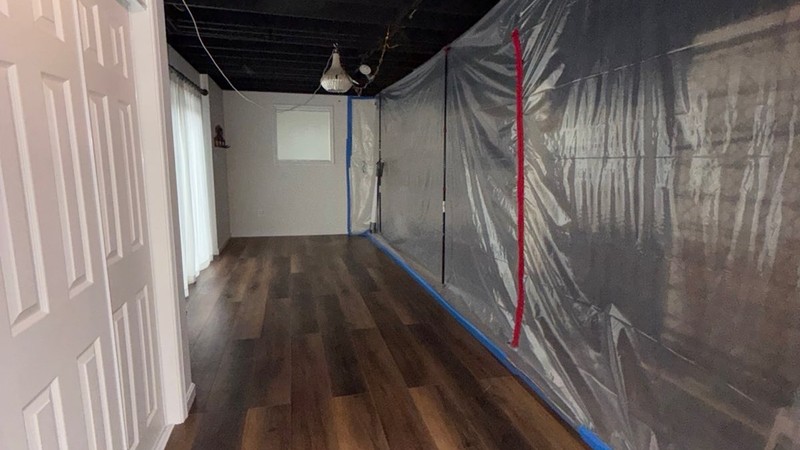
The 10-square-foot guideline comes from EPA guidance and aligns with how the industry scopes containment. Below that size, a careful homeowner may be able to clean a hard, non-porous surface with proper precautions. Above it, the job calls for containment barriers, negative air pressure, HEPA filtration, and controlled removal so spores don't migrate to clean areas.
Keep in mind that what you can see is often smaller than what's actually there. Mold on the visible face of drywall frequently means heavier growth on the hidden back side, inside the wall cavity. When the visible patch is already large, assume the real colony is larger — and don't disturb it before getting it assessed.
| Visible area | Typical risk | Recommended action |
|---|---|---|
| Under ~10 sq ft on hard surface | Localized | Careful DIY cleaning with PPE may be acceptable |
| Around 10 sq ft | Borderline | Get a professional assessment before disturbing it |
| Over ~10 sq ft or on porous material | High / spreading | Same-day professional remediation with containment |
Does a leak that's been wet for more than 48 hours count as a mold emergency?
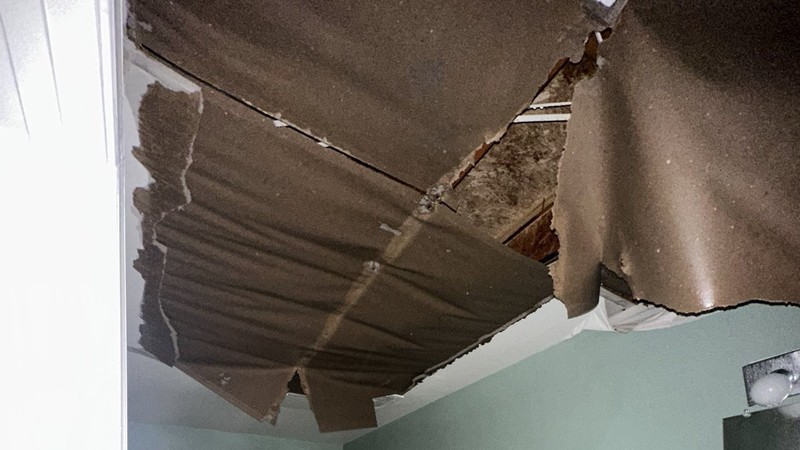
Yes. Any leak or water intrusion that has kept materials wet for more than 48 hours should be treated as a mold emergency, because that is roughly the window in which mold begins to colonize damp organic materials. Even if you can't see mold yet, the conditions for it are already in place, and every additional day feeds the growth.
This is the trigger homeowners most often underestimate. A slow pipe drip behind a cabinet, a roof leak during a rainy week, or a window that weeps during storms can keep materials saturated continuously. Because drywall, framing, and insulation hold moisture, the surface may look dry while the cavity behind it stays wet enough to support growth for days.
The right move is to stop the water source and get the structure professionally dried before mold has a reason to keep growing. Our water damage restoration team dries to verified moisture targets, and a typical structural dry-out runs about 4.5 days with daily moisture monitoring. Acting inside the 48-hour window often means drying the materials in place rather than tearing them out.
- Pipe or supply-line leaks hidden behind walls or cabinets
- Roof or flashing leaks during extended wet weather
- Window or foundation seepage that recurs with every storm
- Appliance lines (icemaker, dishwasher, water heater) that drip slowly
When do breathing symptoms make mold a same-day call?
When someone in the home develops new or worsening breathing symptoms — coughing, wheezing, chest tightness, a runny or stuffy nose, or eye and throat irritation — that line up with time spent indoors, mold becomes a same-day call. Health effects mean spores are already airborne at levels the body is reacting to, which is the point at which waiting is no longer acceptable.
Infants, older adults, and anyone with asthma, allergies, or a weakened immune system are more sensitive and may react before others notice a problem. A telltale sign is symptoms that ease when a person leaves the house and return when they come back. Pair that with a musty odor or visible growth and the connection is strong enough to act on.
We can't diagnose medical conditions, and anyone with serious or persistent symptoms should see a doctor. But from a property standpoint, health complaints are a clear trigger to stop guessing and get the home assessed and remediated. Our mold remediation process is designed to remove the source and restore healthy indoor air, not just hide the visible growth.
What should you do in the first hour of a mold emergency?
In the first hour of a mold emergency, your priorities are simple: stop the water, protect the people, and avoid disturbing the mold. Those three steps keep the problem from spreading while help is on the way.
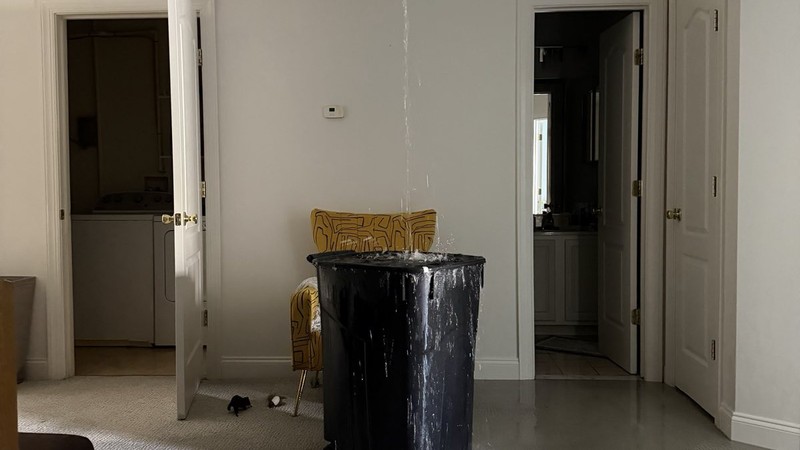
Stop the water at its source if you safely can — shut off a supply valve, place a bucket under an active drip, or close the main shutoff if a pipe has failed. Keep people, especially those with breathing issues, out of the affected room. Turn off your HVAC system if mold is anywhere near the equipment or its ducts so you don't circulate spores. Resist the urge to scrub or sand visible mold, which only launches more spores into the air.
Then call a licensed, insured team. Restoration Doctor responds 24/7 across the Virginia, Maryland, and Washington, D.C. tri-state area, and across the Northern Virginia core we're typically on-site within the hour. The crew that arrives knows how to contain the problem quickly and document it properly — containment, photos, and moisture readings from day one.
- Stop or contain the water source if it's safe to do so
- Move vulnerable household members out of the affected area
- Shut off the HVAC system if mold is near equipment or ducts
- Do not scrub, sand, or spray the mold — don't disturb it
- Photograph the damage and call 1-888-293-5663
Who pays for emergency mold remediation, and does insurance cover it?
Whether insurance covers mold usually depends on the cause: many policies cover mold that results from a sudden, accidental, covered water event (like a burst pipe), while mold from long-term neglect or deferred maintenance is often excluded or capped by a mold sublimit. Most of our customers end up filing an insurance claim, and we make that process as clean as possible.
Here's how billing works with us: we invoice you, the homeowner, directly — we work for you, not your insurance company. What we provide is a carrier-ready claim file that gives your adjuster everything they need, including an Xactimate scope, CompanyCam photo documentation, and daily moisture logs. That documentation is often the difference between a smooth claim and a disputed one.
As for cost, emergency mold and water work typically runs in the thousands, and the real figure depends on how much water was involved, how far it spread, how much material has to be removed, and how many days of drying it takes. We give you an accurate number after an on-site inspection — not a guess over the phone. You can learn more about the process on our insurance claims page.