Sewage Backup in Basement Cleanup: Who to Call — A Homeowner's Guide

BYSteve Jafari, General ManagerNORTHERN VIRGINIA, MARYLAND & D.C.
For sewage backup in basement cleanup, who to call is an IICRC-certified restoration company that follows ANSI/IICRC S500 water-restoration and Category 3 biohazard protocols — not a general handyman or a regular carpet cleaner. Sewage is Category 3 water, the most contaminated category under S500, so get people and pets off the affected level, shut down the HVAC, photograph everything, and then call for professional extraction and sanitization. You will often need a plumber too — the plumber stops the source, the restoration company cleans what the sewage touched. In the Virginia, Maryland, and Washington, D.C. tri-state area, Restoration Doctor answers 24/7 at 1-888-293-5663 with a median on-site arrival of 45 minutes.
Call 1-888-29-FLOODSewage backup in basement cleanup — who do you call first?
Call an IICRC-certified restoration company that handles Category 3 water and biohazard cleanup — that is who to call for sewage backup in basement cleanup. Do not start with a handyman, a plumber alone, or a standard carpet cleaner, because sewage is a biohazard that requires trained technicians, proper personal protective equipment, and antimicrobial sanitization under ANSI/IICRC S500 standards. Restoration Doctor answers 24/7 at 1-888-293-5663, with a median on-site arrival of 45 minutes across the Virginia, Maryland, and Washington, D.C. tri-state area.
A plumber and a restoration company do two different jobs, and you often need both. The plumber stops the source — clearing the clog, snaking the lateral line, or identifying a collapsed pipe. The restoration company handles everything the sewage touched: extraction of contaminated water, removal of porous materials that cannot be saved, structural drying, and antimicrobial treatment to make the space safe again. Trying to clean raw sewage yourself with a shop vac and bleach does not neutralize the bacteria, viruses, and parasites in Category 3 water, and it can push contamination deeper into walls and subfloor.
Restoration Doctor has completed over 10,000 restoration projects across Virginia, Maryland, and Washington, D.C., and sewage work is handled under documented Category 3 biohazard protocols from the first minute on site. That documentation — what was removed, why, and in what condition — also becomes the backbone of your insurance claim, so starting with the right company protects both your health and your wallet.
- Call a plumber to stop the source (clear the clog or repair the line).
- Call an IICRC-certified restoration company for extraction, sanitization, and drying.
- Avoid DIY cleanup — sewage is a Category 3 biohazard, not a simple spill.
- Keep a 24/7 restoration number handy: Restoration Doctor at 1-888-293-5663.
What should you do in the first 60 seconds of a 2am sewage backup?
In the first 60 seconds, get everyone off the affected level, shut down your HVAC, photograph the scene, and call an IICRC-certified responder. Those four moves protect your health and your insurance claim before any cleanup begins. Work the list in order, and do not step into standing sewage water to retrieve belongings — nothing in the basement is worth the exposure.
Why each step matters: evacuating the level limits exposure to contact pathogens and aerosolized contaminants. Shutting the HVAC stops your furnace or air handler from pulling contaminated air and spreading odor and bacteria through the ductwork to the rest of the house. Photographing the water line, the affected rooms, and the visible source documents the loss while it is fresh, which matters because about 83% of our customers end up filing an insurance claim. Calling a certified responder immediately starts extraction before the water wicks farther up drywall and into the subfloor — every hour of delay widens the scope of what has to be removed.
| Seconds | Action | Why it matters |
|---|---|---|
| 0–15 | Get people and pets off the affected level | Sewage is a Category 3 biohazard — limit exposure immediately |
| 15–30 | Shut off the HVAC system | Stops contaminated air from spreading through ductwork |
| 30–45 | Photograph the source, water line, and damaged items | Documents the loss for your insurance claim while it is fresh |
| 45–60 | Call an IICRC-certified responder (1-888-293-5663) | Starts professional extraction before water wicks deeper |
Should you touch the sewage or wait for professionals?
Wait for professionals — do not touch, wade through, or try to mop up raw sewage yourself. Category 3 water contains bacteria such as E. coli, viruses, protozoa, and other pathogens that can cause serious illness through skin contact, ingestion, or inhalation of aerosolized particles. Household bleach and a shop vac do not make a sewage-soaked basement safe, and attempting it exposes you and spreads contamination.
If you absolutely must enter briefly — for example, to shut off power at the breaker panel, and only if you can do so safely without standing in water — wear rubber boots, waterproof gloves, and eye protection, and wash thoroughly afterward. But the real answer is to stay out and let trained technicians in proper PPE handle it. Never run electrical equipment or plug anything in near standing water, and if water is near your electrical panel or outlets, treat the area as live and dangerous until a professional clears it.
Porous materials that absorbed sewage — carpet, pad, particleboard, drywall below the water line, insulation, upholstered furniture — generally cannot be decontaminated to a safe standard and are removed and disposed of as contaminated waste. This is standard practice under IICRC S500 guidance for Category 3 losses, not an upsell, and your restoration team will document each item removed for your claim file.
Is the sewage backup the city's fault or yours? The NoVA cause split
Whether the backup is the municipality's responsibility or yours usually comes down to where the blockage sits: on the public main or on your private lateral line. In most Northern Virginia jurisdictions, the homeowner owns and maintains the sewer lateral — the pipe running from the house to the connection at the public main — while the local authority maintains the main itself. If the clog or break is on your lateral, the cleanup and repair are typically your responsibility; if the public main backed up, the municipality or sewer authority may bear responsibility.
This split matters for two reasons. First, it determines who you report to and who may owe for repairs. Second, it affects your claim — a backup caused by a municipal main surcharge is documented differently than a failed private lateral or a clog you caused. Report a suspected main backup to your local water or sewer authority right away (for example, Fairfax County, the City of Alexandria, Arlington County, or your Maryland or D.C. utility), because they may need to inspect and because their records can support your claim. Regardless of fault, the biohazard in your basement still needs to be cleaned now — do not wait for a fault determination before calling for extraction.
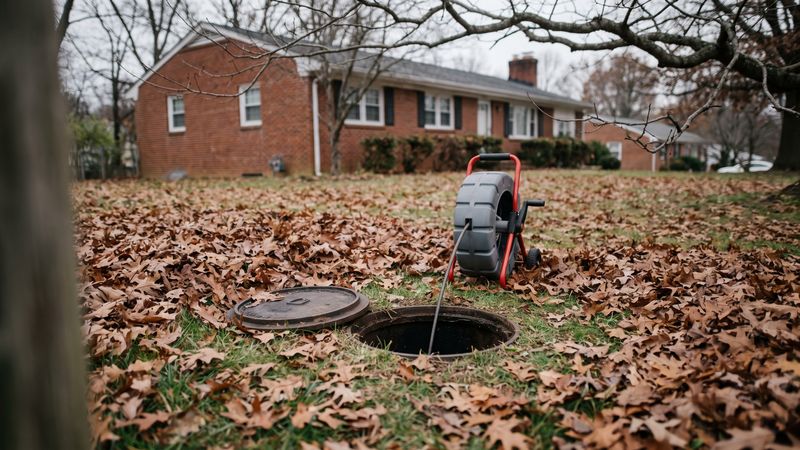
Common Northern Virginia causes we see include tree-root intrusion into older clay lateral lines, grease and wipe buildup, heavy-rain surcharge of the municipal system, and sump or backwater valve failures. A plumber's camera inspection of your lateral is the clearest way to locate the blockage and establish whether it sits on your side or the public side.
- Private lateral (house to main): typically the homeowner's responsibility.
- Public main: typically the local sewer authority's responsibility.
- Tree roots and grease usually point to a private lateral issue.
- Heavy-rain backups affecting multiple homes often point to a municipal main surcharge.
- Report suspected main backups to your county or city utility immediately.
Why is sewage backup treated as a Category 3 biohazard?
Sewage backup is classified as Category 3 water — the most contaminated category under ANSI/IICRC S500 — because it carries pathogenic, toxigenic, or other harmful agents that pose a significant health risk. This is the same category as rising floodwater from rivers or seawater, and it is why the cleanup follows biohazard protocols rather than ordinary water-damage steps. Category 1 is clean water from a sanitary source such as a broken supply line, Category 2 is 'gray water' with significant contamination, and Category 3 is 'black water' that includes sewage. Water can also degrade: Category 1 water left sitting, or water that passes through contaminated materials, can deteriorate into Category 2 or 3.
The classification drives the entire response. Technicians arrive in PPE, contain the affected area to prevent cross-contamination, extract the contaminated water, remove unsalvageable porous materials, apply EPA-registered antimicrobials to remaining surfaces, and then dry the structure to verified drying goals. Because moisture left in wall cavities and subfloor feeds mold growth — which can begin within 24 to 48 hours in damp conditions — the drying phase is monitored daily with moisture meters and documented in drying logs. Our typical structural dry-out runs about 4.5 days, verified with instruments rather than guessed. The goal is not just a dry basement but a sanitized, safe one.
| Category | Common name | Example source | Cleanup approach |
|---|---|---|---|
| Category 1 | Clean water | Broken supply line | Dry and restore |
| Category 2 | Gray water | Washing machine or dishwasher overflow | Clean, sanitize, dry |
| Category 3 | Black water | Sewage backup, toilet overflow with waste, rising floodwater | Biohazard protocol: remove porous materials, sanitize, dry |
What does professional sewage cleanup actually involve?
Professional sewage cleanup involves containment, extraction, removal of contaminated materials, sanitizing, structural drying, and documented verification — in that sequence. The work is methodical because skipping a step leaves behind either pathogens or hidden moisture that becomes mold. Here is what to expect when a certified crew arrives.
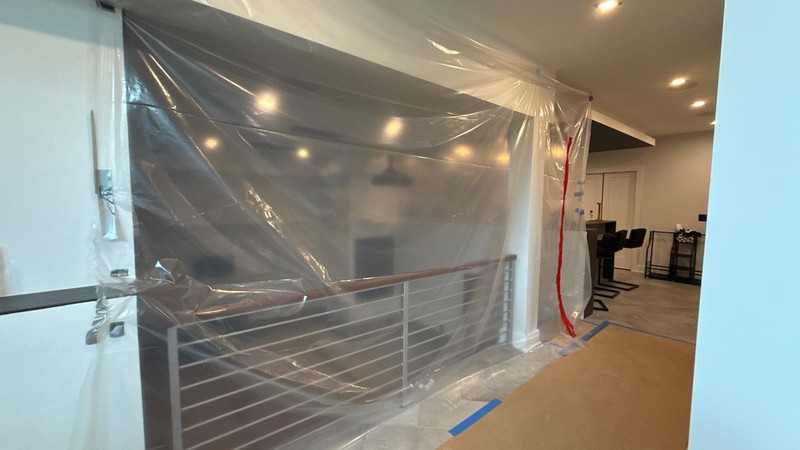
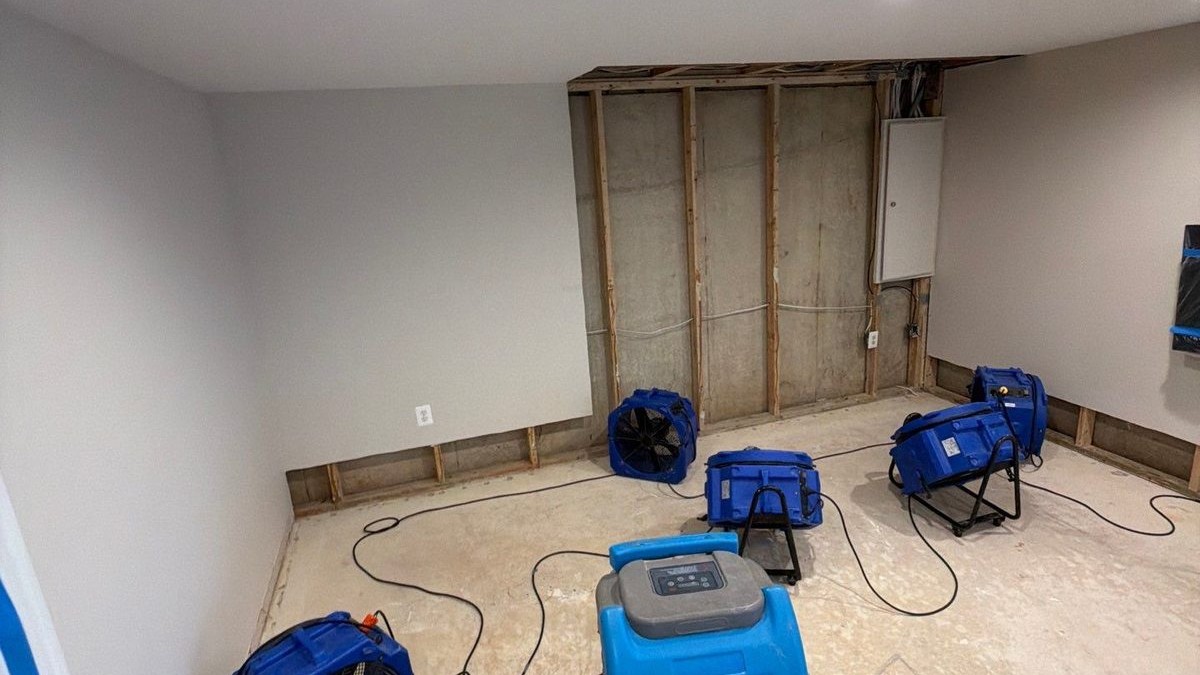
First, the team sets up containment and PPE and shuts off cross-contamination pathways, including the HVAC if you have not already. Next, they extract the standing contaminated water with truck-mounted or portable equipment. Then they remove porous materials that cannot be decontaminated — carpet, pad, saturated drywall, insulation, and affected furnishings — bagging them as contaminated waste and photographing each item. After removal, salvageable hard surfaces are cleaned and treated with EPA-registered antimicrobials. Finally, air movers and dehumidifiers dry the structure to verified drying goals, with daily moisture readings logged to confirm progress.
Throughout the job, Restoration Doctor builds a carrier-ready claim file: an Xactimate scope of the work, CompanyCam photo documentation, and daily moisture logs. We bill you, the homeowner, directly and hand you that complete file so you can submit it to your carrier — we work for you, not your insurance company. You can learn more about how we handle claims on our insurance claims page and about the full process on our sewage cleanup and water damage restoration service pages.
- Containment and PPE to stop cross-contamination
- Extraction of contaminated standing water
- Removal and bagging of unsalvageable porous materials
- Antimicrobial cleaning of salvageable hard surfaces
- Structural drying with daily monitoring to verified drying goals
- Documentation: Xactimate scope, CompanyCam photos, daily moisture logs
Does homeowners insurance cover a basement sewage backup?
Sewage backup is usually covered only if you carry a specific 'sewer and drain backup' or 'water backup' endorsement — it is typically not included in a standard homeowners policy by default. This is one of the most common coverage surprises homeowners discover after a loss, so check your declarations page for that endorsement and note its separate sublimit, which is frequently lower than your main dwelling limit. Your deductible still applies.
About 83% of our customers file an insurance claim, and the single biggest factor in a smooth claim is documentation created at the scene and during cleanup. That is why the photos you take in the first minute and the daily moisture logs we maintain matter so much. We provide a carrier-ready file, but the invoice comes to you — we work for you as the homeowner, not for the carrier. Keep every receipt, do not throw away removed materials until they are documented, and report the loss to your insurer promptly.
If the backup originated in the municipal main, you may also have a separate claim against the sewer authority, though those claims often carry strict notice deadlines and statutory caps. Document the cause, report it to the utility quickly, and keep your restoration file organized. Our insurance claims resource walks through what adjusters typically ask for.
How fast can help arrive, and how much will cleanup cost?
Help can arrive fast — Restoration Doctor targets on-site arrival within 60 minutes across the Virginia, Maryland, and Washington, D.C. tri-state area, with a median arrival of 45 minutes, 24 hours a day. Sewage is time-sensitive because contaminated water keeps wicking into materials and bacteria keep multiplying, so a quick response limits both the health risk and the scope of removal. The sooner extraction starts, the more of your basement can often be saved.
On cost, sewage cleanup typically runs in the thousands, and the honest answer is that the real figure comes after an on-site inspection. The price is driven by how much sewage backed up, how far it spread, how much porous material has to be removed and disposed of as contaminated waste, and how many days of structural drying the space needs. A few inches confined to a finished basement floor is a very different scope than waste that saturated drywall across multiple rooms. We give you a documented scope rather than a guessed number, and because Category 3 work requires biohazard handling and disposal, we would rather inspect than mislead you with a figure over the phone.
Whatever the hour, the right next step is the same: get people off the affected level, shut the HVAC, photograph the scene, and call. Reach Restoration Doctor 24/7 at 1-888-293-5663 or through our contact page, and see response details on our emergency water damage page.