Mold in Window Sills from Condensation: A Homeowner's Winter Guide

BYSteve Jafari, General ManagerNORTHERN VIRGINIA, MARYLAND & D.C.
Mold in window sills from condensation forms when warm, humid indoor air hits cold glass, drips onto the sill, and feeds mold growth on paint, caulk, and wood. Wiping it away never works long-term because the real driver is cold single-pane or failing glass combined with high indoor humidity. The permanent fix is lowering winter indoor humidity to roughly 30–50%, improving airflow at the window, and warming the cold surface — not just scrubbing. If the wood under the mold is soft, stained, or smells musty, moisture has already penetrated past the surface and the problem needs a professional inspection, not another wipe-down.
Call 1-888-29-FLOODWhy does mold keep growing in my window sills every winter?
Mold keeps returning to your window sills every winter because you are treating the symptom, not the cause. The black or green growth on the sill is fed by liquid water — condensation that forms when warm, moisture-laden indoor air touches cold glass and metal, then runs down and pools on the sill. As long as that condensation keeps forming, the mold keeps coming back no matter how many times you wipe it.
This is one of the most misunderstood mold problems we see across Virginia, Maryland, and Washington, D.C. Homeowners scrub the same window sills week after week all winter, assume the cleaner isn't strong enough, and never realize the growth is a humidity-and-cold-surface issue. The sill is simply the lowest point where the water collects and sits long enough for spores to germinate. Mold needs three things to grow: spores (always present in indoor air), a food source (paint, caulk, wood, and household dust all qualify), and moisture. Condensation supplies that last ingredient on a daily schedule all winter long.
Condensation mold is seasonal by nature. It flares up in the coldest months — roughly December through February in our region — because that is when the temperature gap between your warm indoor air and your cold window glass is largest. If your mold disappears in spring and returns every winter like clockwork, condensation is almost certainly the culprit. A roof leak, plumbing leak, or exterior water intrusion, by contrast, tends to show up year-round and often worsens after rain rather than after cold snaps.
What actually causes condensation on window sills?
Condensation on window sills is caused by warm indoor air hitting a surface that is colder than the air's dew point. When that happens, the water vapor in the air can no longer remain a gas, so it converts to liquid water directly on the glass, frame, and sill. The two variables that control it are how humid your indoor air is and how cold your window surface runs. Change either one and you change how much water forms.
Cold window surfaces are usually the real weak link. Single-pane glass, aluminum frames with no thermal break, and older windows with failed insulated-glass seals all run far colder than the surrounding wall. That cold surface acts like a cold drink on a summer day — water beads up on it almost instantly. Double-pane windows with intact seals and warm-edge spacers stay much closer to room temperature and condense far less under the same indoor conditions.
High indoor humidity supplies the water. Everyday living adds a surprising amount of moisture to indoor air: showering, cooking, running the dishwasher, drying clothes indoors, aquariums, houseplants, and simply breathing. In winter, homes are sealed tight and ventilate less, so that moisture has nowhere to go and the relative humidity climbs until it condenses on the coldest surface in the room — your window. Ironically, energy upgrades like new insulation and tighter windows can make condensation worse if no ventilation is added, because the same moisture is now trapped inside a tighter envelope.
- Single-pane glass or failed double-pane seals (cold surface)
- Aluminum or metal frames with no thermal break
- Indoor relative humidity above roughly 50% in winter
- Poor air circulation behind curtains and blinds
- Moisture from showers, cooking, humidifiers, and drying laundry
- Air-sealing or insulation upgrades that tightened the home without added ventilation
Is window sill condensation mold dangerous to my health?
Window sill condensation mold is usually a limited, surface-level problem, but it is not harmless — any indoor mold can trigger allergic reactions, asthma flare-ups, sinus irritation, and respiratory symptoms, especially in children, older adults, and anyone who is immune-compromised. The concern grows with the size of the colony and how long it has been actively growing and releasing spores into the room air.
In the terminology of the ANSI/IICRC S520 mold remediation standard, any visible, actual mold growth is Condition 3 contamination — regardless of how small the patch is. A few spots on a painted sill or caulk line are typically something a homeowner can manage safely once the moisture is controlled. The risk escalates when the water has been wicking into the wood sill, the drywall below the window, or the wall cavity for months. Hidden growth behind trim and inside the wall can become a much larger remediation project and a genuine indoor air-quality problem.
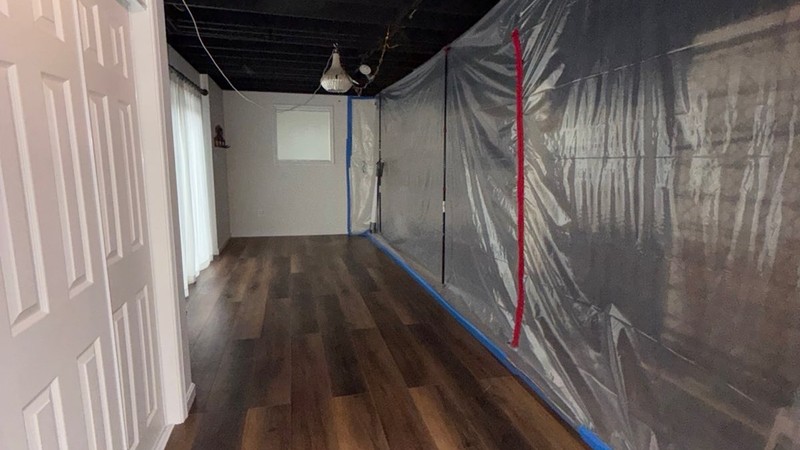
If you or your family notice worsening allergy-like symptoms that improve when you leave the house, a persistent musty odor near the windows, or visible growth spreading beyond the sill onto the wall, treat it as more than a cleaning task. Professional remediation under ANSI/IICRC S520 uses containment, controlled removal, and post-remediation verification specifically so spores are not spread through the rest of the home during the work.
How do I tell surface mold from a bigger hidden moisture problem?
You tell them apart by looking past the visible spot: surface mold stays on the glass, caulk, and painted sill and wipes away to reveal sound material underneath, while a hidden problem shows soft, swollen, or discolored wood, staining that bleeds onto the wall, a persistent musty smell, or paint that bubbles and peels. If the material under the mold is damaged, water has already penetrated and the problem is structural, not cosmetic.
A simple test is to press the sill and the drywall just below the window with your fingers. Firm, dry, and solid means the growth is likely still at the surface. Soft, spongy, cool, or crumbling material means moisture has been sitting long enough to compromise the wood or gypsum, and mold is very likely growing inside the wall where you cannot see it. Also check the lowest corners of the window frame, where water tends to pool longest, and the wall below the sill for faint tan or yellow staining.
Moisture meters tell the real story. During an inspection we take moisture readings in the sill, the surrounding framing, and the wall below, and compare them to a dry reference area in the same room — the same approach the IICRC S500 standard uses to establish drying goals after a water loss. Elevated readings behind an intact-looking wall are the single most common sign that a window problem is bigger than the homeowner thought.
| Clue | Likely surface mold | Likely hidden problem |
|---|---|---|
| Appears | On glass, caulk, painted sill | Spreads onto drywall/wall below |
| Wood condition | Firm and sound | Soft, swollen, or discolored |
| Odor | Mild, clears after cleaning | Persistent musty smell |
| Returns | Each cold snap | Year-round, worsening |
| Paint | Intact | Bubbling or peeling |
| Right response | Clean + control humidity | Professional inspection |
How do I clean mold off window sills safely?
To clean mold off window sills safely, protect yourself first, remove the growth physically with detergent and water rather than relying on bleach, dry the area completely, and understand this only works if you also fix the condensation that caused it. Cleaning without controlling humidity simply resets the clock until the next cold, humid stretch.
Wear gloves and an N95 respirator, open a window for ventilation, and wipe the mold with a cloth dampened in a mild detergent solution. Physical removal is what matters — the goal is to lift the mold off the surface, not just lighten its color. Bleach is a poor choice on porous wood sills: it bleaches the stain so the surface looks clean, but the chlorine does not penetrate the wood the way the hyphae do, and the water it leaves behind can actually support regrowth. Clean, dry the area thoroughly, and bag and discard the used cloths rather than rinsing them in the sink.
Only tackle small, surface-level spots yourself. The EPA's general guideline is that homeowners can handle mold patches smaller than about 10 square feet; anything larger, or any mold that has penetrated into wood, drywall, or the wall cavity, calls for professional remediation with proper containment so spores don't spread through the home. If the same sill keeps regrowing no matter what you do, stop cleaning and start diagnosing the moisture source — that is the real problem.
- Wear an N95 respirator and gloves, and ventilate the room
- Use detergent and water to physically wipe the mold away
- Avoid bleach on porous wood — it masks the stain and leaves growth behind
- Dry the sill and frame completely after cleaning
- Bag and discard contaminated cloths and sponges
- Stop and call a professional if growth keeps returning or has spread beyond the sill
How do I stop condensation mold from coming back for good?
You stop condensation mold permanently by attacking both halves of the equation: lower your indoor humidity and raise the temperature of the cold window surface. Do both and the air at the glass never reaches its dew point, so no water forms and mold has nothing to feed on. This is the step almost every homeowner skips when they just keep wiping.
Start with humidity, because it is the fastest win. Keep indoor relative humidity below about 50% in winter — 30 to 40% is ideal during cold weather, and the colder your windows run, the lower you should aim. Run bathroom and kitchen exhaust fans during and after showers and cooking, use a dehumidifier in persistently damp rooms, cover aquariums, move houseplants away from windows, turn down or shut off whole-house humidifiers during cold snaps, and avoid drying laundry indoors. A simple hygrometer costs little, lets you watch the number, and proves whether your fixes are working.
Then address the cold surface. The permanent cure for a chronically cold window is replacing single-pane glass or failed insulated units with modern double- or triple-pane windows, but there are effective interim measures: interior window insulation film, thermal cellular shades left slightly open at the bottom so air can still circulate, and improving insulation and air-sealing in the wall around the window. Air circulation matters more than most people realize — pull curtains and blinds back during the day so warm room air can reach the glass instead of trapping a cold, humid pocket against it, and make sure supply registers near windows aren't blocked by furniture.
- Keep winter indoor humidity between 30% and 50%
- Run exhaust fans during and after showers and cooking
- Use a dehumidifier in persistently damp rooms
- Improve airflow — don't trap cold, humid air behind closed curtains
- Add interior insulating film or thermal shades to cold glass
- Replace single-pane or seal-failed windows for the permanent fix
When should I call a professional for window mold?
Call a professional when the mold keeps returning despite cleaning, when it has spread beyond the sill onto the wall or into the wood, when you smell a persistent musty odor near the window, or when the material under the growth is soft or stained. These are signs the moisture has penetrated past the surface, and no amount of wiping will reach where the mold actually lives.
At that point the right move is an inspection with moisture meters to map how far the water has traveled, followed by remediation under the ANSI/IICRC S520 standard if hidden growth is confirmed. Proper containment and negative air pressure keep spores from spreading to clean parts of the home during removal — something a casual DIY scrub-down almost never accomplishes. If active water intrusion is found, our water damage restoration team addresses the moisture source and documents the dry-down with daily moisture logs so the repair is verified, not assumed.
Restoration Doctor serves homeowners across the Virginia, Maryland, and Washington, D.C. tri-state area, and an inspection is the fastest way to settle whether your window mold is cosmetic or structural. You can reach us 24/7 at 1-888-293-5663 or through our contact page. If an insurance claim is involved, we work for you, not your insurance company: we bill you directly and hand you a carrier-ready claim file — Xactimate scope, CompanyCam photo documentation, and daily moisture logs — so you stay in control of the process from the first reading to the final repair.