Musty Smell After Water Damage: A Homeowner's Guide

BYSteve Jafari, General ManagerNORTHERN VIRGINIA, MARYLAND & D.C.

A musty smell after water damage almost always means moisture is still trapped somewhere and the drying process failed. That earthy, damp odor is off-gassing from microbial growth feeding on wet drywall, subfloor, insulation, or framing you can't see. Under IICRC S500 guidance, materials that stay wet past 24 to 48 hours are at risk for microbial growth, so the smell can appear fast — and masking it won't fix it. The only permanent solution is finding the hidden moisture, drying every affected material to a verified dry standard, and remediating any mold that has already started.
Call 1-888-29-FLOODWhy do I still smell a musty odor after water damage?
If you still smell a musty odor after water damage, it's because something is still wet. That damp, earthy smell is not a leftover "memory" of the flood — it is a real-time chemical signal that moisture remains trapped in your building materials and microbes have begun to grow. In restoration, we put it plainly: if you can smell it, it's still wet.
The odor itself comes from microbial volatile organic compounds (mVOCs) — gases released by mold and bacteria as they digest damp organic material like paper-faced drywall, wood framing, carpet backing, and insulation. Those organisms cannot grow on dry material. So a persistent musty smell is direct evidence that moisture remains: the surface may feel dry to the touch while the core of the material is still holding water above its dry standard.
This matters because a musty smell after a supposedly "finished" dry-out is one of the most common reasons homeowners call us for a second opinion. Fans blowing on a wet wall for two days will dry the paint but can leave the drywall core, the bottom plate, and the wall cavity saturated. The smell is telling you the job isn't done.

What actually causes the musty smell after water damage?
The musty smell is caused by mold and bacteria releasing microbial volatile organic compounds as they feed on wet organic materials. Under the ANSI/IICRC S500 standard for water damage restoration — and EPA's guidance to dry water-damaged areas and items within 24 to 48 hours — materials left wet past that window are at risk for microbial growth, which means an odor can appear surprisingly fast after a leak or flood.
The specific compounds behind that smell include geosmin and 2-methylisoborneol, the same earthy-smelling molecules responsible for the scent of fresh soil and beets. Your nose is extraordinarily sensitive to them, detecting geosmin at concentrations measured in parts per trillion. That's why you can smell a problem long before you can see a single spot of visible mold.
Several conditions accelerate the odor after water damage:
- Trapped humidity: Water that evaporates into a closed wall cavity or under flooring has nowhere to go and re-condenses on cool surfaces.
- Organic food sources: Drywall paper, wood, household dust, and carpet backing all feed mold when wet.
- Warm temperatures: Most household molds thrive between roughly 68°F and 86°F — the normal indoor comfort range.
- Poor airflow: Closets, cabinets, subfloors, and crawl spaces stay damp and stagnant, concentrating the smell.
- Incomplete drying: Surface-only drying leaves the material core wet, so the smell returns days after the fans are removed.
Where does hidden moisture hide after water damage?
Hidden moisture after water damage most often hides inside wall cavities, under flooring, in the subfloor, behind baseboards, in insulation, and in the framing itself — all places a surface inspection or a dry-feeling wall will completely miss. Water travels down and outward by gravity and wicks upward through porous materials by capillary action, so the wet zone is almost always larger than the visible stain.
This is the core reason drying "fails" and the smell returns. A homeowner or a rushed crew dries what they can see and reach, but trapped water in concealed cavities keeps feeding microbial growth. A moisture meter and a thermal imaging camera tell a very different story than the surface does.
The mid-Atlantic climate makes this worse. In the Virginia, Maryland, and Washington, D.C. region, humid summers keep outdoor dew points high, so wall cavities, basements, and vented crawl spaces dry slowly on their own — and sometimes not at all without dehumidification. That's why a spring or summer water loss in this region is especially prone to a lingering musty odor.
Here are the usual hiding spots, ranked by how often we find lingering moisture during a musty-smell callback:
| Hidden location | Why it stays wet | Typical warning sign |
|---|---|---|
| Inside wall cavities | Water runs down inside the wall and pools on the bottom plate | Musty smell near outlets; cool spot on wall |
| Under vinyl or laminate flooring | Non-porous surface traps water against the subfloor | Cupping, peeling edges, soft spots |
| Subfloor and floor joists | Water wicks into wood and dries very slowly | Odor from below; springy floor |
| Behind baseboards and trim | Water hides in the gap between drywall and floor | Peeling paint, discoloration at base |
| Insulation (batt or blown-in) | Holds water like a sponge and won't release it | Persistent smell with no visible stain |
| Cabinet toe-kicks and under-sink bases | Enclosed, unventilated, near plumbing | Sharp musty smell when doors open |
| Crawl spaces and basements | Naturally humid, poor airflow, ground moisture | Whole-home musty smell that's worst downstairs |

Does a musty smell after water damage mean I have mold?
A musty smell after water damage strongly indicates active or developing mold or bacterial growth — the odor is literally produced by those organisms. It doesn't always mean you have a large, visible colony yet, but it does mean the conditions for one are present and the biological process has begun.
Under the ANSI/IICRC S520 standard for professional mold remediation, the goal is to return the indoor environment to a normal fungal ecology — not simply to hide the smell. Deodorizing sprays, ozone machines, and air fresheners can temporarily mask mVOCs, but they do nothing to remove the moisture or the microbial source. Within days, the smell comes back, because the mold is still alive and still eating.
The important distinction is timing. Caught in the first 24 to 72 hours and dried properly, most water losses never develop a mold problem at all. Left wet — or dried only on the surface — the same loss can turn into a full remediation project. If you're smelling that musty odor, the clock has already started. You can learn more about our approach on our mold remediation page.
How do professionals find and eliminate the source of the smell?
Professionals eliminate a musty smell by locating every pocket of trapped moisture with meters and thermal imaging, drying each material to a documented drying goal, removing anything too damaged to save, and remediating microbial growth at the source. Deodorizing is the last step, not the first — because the odor cannot return once the moisture and the mold are gone.
At Restoration Doctor, our process follows ANSI/IICRC S500 for water and S520 for mold. We don't guess where the water is; we measure it. Every job is documented with moisture readings, CompanyCam photos, and daily drying logs, so you can see the material actually reaching its dry standard — not just smelling better.
A typical source-elimination sequence looks like this:
- Moisture mapping: We use penetrating and non-penetrating moisture meters plus thermal imaging to define the true wet zone inside walls, floors, and ceilings.
- Containment: For any confirmed microbial growth, we set up containment and negative air pressure per S520 to prevent spores from spreading to clean areas.
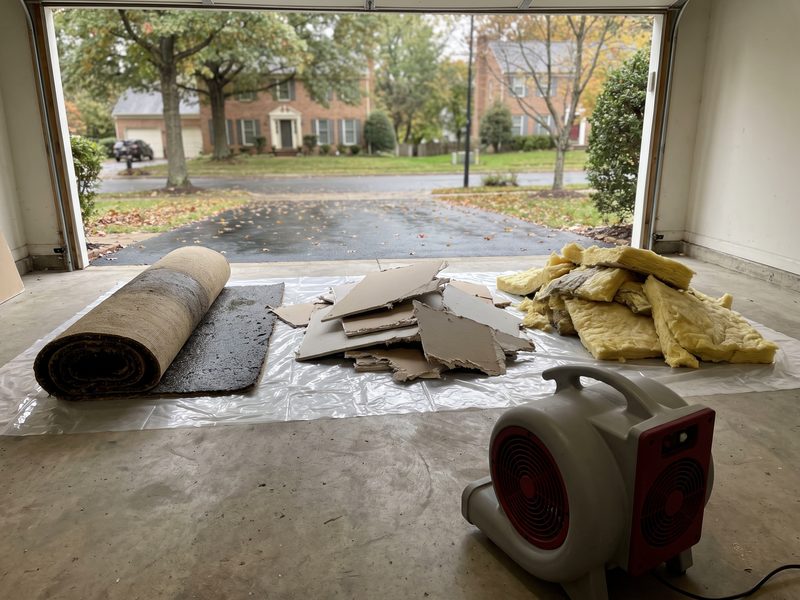
- Controlled demolition (if needed): Unsalvageable wet drywall, insulation, and flooring are removed rather than dried in place.
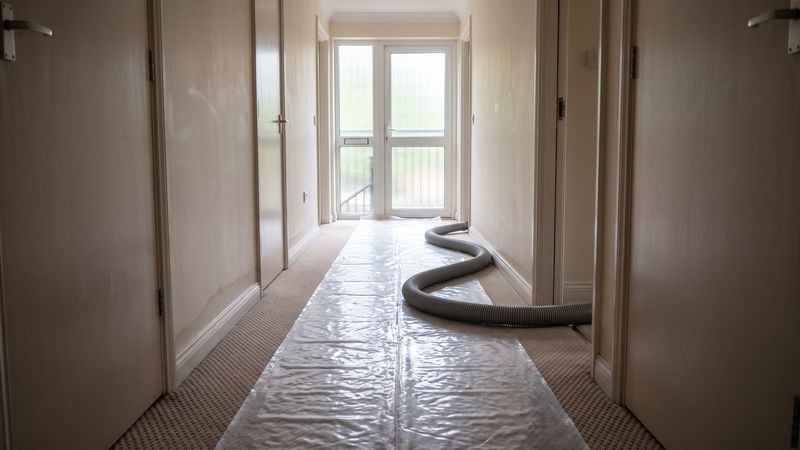
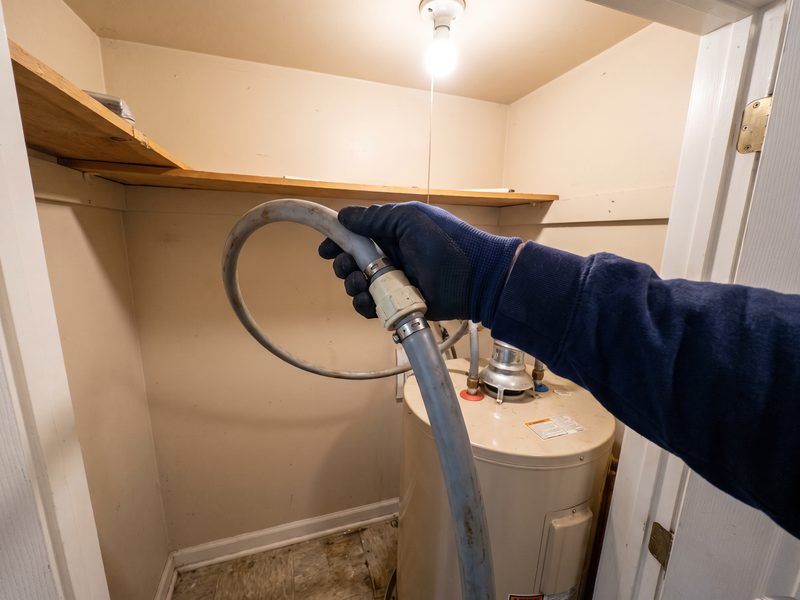
- Structural drying: Air movers and commercial dehumidifiers create the psychrometric conditions — warm, dry, moving air — that pull water out of the material core, not just the surface.
- Daily monitoring: We track temperature, relative humidity, and material moisture content every day until readings hit the documented drying goals.
- Antimicrobial treatment and deodorization: Only after the material is dry and the source is removed do we treat and deodorize, so the smell stays gone.

Can I get rid of the musty smell after water damage myself?
You can sometimes resolve a very minor, freshly-caught musty smell yourself — but only if the water source is stopped, the affected area is small, and you can dry the material completely within 24 to 48 hours. If the smell persists after you've dried the visible surface, the moisture is hidden deeper than you can reach, and DIY methods will only mask the problem.
The single biggest DIY mistake is treating the smell instead of the water. Ozone generators, bleach, and scented sprays can knock down the odor for a day or two, but they never touch the wet drywall core, the soaked bottom plate, or the saturated insulation producing the mVOCs. The smell always comes back — and meanwhile, the mold keeps growing.
If you want to attempt it, here's the honest scope of what DIY can and can't do:
- Do stop the water source first — a running leak makes drying impossible.
- Do increase airflow and run a dehumidifier to bring indoor relative humidity below 50%.
- Do remove and discard saturated porous items (carpet pad, wet cardboard) that can't be dried quickly.
- Don't rely on air fresheners, ozone, or 'mold sprays' as a cure — they mask, they don't dry.
- Don't paint or seal over a musty wall; you'll trap moisture and grow mold behind the paint.
- Don't ignore a smell that returns after drying — that's confirmation of hidden moisture.
How long should it take for the musty smell to go away?
With proper professional drying, the musty smell typically fades as the materials reach their verified drying goals — for most residential losses, that's a structural dry-out of roughly three to five days, monitored daily. If a smell lingers well beyond that, it means moisture is still present or microbial growth was not fully removed.
Timing depends on how long the material was wet, how porous it is, and how deep the water penetrated. A quickly-caught spill in an open room dries far faster than water that sat inside a wall cavity for a week. The key is that professional drying targets measurable dryness — specific moisture content goals for wood, drywall, and subfloor, referenced against dry standards for those materials — rather than a subjective "seems dry."
If you paid for a dry-out and the smell returned days or weeks later, that's a red flag that the job was surface-only. This is one of the most common reasons homeowners call us for a re-inspection. We'll take fresh moisture readings and tell you honestly whether the material actually reached dry — and if it didn't, why the smell came back.

When should I call a professional about a musty smell after water damage?
Call a professional as soon as a musty smell appears after water damage and doesn't disappear within a day or two of drying — especially if you can't see the source, the affected area is larger than a small spot, or anyone in the home has asthma, allergies, or a weakened immune system. A lingering musty odor is your evidence that hidden moisture and microbial growth are present, and both get worse the longer they're left.
Restoration Doctor responds 24/7 across the Virginia, Maryland, and Washington, D.C. tri-state area, and a large share of the calls we take start with exactly this sentence: "It still smells musty and I don't know why." Our team is based at 8609 Westwood Center Dr, Ste 110-1062, Vienna, VA 22182, and we bring moisture meters and thermal imaging to every inspection so the answer is measured, not guessed.
One more thing that puts homeowners at ease: many of our customers file an insurance claim, and we make that straightforward. We bill you, the homeowner, directly — never your insurance company — and hand you a carrier-ready claim file with an Xactimate scope, CompanyCam photo documentation, and daily moisture logs. That means we work for you, not your insurer. If you're smelling that musty odor, reach out through our contact page or call 1-888-293-5663, and see our water damage restoration and emergency water damage pages for what happens next.