Smoke Damage From a Neighbor's Fire: Who Pays for the Cleanup?
BY RESTORATION DOCTOR · NORTHERN VIRGINIA, MARYLAND & D.C.
When a neighbor's fire fills your unit with smoke, three policies can respond: your own, the association's master policy, and the neighbor's liability coverage. Which one moves first has little to do with who caused the fire, so the fastest way to protect yourself is to open your own claim, document the residue before you touch it, and stop the odor from setting.
Call 1-888-29-FLOODWhose insurance responds when the fire was not in your unit?
When smoke damage from a neighbor's fire reaches your unit, your own policy is almost always the one that responds first. Your homeowner or renter coverage pays for your interior finishes, your contents and your loss of use, then your carrier decides separately whether to chase anyone else for reimbursement.
That surprises people. The fire started in someone else's kitchen, so the instinct is to wait for that owner's insurer to call. It will not call. Liability coverage responds only after fault is established, and that takes months. Meanwhile the residue on your walls keeps reacting with the surfaces underneath.
There are three routes to money in a stacked building, and they run on different clocks. Your own policy is the fast one. The association's master policy covers the building, and sometimes the original unit finishes, depending on how the governing documents split responsibility. The neighbor's liability coverage is the slow one, and in Virginia it is also the least predictable.
| Route | What it usually reaches | How fast it moves | What trips it up |
|---|---|---|---|
| Your own unit-owner or renter policy | Smoke cleaning, contents, odor work and loss of use, after your deductible | Days. You open it and an adjuster is assigned | Contents limits and category sub-limits |
| The association's master policy | Common areas, structure, and in some buildings the original finishes | Weeks. The manager or board opens it, not you | A large deductible that may be assessed to owners |
| The neighbor's liability coverage | Reimbursement to your carrier if negligence is proven | Months, sometimes longer | Fault must be established, and Virginia sets a hard standard |
| Loss assessment endorsement on your policy | Your share of a deductible or shortfall the association assesses | Follows the association's timeline | It cannot be added after the fire |
Does your own policy cover smoke damage from someone else's fire?
In most unit-owner and renter policies, smoke is a named peril, and the policy does not ask where the fire started. A standard HO-6 unit-owner form covers sudden and accidental damage from smoke to the parts of the unit you are responsible for, plus your personal property, subject to your deductible and your limits.
What that means on the ground: paint, cabinet boxes, closet contents, the mattress, the curtains, the HVAC filter: all of it sits inside your claim. So does professional cleaning of surfaces that show residue but no burn. Renters sit in a similar position under an HO-4 form, which covers contents and loss of use but not the building.
Two details cause most of the friction. Contents coverage is frequently written at actual cash value unless you bought replacement cost, and smoke ruins soft goods quietly, so a depreciated settlement on a wardrobe can be a shock. Some carriers also apply sub-limits to categories such as electronics, and smoke is exactly the loss type that hits those categories hard.
Call your own carrier the day you smell smoke, not the day the association finishes its investigation. Opening your claim waives nothing against anyone else, and it starts the clock on the only coverage you control.
What does the association's master policy cover in this situation?
The master policy covers the building, and how far it reaches into your unit depends on which of three common forms your association carries. Bare walls coverage stops at the unfinished surfaces. Single entity coverage includes the finishes the developer installed but not your upgrades. All-in coverage reaches unit finishes and built-in fixtures.
So the same smoke event produces different answers in two buildings on the same street. In a bare walls building, the drywall face, the paint, the flooring and the cabinets are yours. In an all-in building, much of that is the association's, and your policy is left covering contents, upgrades and loss of use.
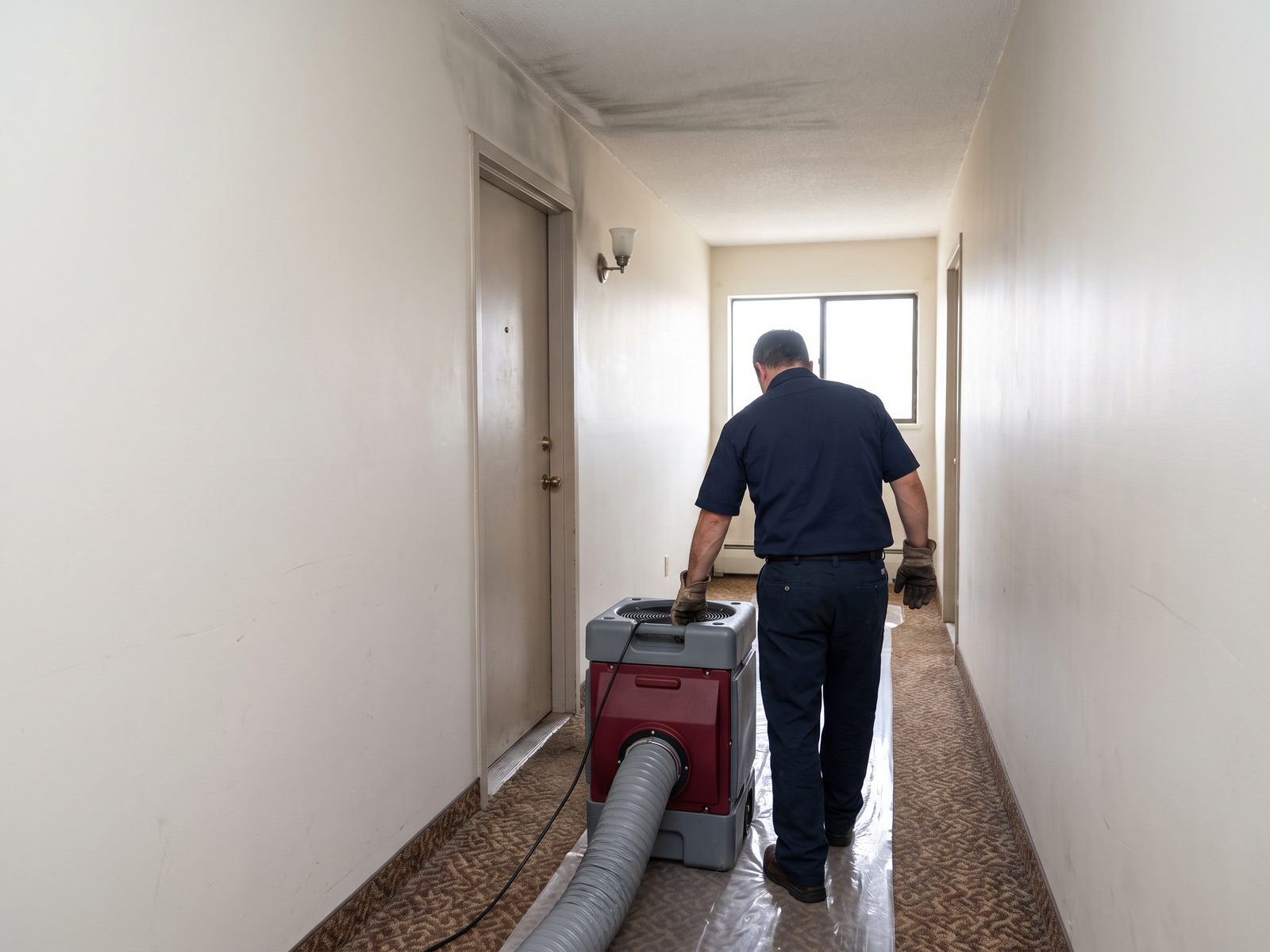
The master policy almost always covers the corridors, stairwells and ventilation chases that carried the smoke to you. Corridor and shaft cleaning is often what finally stops odor from re-entering units that have already been cleaned. If the common areas are left dirty, units downstream keep smelling smoke and everyone blames the cleaning contractor.
Ask the property manager for the master policy declarations page and the bylaw section that allocates repair responsibility. Your adjuster will want the same two documents in week one.
- Bare walls: your policy covers drywall surface, paint, floors, cabinets, contents
- Single entity: the master policy covers builder-grade finishes, you cover upgrades
- All-in: the master policy reaches unit finishes and fixtures, you cover contents and loss of use
- The bylaws, not the agent, decide where the line falls
Who pays the master-policy deductible, and can it be assessed to you?
Yes. In many Virginia associations the master-policy deductible can be assessed back to owners, and on a fire loss that deductible is often a five-figure number. Associations carry high deductibles to hold the premium down, and the bylaws frequently allow the board to pass it, or a share of it, along as a special assessment.
Sometimes the whole deductible lands on the unit where the fire started. Sometimes it is spread across every owner by percentage interest. Sometimes it falls on the owners whose units were repaired. All three appear in governing documents around Northern Virginia.
This is where loss assessment coverage earns its keep. It is a small endorsement on your unit-owner policy that pays your share of an assessment tied to a covered loss, up to the limit you selected. Many owners carry a token limit chosen years ago and never revisited, which is not much help against a fire deductible.
If you are reading this before anything has happened, that endorsement is the cheapest thing on this page to fix. After a fire it cannot be added retroactively.
What is subrogation, and why might your carrier pursue the neighbor?
Subrogation is your insurer stepping into your shoes to recover what it paid you. Once your carrier settles your smoke claim, it inherits whatever right you had to collect from whoever caused the fire, and it pursues that party at its own expense.
For you this is mostly good news, and it is another reason to file early. Your carrier has investigators, cause and origin experts and lawyers. You do not. If the recovery succeeds, most policies return your deductible out of what is collected, often in proportion to the amount recovered.
Two catches are worth knowing. Subrogation can run long after your unit is cleaned and repaired, so do not expect the deductible back quickly. And the investigation depends on the fire scene staying undisturbed, in a unit you have no control over.
Do not sign anything from another owner, a contractor or another insurer that releases claims. A release signed to speed up a small payment can quietly end your carrier's right to recover.
Why is proving the neighbor's negligence harder in Virginia?
Virginia still applies contributory negligence, which means a claimant found even slightly at fault can be barred from recovering anything. Most states use a comparative system that reduces the award by the claimant's share of blame. Virginia does not work that way, and that difference changes how liability claims are valued here.
Fault also has to be proven, not assumed. A fire starting in another unit is not by itself proof that the owner did anything wrong. Cooking fires, failed appliances, manufacturing defects and electrical faults inside the walls all happen without anyone being careless.
There is a further wrinkle in stacked housing. Many governing documents and many master policies contain waiver of subrogation language among the association, the owners and their insurers. Where it applies, one owner's carrier may have given up the right to pursue another owner before the fire happened.
None of this is legal advice. Treat the neighbor's policy as a possible late refund rather than a plan, and take the liability question to a Virginia attorney, not to your contractor.
What does smoke actually do to contents in a unit that did not burn?
Smoke is not soot alone. It is a mix of fine particulate, acidic gases and condensed oils that travels wherever air travels, and it keeps working on surfaces after the fire is out. That is why a unit two floors up, with no flame damage, can end up with a larger contents loss than the unit that burned.
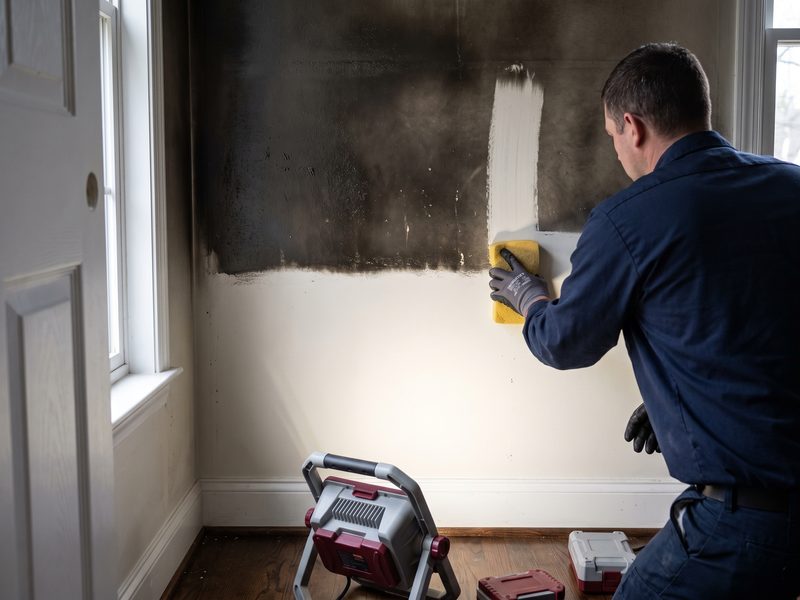
The mechanism is chemistry plus airflow. Combustion products carry acids that etch soft metals, chrome, marble and mirror backing. On painted walls the residue starts as a film you can wipe, and within days it begins to bond, which is why early cleaning costs less than late cleaning. Shadowing above door frames shows where the air moved fastest.
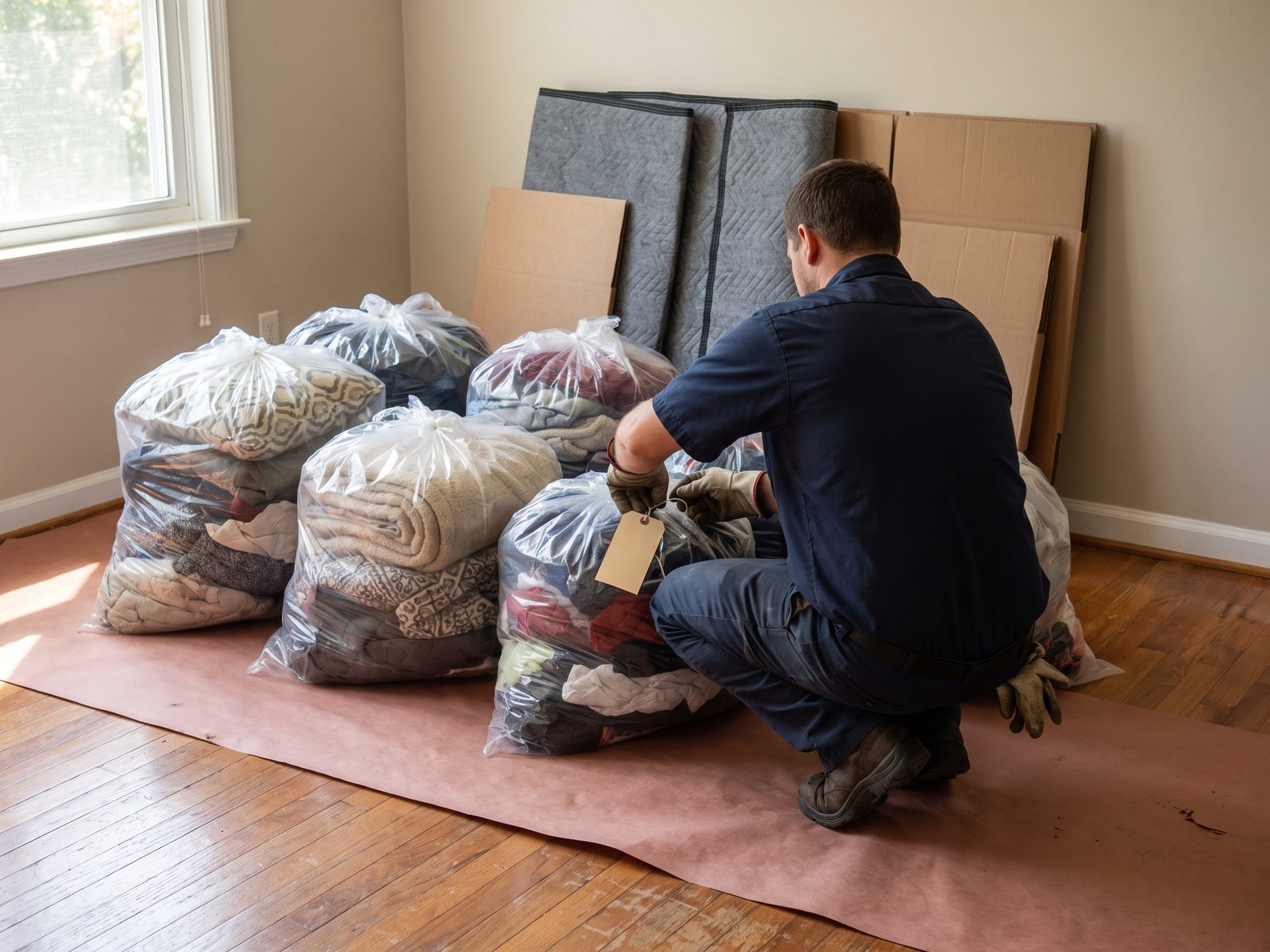
Textiles are the odor reservoir. Upholstery, mattresses, drapery, carpet pad and anything with an open weave hold the oily fraction, and they release it back into the air for months if they are not treated. Wiping the walls and declaring victory is the most common mistake we see in a neighboring unit, because the smell returns the first warm day the air handler runs.
The ventilation path matters as much as the distance. Shared chases, corridor pressure and return ducts carry smoke past closed doors, so plan on the HVAC system, the filters and the duct runs being part of the scope. Our District team handles the same attached-building problem across the river, and you can read how they approach fire and smoke restoration in the District at https://restorationdoctordc.com/services/fire-damage-restoration.
- Acidic residue etches chrome, marble, mirrors, appliance finishes within days
- Painted surfaces go from wipeable film to bonded residue quickly
- Soft goods and mattresses hold the oily fraction and keep releasing odor
- The HVAC filter, the coil, the duct run recirculate residue until cleaned
What should you do in the first 48 hours, and what should you not clean?
Do three things quickly: make sure the building has cleared you to return, open your own claim, and photograph every affected surface before anyone touches it. After that, the most valuable thing you can do is stop making the loss worse, and most well-meaning cleaning makes it worse.
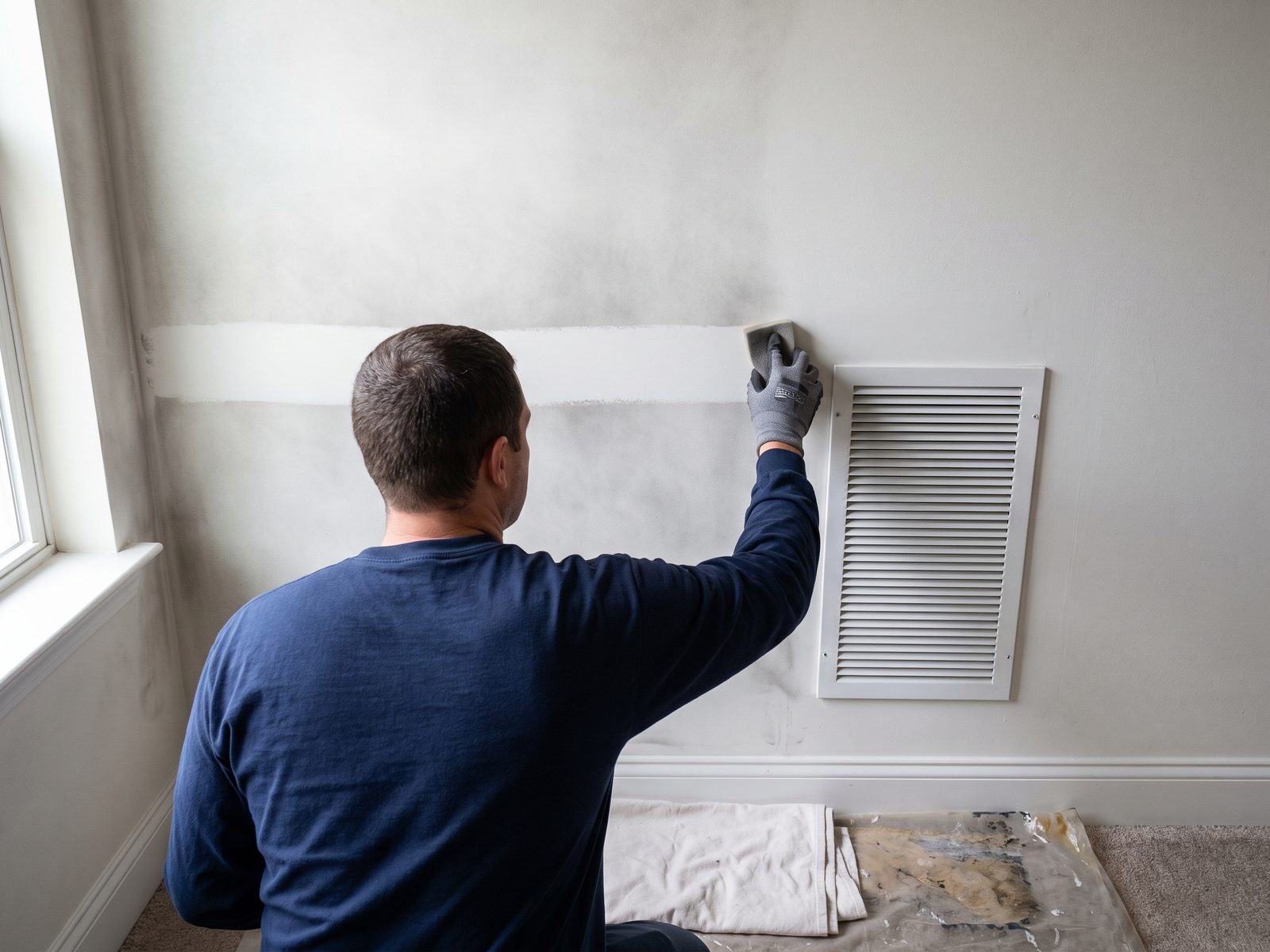
The residue on your walls is oily and acidic. A household sponge and an all-purpose spray push it into the paint and into the drywall paper underneath, which turns a cleanable surface into a repaint. Heat sets odor, so running the unit warm, steam cleaning upholstery or laundering smoke-exposed clothing in hot water can lock the smell in permanently. Air fresheners and ozone machines mask it without removing the source.
Ventilation is the one thing you can usually do safely, if the outdoor air is clean and the building allows it. Beyond that, keep the HVAC off until someone has checked whether the system pulled residue into the ducts, and bag exposed soft goods loosely rather than sealing them in plastic.
Crews work in the order the IICRC S700 fire and smoke standard sets out, chosen by residue type. The wrong first step cannot be undone.
- Do photograph every room and the inside of closets and drawers before cleaning
- Do not wipe walls or ceilings with a wet sponge or a general-purpose spray
- Do not launder or dry-clean smoke-exposed clothing in heat before it is evaluated
- Do not throw anything away before it is photographed
Where do you stay, and who pays for it?
Most unit-owner and renter policies include loss of use coverage, sometimes called additional living expense, and it pays the reasonable extra cost of living somewhere else while your unit is uninhabitable. Your own policy funds it, not the association's and not the neighbor's.
Uninhabitable is the word that causes arguments. Heavy odor, no working HVAC, no power or a building-wide order keeping residents out will generally qualify. A faint smell in a bedroom often will not, at least not without a physician's note or an air quality report behind it. Ask your adjuster in writing what standard is being applied before you book anything long.
Keep every receipt, and understand that loss of use pays the difference between your normal cost of living and your temporary cost, not the whole hotel bill in isolation. Meals, pet boarding, laundry, extra mileage: those usually qualify. Rent you already pay on the damaged unit is not an extra expense.
In buildings where many units are displaced at once, the manager may organize relocation and then seek reimbursement. Confirm in writing who is paying and for how long, because a verbal arrangement that ends abruptly leaves you holding the balance.
How do you document a smoke loss when there is no fire damage to photograph?
You document residue, odor, airflow. Those are the things an adjuster can be shown. A smoke claim in an unburned unit is won on documentation quality, since there is no charred beam to point at and the damage is measured in film and smell.
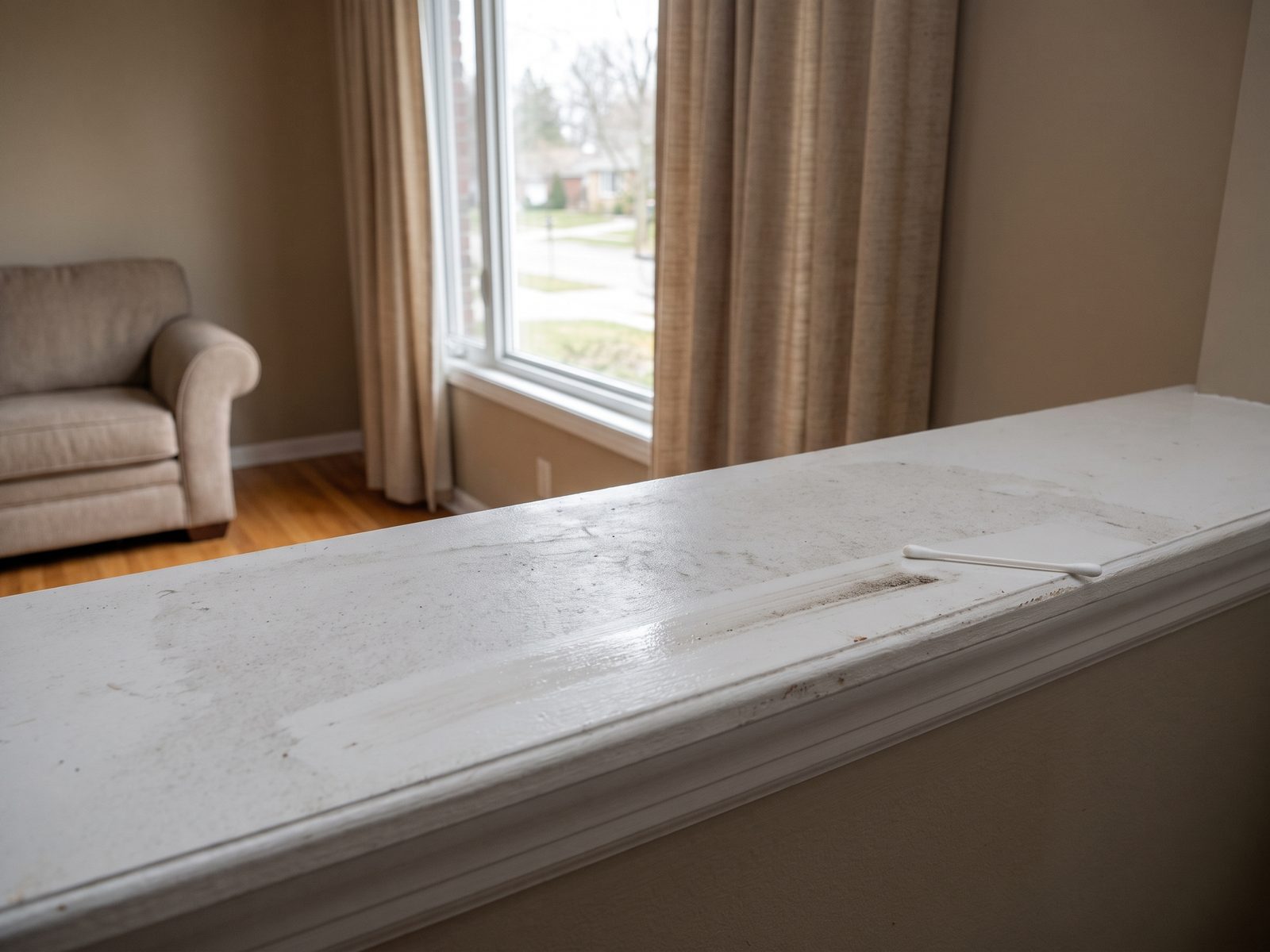
Start wide and work close. Photograph each room from two corners, then close on the places residue collects: the tops of door casings, the return air grille, white surfaces near the ventilation path. A swab test on a white cloth beside an untouched control area is the most persuasive image in a smoke file, because it shows transfer rather than asking someone to imagine it.
Then inventory the contents room by room, before anything is moved. Note brand, age and condition, open closets and drawers for the camera, and photograph electronics with the vents visible. Keep the corridor and common area photographs too, because they explain how smoke reached a unit that never saw flame.
In our experience the smoke claims that settle without a fight are the ones where somebody photographed the loss before touching anything. Cleaning first and documenting second is the most expensive sequence error in this process.
Standards and public guidance behind the advice above:
- IICRC S700, the standard for professional fire and smoke damage restoration: https://iicrc.org/s700/
- U.S. Fire Administration home fire guidance: https://www.usfa.fema.gov/prevention/home-fires/
- EPA indoor air quality guidance: https://www.epa.gov/indoor-air-quality-iaq