What To Do After a House Fire: A Recovery Checklist
BY RESTORATION DOCTOR · NORTHERN VIRGINIA, MARYLAND & D.C.

What to do after a house fire, in order: make sure everyone is safe and accounted for, do not re-enter until the fire department clears the structure, notify your insurance carrier, and get the property secured against weather and intrusion. Then document everything with photos before any cleanup begins, and bring in an IICRC-aligned restoration team to handle smoke, soot, firefighting water, and structural drying — moisture left behind past the 24-to-48-hour drying window puts materials at risk for mold growth. Restoration Doctor responds 24/7 across the Virginia, Maryland, and Washington, D.C. tri-state area, bills you directly, and hands you a carrier-ready claim file so you stay in control of your recovery.
Call 1-888-29-FLOODWhat should you do first after a house fire?
First, make sure every person and pet is out of the home and accounted for, then call 911 if you haven't already and stay out until firefighters tell you it is safe. Your only priority in the first minutes is life safety — belongings, paperwork, and cleanup all come later.
Knowing what to do after a house fire starts with resisting the instinct to rush back inside for valuables. Structures weakened by fire can collapse, and the air inside may still contain carbon monoxide, superheated gases, and toxic combustion byproducts. Let the fire department confirm the fire is fully extinguished and the structure is stable.
Once you are safely outside, gather your household in one spot, check for injuries, and get medical attention for anyone with burns or smoke inhalation. If you have somewhere to go — family, a neighbor, a hotel — plan for at least one night away. Most homes are not immediately habitable after a fire because of smoke residue, water from suppression efforts, and disabled utilities.
- Get everyone out and confirm all people and pets are accounted for.
- Call 911 and let the fire department fully extinguish and clear the scene.
- Do not re-enter until the structure is declared safe.
- Seek medical care for burns, cuts, or smoke inhalation.
- Arrange temporary lodging — your policy may cover this under Loss of Use.

When is it safe to re-enter your home after a fire?
It is only safe to re-enter after the fire department officially clears the structure and the utilities have been assessed. Even a fire that looks small can leave hidden hazards behind walls, in the attic, and in the electrical system, so wait for the all-clear before stepping back inside.
After a fire, gas lines, electrical wiring, and structural framing may all be compromised. Do not turn utilities back on yourself — the fire department or a qualified professional should shut off and inspect gas, electricity, and water before anything is reactivated. Smoldering embers can also reignite hours later, especially in wall cavities and insulation.
When you do get temporary access, wear closed-toe shoes, long sleeves, gloves, and an N95 or better respirator if you have one. Soot and ash are irritating to the lungs and skin and can contain hazardous particulates. Watch for sagging ceilings, weakened floors, and standing water, which frequently sits near electrical hazards. If anything feels unstable underfoot, back out and wait for professionals.
How and when should you contact your insurance company?
Contact your insurance carrier as soon as you and your family are safe — ideally the same day as the fire. Prompt reporting starts your claim, and most homeowner policies cover emergency board-up, temporary lodging under Loss of Use, and steps taken to protect your contents from further damage.
When you call, ask specifically about your Additional Living Expenses or Loss of Use coverage so you know what lodging, meals, and travel costs may be reimbursed while your home is uninhabitable. Get your claim number, your adjuster's name and contact information, and written confirmation of what the carrier authorizes for emergency services.
Here is an important distinction about how restoration billing works: Restoration Doctor bills you, the homeowner, directly — not your insurance company. We work for you, not your carrier. What we provide is a carrier-ready claim file: an Xactimate scope of the loss, CompanyCam photo documentation, and daily moisture and drying logs. That documentation is exactly what an adjuster needs to evaluate your claim, and because we advocate for your interests rather than the insurer's, nothing in our scope is quietly minimized to protect a payout.
If you feel overwhelmed by the claim process, our team can walk you through it. Learn more about how we support the paperwork side on our insurance claims page.

How do you secure your property after a fire?
Securing your property means boarding up broken windows and doors, tarping damaged roof sections, and preventing unauthorized entry — and it should happen within hours, not days. An unsecured fire-damaged home is exposed to weather, theft, and further structural decline, and most insurance policies require you to take reasonable steps to prevent additional damage after a loss.
Fire suppression leaves a home wide open: firefighters often break windows, cut roof ventilation holes, and force doors to fight the blaze and check for hidden fire. Those openings let in rain, wind, animals, and trespassers. Emergency board-up and tarping stop the loss from getting worse and protect what can still be salvaged inside.
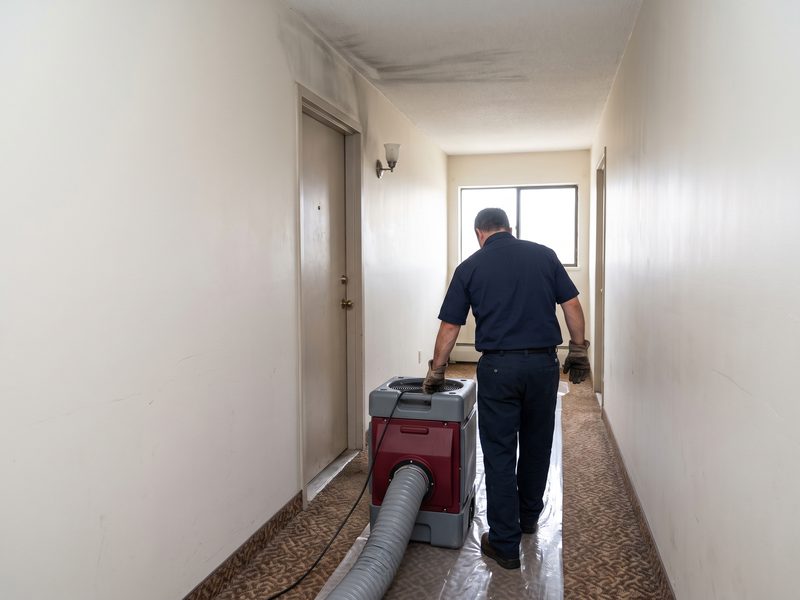
This is also where water damage becomes a parallel emergency. The water used to extinguish a fire soaks into drywall, flooring, framing, and insulation, and that trapped moisture needs to be dried within 24 to 48 hours to prevent mold growth — a condition that, once established, must be remediated under the IICRC S520 mold remediation standard. Rapid structural drying is often needed alongside fire cleanup, which is why our teams handle both. If your home has standing water or saturated materials, our emergency water damage response can begin drying immediately.
- Board up broken windows and doors to block weather and intruders.
- Tarp compromised roof sections to keep rain out.
- Extract standing water from firefighting efforts before it spreads.
- Set up containment so soot and moisture don't migrate into clean areas.
- Keep a copy of any board-up authorization for your claim file.
What documentation do you need after a house fire?
Document everything before you move, throw away, or clean anything. Photograph and video every damaged room, item, and structural element, and make a written inventory of destroyed belongings with approximate ages and values — this record is the backbone of your insurance claim.
Do not discard fire-damaged items until your adjuster has seen them or you have thorough photos, even things that are clearly ruined. Adjusters value what they can verify, and premature cleanup or disposal can reduce what you are able to recover. If evidence of an item existed before the fire — social media photos, old phone backups, or purchase receipts — gather that too.
Keep every receipt connected to the fire: hotel stays, meals, replacement clothing, and any emergency purchases. These support your Loss of Use claim. Also request the fire department's incident report, which documents the cause, date, and time of the fire and is frequently requested by carriers.
When Restoration Doctor is on the job, much of this documentation is handled for you. We capture CompanyCam photos throughout the process, build an Xactimate scope of the damage, and maintain daily moisture logs during structural drying — all of which fold directly into your claim file.
| Document | Why it matters |
|---|---|
| Photos & video of all damage | Proves the extent of loss before cleanup begins |
| Written contents inventory | Lists destroyed belongings with age and value estimates |
| Fire department incident report | Confirms cause, date, and time for your carrier |
| Receipts for lodging, meals, purchases | Supports your Loss of Use / Additional Living Expenses claim |
| Restoration scope & photo logs | Carrier-ready evidence of professional mitigation |

What does professional fire damage restoration handle?
Professional fire damage restoration handles the full recovery: soot and smoke residue removal, odor neutralization, water extraction and structural drying, salvage of contents, and repairs to bring the home back to a safe, livable condition. It is far more involved than surface cleaning because smoke and soot penetrate deep into porous materials.
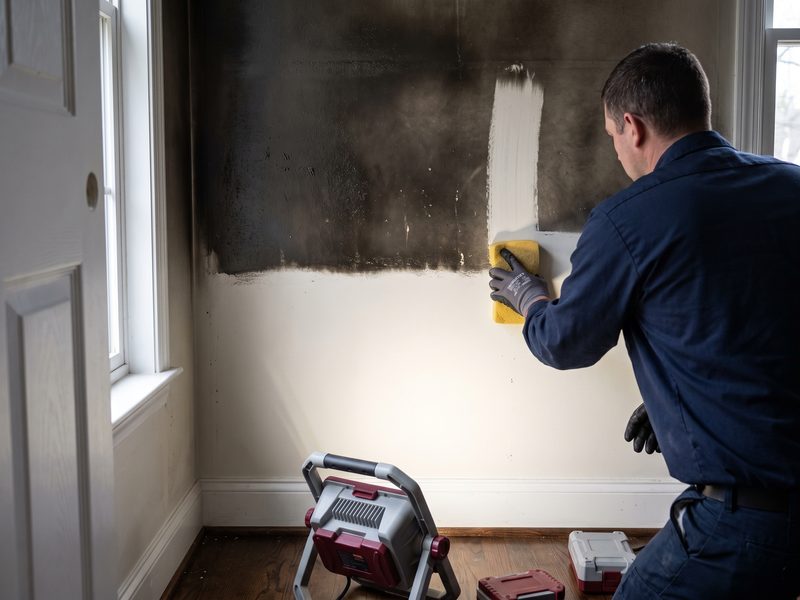
Different fires leave different residues — dry soot from fast, high-heat fires; sticky wet soot from slow, smoldering fires; and protein residue from kitchen fires, which is nearly invisible but intensely odorous. Each requires a specific cleaning method and chemistry. Using the wrong approach can permanently set stains and lock in odor, which is why technique matters.
Odor removal is one of the most technical parts of the job. Smoke particles embed in drywall, framing, HVAC systems, and soft goods, and simply masking the smell doesn't work. Restoration teams use methods such as thermal fogging, hydroxyl generation, ozone treatment in unoccupied spaces, HVAC cleaning, and sealing of affected surfaces to eliminate odor at the source rather than covering it.
Because firefighting water is almost always part of the picture, restoration also means water mitigation performed to the ANSI/IICRC S500 standard, with the water category assessed on site — water that contacts contaminated materials or sits untreated can degrade toward Category 3, which requires enhanced protective and disposal protocols. Explore how these overlap on our fire damage restoration and water damage restoration service pages, and see our full range on the services overview.
- Soot and smoke residue removal matched to the smoke type
- Odor elimination via thermal fogging, hydroxyl/ozone, and HVAC cleaning
- Water extraction and structural drying to documented drying goals
- Contents cleaning, pack-out, and salvage
- Structural repairs and reconstruction to restore the home
How long does fire and smoke damage restoration take?
Timelines vary with the severity of the fire, but structural drying alone typically takes three to five days, monitored daily against documented drying goals, while full fire restoration — cleaning, odor removal, and repairs — can run from a couple of weeks to several months for major losses. A small, contained kitchen fire is a very different project from a fire that spread across multiple rooms.
The process generally moves in phases: emergency response and securing the property, water extraction and drying, soot and odor removal, contents cleaning, and finally reconstruction. Drying is measured with moisture meters and psychrometric readings, not guesswork — a material isn't considered dry until it reaches its documented drying goal, which prevents hidden moisture from turning into a mold problem later.
Restoration Doctor responds 24/7 across the Virginia, Maryland, and Washington, D.C. tri-state area. Fast arrival matters: soot is acidic and begins corroding metal, etching glass, and staining surfaces within hours to days, so the sooner cleaning and drying begin, the more of your home and belongings can be saved — and the shorter the overall timeline tends to be. Our crews sequence the work so no phase delays the next.

What mistakes should you avoid after a house fire?
The biggest mistakes after a house fire are re-entering too early, cleaning or throwing things away before documenting them, turning utilities back on yourself, and touching soot-covered surfaces without protection. Each of these can either endanger you or reduce what you recover on your claim.
Well-meaning cleanup often causes more harm. Wiping soot off walls with a household cloth can grind residue deeper and set permanent stains. Running the HVAC system spreads smoke particles throughout the house. Wetting electronics or soot-damaged metal surfaces can accelerate corrosion. These are jobs for professionals with the right chemistry and equipment.
Also avoid signing away your rights or accepting a settlement before you understand the true scope of the damage. Because Restoration Doctor bills homeowners directly and hands you a carrier-ready claim file rather than working for the insurer, you keep control of the process. If you're unsure about a next step, reach out through our contact page and we'll help you think it through calmly.
- Don't re-enter before the fire department clears the structure.
- Don't clean soot or discard items before documenting them.
- Don't turn gas, power, or water back on yourself.
- Don't run the HVAC system — it spreads smoke residue.
- Don't accept a claim scope you don't understand.