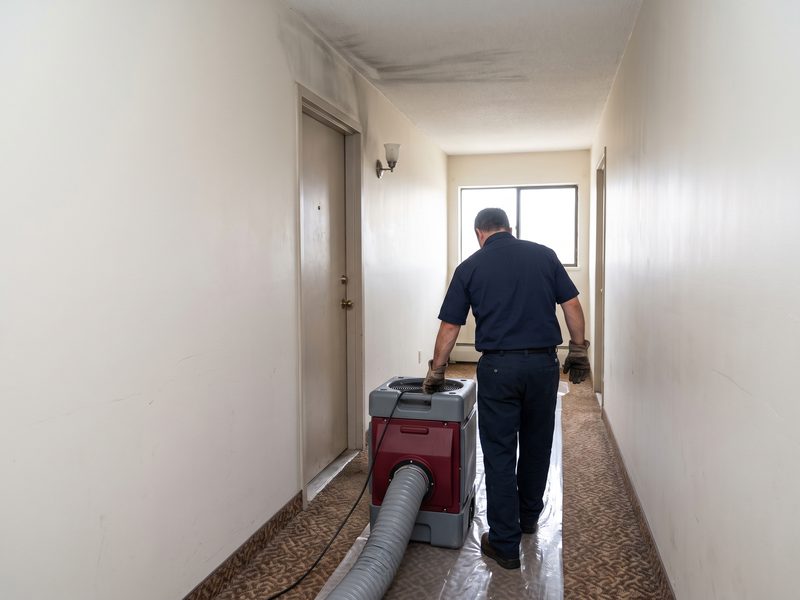
Wet Smoke vs Dry Smoke Damage and Protein Residue: How We Tell Them Apart
BY RESTORATION DOCTOR · NORTHERN VIRGINIA, MARYLAND & D.C.
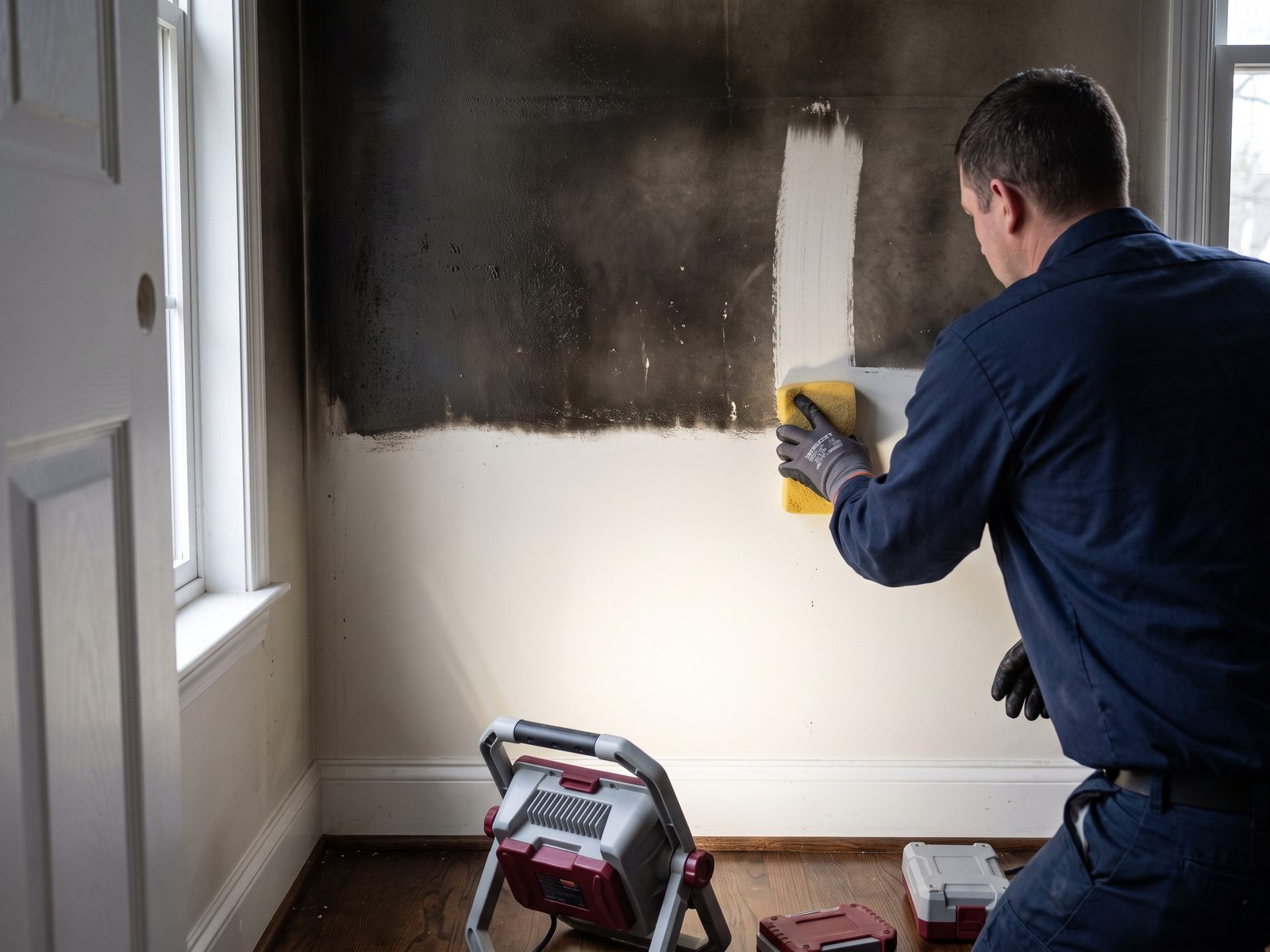
Wet smoke, dry smoke, protein residue and fuel-oil soot look different, smell different and respond to completely different cleaning methods, so identifying the residue is the first real step of a fire job. This guide describes each type, explains how it is identified on site, and shows why the wrong method drives residue deeper instead of removing it.
Call 1-888-29-FLOODWhy does it matter what kind of smoke was in the room?
Wet smoke vs dry smoke damage is the first question a restorer answers on site, because the residue type decides the cleaning method, and the wrong method sets soot into the surface instead of lifting it. Wet smoke smears, dry smoke powders, protein residue lacquers, and fuel-oil soot from a furnace puffback does all three at once.
A fire leaves behind whatever its fuel could not finish burning. A slow smoldering fire leaves sticky carbon. A fast, well-ventilated fire leaves a fine dust that travels. Scorched cooking oil leaves almost nothing you can see. The residue is a record of the fire, and reading that record correctly is the real first step of the job.
Three fires account for most of the smoke work in Northern Virginia homes. A smoldering basement or bedroom fire running on foam and plastics. A pan fire on the stovetop. An oil-fired furnace misfiring in an older Arlington, Falls Church or Alexandria house. Each one leaves a different residue on the same painted wall.
| Residue type | Usual source | How it looks and feels | First cleaning approach |
|---|---|---|---|
| Wet smoke | Slow, smoldering, low-heat fire in plastics, foam, rubber or vinyl | Thick, black and sticky; smears when touched; sharp acrid odor; webs in corners | Degreasing or solvent agents with dwell time, worked gently from the bottom up |
| Dry smoke | Fast, hot, oxygen-rich fire in paper, wood or natural fiber | Fine, dry and powdery; sits on ledges and travels furthest through the house | Dry chemical sponge and HEPA vacuuming before any liquid touches the surface |
| Protein residue | Scorched meat, poultry or cooking oil on a stovetop or in an oven | Nearly invisible amber film; feels greasy; yellows paint and varnish; heavy odor | Alkaline degreasers on every surface in the room, ceilings and light fixtures included |
| Fuel-oil soot (puffback) | Delayed ignition in an oil-fired furnace or boiler | Black, fine and oily at the same time; acidic; carried room to room by the ductwork | Containment, HEPA capture, degreasing, and cleaning of the duct system |
What is wet smoke, and what does it leave behind?
Wet smoke is what a fire leaves when it never got enough air to burn cleanly. It is dark, heavy and sticky, and it smears the moment a dry cloth passes over it. The fuel is usually synthetic: sofa foam, vinyl flooring, plastic storage bins, rubber-backed carpet.
The odor tells you before the residue does. Wet smoke smells sharp and plasticky rather than woody. In corners and ceiling angles you often find soot webs, thin greasy strands that look like cobwebs and are not, formed where charged particles chain together in still air.
Wet smoke is also acidic, so time works against the building. Left alone it etches glass and corrodes metal fixtures. Cleaning is slow work. The residue has to be softened with a degreasing agent, given dwell time, then lifted with controlled pressure. Scrubbing grinds carbon into wall texture and wood grain.
- Smears into a dark streak when wiped with a dry cloth
- Greasy strands in corners and ceiling angles that look like cobwebs
- Heaviest on cool surfaces, in closets and above door openings
- Metal and grout start to discolor quickly if nothing is done
What is dry smoke, and why does it get into everything?
Dry smoke comes from a fast, hot, oxygen-rich fire burning paper, wood or natural fiber. The residue is a fine powder rather than a film, and it brushes off a hard surface with very little effort. That is exactly what makes it dangerous to clean the wrong way.
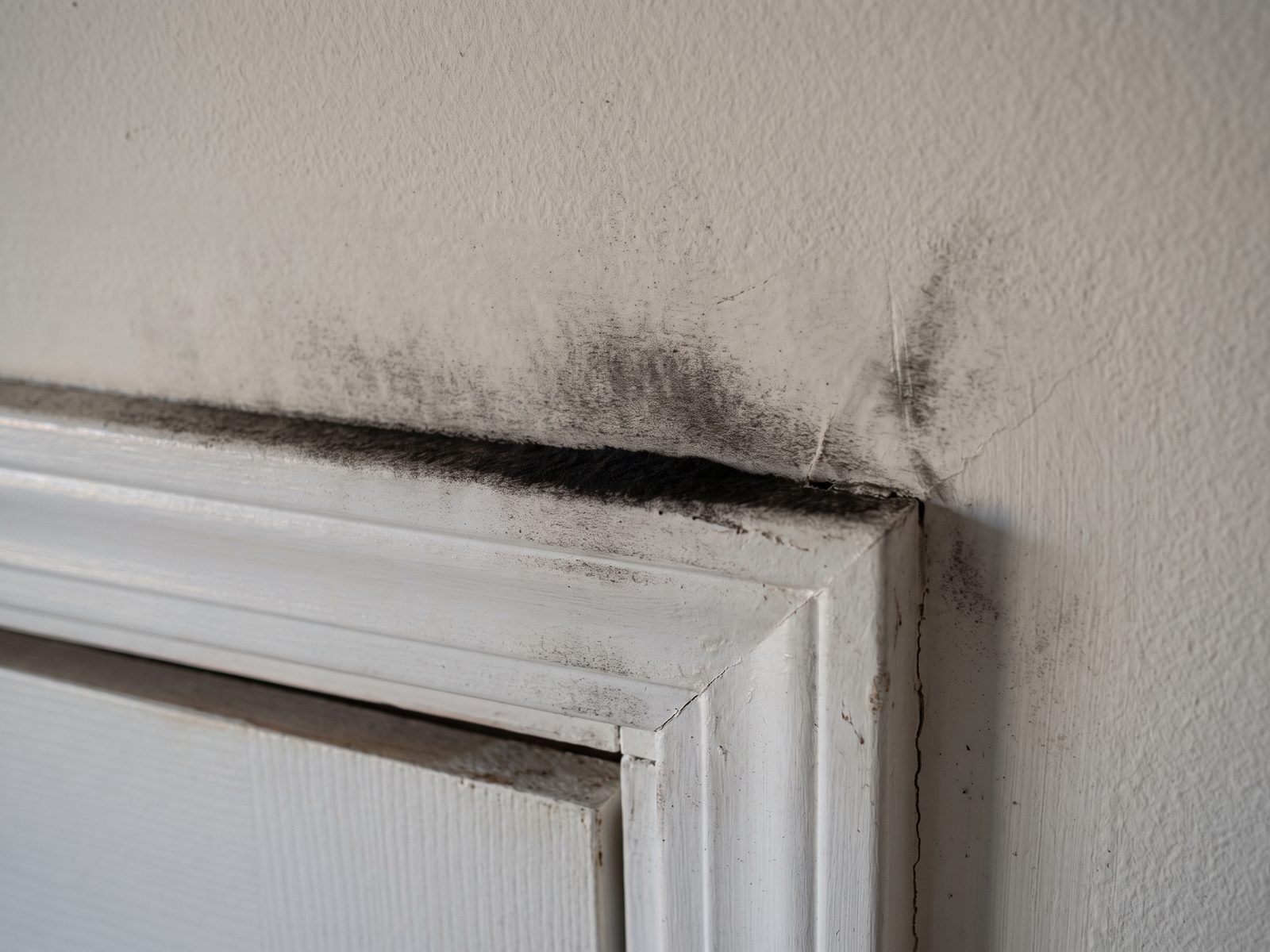
Small light particles travel further than any other residue. Dry smoke rides pressure differences through wall cavities, around outlet plates, past recessed lights and into the return side of the HVAC system. We find it on the top edge of door casings and inside closed dresser drawers in rooms that never saw flame.
Soot also drifts toward cold. It picks out the framing behind drywall, leaving faint stripes that follow the studs and joists. Dry residue comes off dry, with a chemical sponge and HEPA vacuuming. Put liquid on it first and the powder becomes a gray slurry that soaks into flat paint.
- Check the top edge of door and window casings before calling a room clean
- Pull the HVAC filter; a gray loaded filter means the system moved smoke
- Look for stripe patterns on walls and ceilings that follow the framing
- Open drawers and closets in rooms away from the fire
What is protein residue, and why can you smell it before you see it?
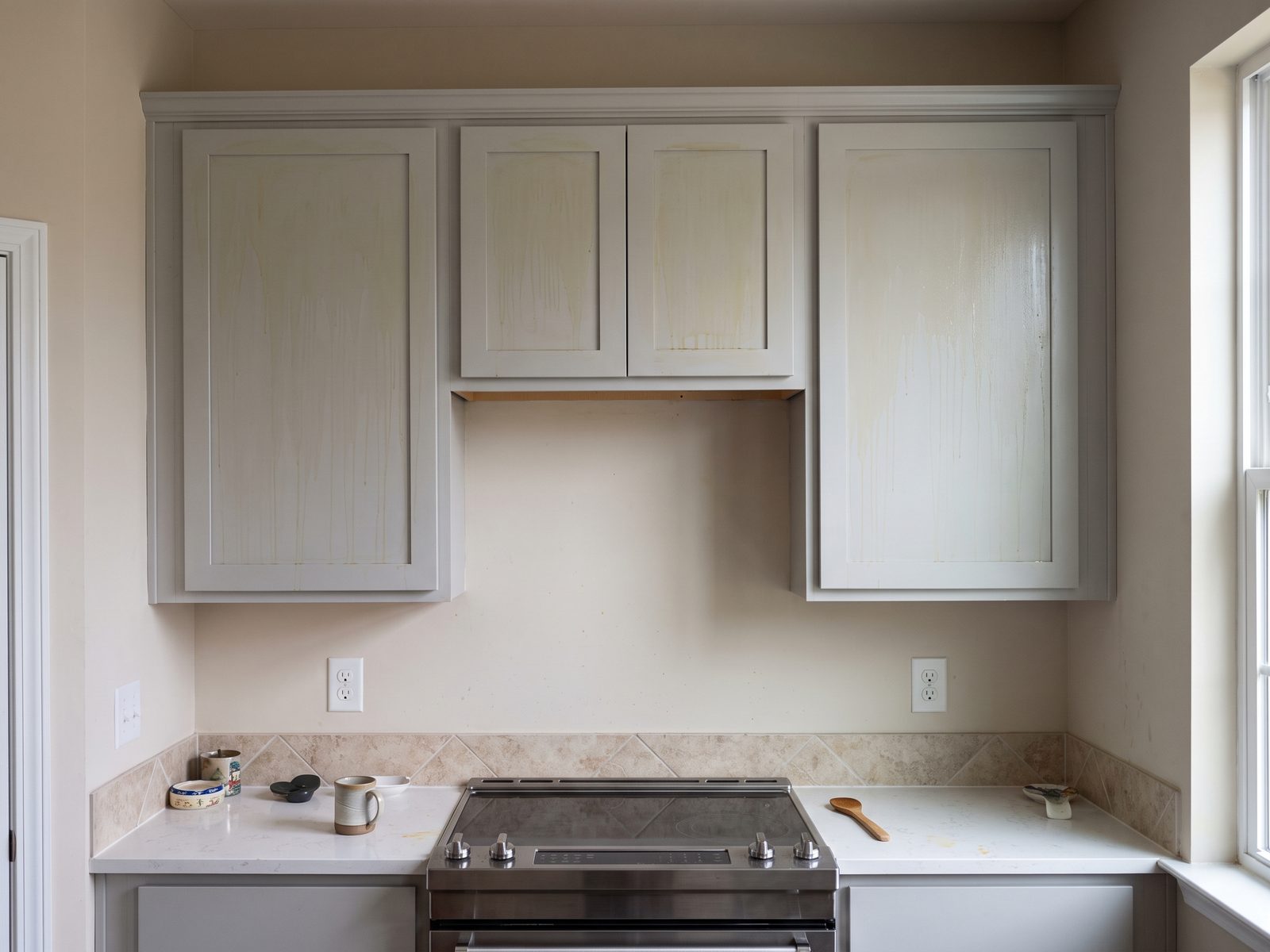
Protein residue is the one you smell first and see last. It comes from scorched meat, poultry or cooking oil, usually a pan left on a burner, and it leaves a thin amber film rather than black soot. Many kitchens look close to normal while the odor makes the house unlivable.
Run a finger across a cabinet door above the range and the film shows itself. It feels greasy, it lifts in a faint smear, and on white paint or clear varnish it yellows within days. It coats cabinet interiors, the ceiling over the range, the range hood, dish surfaces and refrigerator gaskets.
Because so little is visible, protein jobs get underestimated more than any other kind. Painting over the film fails, because it keeps releasing odor and can bleed through the new finish. The work is unglamorous: alkaline degreasers over every surface in the affected rooms, ceilings and light fixtures included, then a second pass where the first one missed.
What is a furnace puffback, and why is fuel-oil soot different again?
A puffback is a small explosion inside an oil-fired furnace or boiler. The burner ignites late, fuel that collected in the chamber lights all at once, and the pressure pushes soot and oil mist out of the appliance. If the unit is tied into ductwork, that soot reaches every register in seconds.
Oil heat is far less common here than it is in New England, but it has not disappeared from the older housing stock in Arlington, Falls Church and Alexandria, and every one of those systems is a puffback waiting for a bad ignition cycle. Puffbacks cluster on the first genuinely cold nights, when a system that sat idle all summer starts cycling hard. Some are loud enough to bring the fire department. Others are a soft thud nobody registers while the house slowly grays over.
Fuel-oil soot travels like dry smoke and sticks like wet smoke, and it is acidic enough to go after electronics and metal trim. The duct system is part of the job rather than an add-on. A puffback cleaned room by room while the ducts are ignored is a job that comes back with the first cold snap.
- Black streaking on the wall or ceiling above supply registers
- A greasy film on television screens, mirrors and picture glass
- An oily fuel smell that gets stronger when the heat cycles on
- A house that dulled everywhere at once rather than in one room
How does a restorer identify the type on site?
Identification is a test, not a guess. A technician takes a dry chemical sponge to a small, out-of-sight patch on each affected material and watches what happens. Residue that lifts away clean and leaves a sharp edge is dry. Residue that smears is wet smoke or protein. Residue that ghosts back within a minute is usually oily.
That test sits alongside a reading of the room: what burned, how much air it had, where the residue is heaviest, and which direction it moved. Smoke webs point to smoldering. A scorched pan under a yellowing ceiling points to protein. A sooty return grille and an oil tank in the basement point to a puffback.
Most real fires leave mixed residues, so the test gets repeated per material and per elevation rather than once for the whole house. ANSI/IICRC S700, the standard for professional fire and smoke damage restoration, covers assessing the presence and boundaries of fire residues and odors, building a written restoration work plan, and documenting what was found and done. An adjuster reading the file will look for exactly that.
- Test clean an inconspicuous area of each material before touching the room
- Identify the fuel and the burn pattern at the point of origin
- Check the HVAC filter, the returns and the supply registers
- Note the odor, which separates plastic, protein and fuel oil quickly
Why does the wrong cleaning method make each one worse?
Every residue type has a method that removes it and a method that drives it in, and the difference is usually a wet cloth applied at the wrong moment. That is why a well-meant first pass by a homeowner often costs more than the fire did.
Water on dry soot is the classic mistake. The powder dissolves into a gray wash that soaks into flat paint, and a dust problem becomes a staining problem. Scrubbing wet smoke dry is the opposite error, grinding sticky carbon into texture and grout lines. On protein film, the wrong chemistry spreads a thin coat of the odor source over a wider area.
Two other habits set residue permanently. Running the HVAC system pushes soot into rooms and ducts that were clean, and heating the house drives odor deeper into porous materials. Painting over uncleaned soot traps it underneath, where it keeps working. Deodorizing equipment can finish a job but never replace one, and ozone is not something to run in an occupied home.
What can be cleaned in place, and what has to be sealed or replaced?
Hard, non-porous surfaces usually clean in place. Porous materials that absorbed odor along with the residue are the ones that come out. Nothing is automatic in either direction, and a test clean on the actual material decides it rather than a rule of thumb.
Glass, metal, tile, sealed stone, finished cabinetry and painted drywall are normally cleanable, though drywall that took heavy wet smoke may clean well and still need a sealer before paint. Carpet pad, insulation in the fire room, exposed duct board and acoustic ceiling tile are the usual removals, because the odor lives inside the material.
Sealing has a real place and a common misuse. After a surface is cleaned, a pigmented sealer locks down what could not be washed out of rough framing or subfloor. Used as a shortcut over soot that was never cleaned, it hides the problem for a season and then fails.
- Usually cleanable in place: glass, metal, tile, sealed stone, finished wood, painted drywall
- Usually removed: carpet pad, insulation in the fire room, duct board, ceiling tile
- Often removed when saturated with odor: mattresses, upholstered furniture, heavy drapery
- Sealed after cleaning rather than instead of it: framing, subfloor, sheathing
Why does the smell come back when the humidity rises?
Smoke odor returns in warm, humid weather because residue still in the building releases more of its odor compounds as temperature and moisture climb. Nothing new has happened. The house has simply gotten better at moving what was already there into the air.
Soot is porous, and it holds odor compounds the way a carbon filter does. Through a humid Virginia summer those compounds move back into the air more readily, and materials that absorbed odor during the fire breathe it out again: drywall paper, insulation, carpet backing, unfinished framing. A room that read clean on a dry February walkthrough can smell wrong in July.
The first heating cycle of the fall does the same thing for a different reason, pushing odor out of ducts that still hold residue. Treating it means finding the residue that remains, removing it, sealing what cannot be fully cleaned, then treating the air. Holding indoor humidity to a moderate level makes the result more stable, but it is no substitute for finding the source.
- Duct runs, registers, the blower housing and the coil
- Attic or wall insulation above and behind the fire area
- Carpet pad, tack strip and the subfloor underneath
- Contents stored in closets and boxes that were never opened
What should you avoid touching before anyone arrives?
Leave the residue alone. Do not wipe or scrub walls, ceilings or trim, because one dry pass across wet smoke or one wet pass across dry soot can turn a cleanable surface into a refinishing job. Do not shampoo carpet or run a household vacuum over soot, and do not switch on electronics that carry residue.
Leave the HVAC system off until someone has looked at it, since running it moves soot into clean rooms and into duct runs. If the fire department has released the building and the outdoor air is dry, opening windows is reasonable. Keep children and pets out of affected rooms, and throw out food that was exposed to smoke.
Photograph everything before it is moved or cleaned, and hold on to damaged items until they have been recorded, because the contents list is where most fire claims are argued. The standards this work is measured against are published and named below, so no homeowner has to take a contractor's word for the method.
- ANSI/IICRC S700, Standard for Professional Fire and Smoke Damage Restoration (scope and purchase): https://iicrc.org/s700/
- United States Fire Administration, guidance for the days after a home fire: https://www.usfa.fema.gov/prevention/home-fires/after-a-fire/
- Environmental Protection Agency, indoor air quality and indoor pollutant sources: https://www.epa.gov/indoor-air-quality-iaq/indoor-pollutants-and-sources
- Environmental Protection Agency, why ozone generators sold as air cleaners are not safe for occupied spaces: https://www.epa.gov/indoor-air-quality-iaq/ozone-generators-are-sold-air-cleaners