Washing Machine Overflow Water Damage: A Homeowner's Guide

BYSteve Jafari, General ManagerNORTHERN VIRGINIA, MARYLAND & D.C.

Washing machine overflow water damage usually comes from one of two failures: a burst rubber supply hose (which sprays pressurized water continuously) or a drain overflow (dirty water backing up onto the floor). Shut off the water at the wall valves or the main, unplug the machine, and start extracting standing water within the first hour to limit swelling, warping, and mold. A burst supply line is Category 1 (clean) water under the IICRC S500 standard; a drain overflow is Category 2 (gray) water that also needs sanitizing. The single best prevention is replacing old rubber fill hoses with $10-$20 braided stainless-steel hoses — one of the highest-return upgrades in your home.
Call 1-888-29-FLOODWhat should I do immediately when my washing machine overflows?
Shut off the water first, then cut the power. Turn the hot and cold supply valves behind the machine fully clockwise (or shut off your home's main water valve if you can't reach them), unplug the washer, and stop the cycle. This stops new water from feeding the flood while you deal with what's already on the floor.
Speed matters more than anything else in the first hour. Water migrates fast through baseboards, under vinyl and laminate flooring, into wall cavities, and down through the subfloor into the ceiling below — a real risk when the laundry room sits on a second floor or above a finished basement. The sooner standing water is removed, the less structural damage and mold risk you face.
If the water has spread beyond the laundry room, reached a finished ceiling below, or you suspect it's dirty drain water, call a professional for emergency extraction. Restoration Doctor answers 24/7 at 1-888-293-5663 and responds fast across the Virginia, Maryland, and Washington, D.C. tri-state area.
- Close the hot and cold supply valves behind the washer (turn clockwise).
- Unplug the machine so water never contacts live electrical components.
- Move laundry baskets, rugs, and cardboard off the wet floor.
- Blot and mop standing water; use towels to build a barrier at doorways.
- Photograph everything before you clean up — you'll want it for your claim.
- Call for professional extraction if water reached walls, subfloor, or a ceiling below.

What causes washing machine overflow water damage — a supply hose burst or a drain overflow?
There are two fundamentally different failures, and they behave very differently. A supply hose burst is a pressurized failure on the clean-water side: the rubber fill hose connecting the wall valve to the machine splits, and because household supply lines stay under constant pressure, water keeps spraying whether or not the machine is running. A drain overflow is a gravity failure on the dirty-water side: the standpipe or drain line clogs and used wash water backs up onto the floor, but only while the machine is draining.
The distinction matters for both severity and cleanup. A burst supply hose is the classic catastrophic laundry flood — it can discharge hundreds of gallons overnight or while you're at work, and the water starts out clean (Category 1 under the IICRC S500 standard). A drain overflow releases used water carrying detergent, lint, body soils, and bacteria, which grades as gray water (Category 2) and requires sanitizing, not just drying.
Supply hoses are also the more common culprit and the easier one to prevent. Standard rubber hoses degrade from the inside as they age, and manufacturers generally recommend replacing them every three to five years — a step most homeowners forget entirely.
| Factor | Supply hose burst | Drain overflow |
|---|---|---|
| Water source | Clean pressurized supply line | Used wash water / standpipe |
| Water category (IICRC S500) | Category 1 (clean) | Category 2 (gray) |
| Runs continuously? | Yes — stays under pressure 24/7 | No — only during the drain cycle |
| Typical volume | Can be hundreds of gallons | Usually limited to a few gallons per cycle |
| Cleanup need | Extraction + drying | Extraction + drying + sanitizing |
| Best prevention | Braided steel hose upgrade | Clear the drain/standpipe clog |
How does a braided steel hose prevent the most common laundry-room flood?
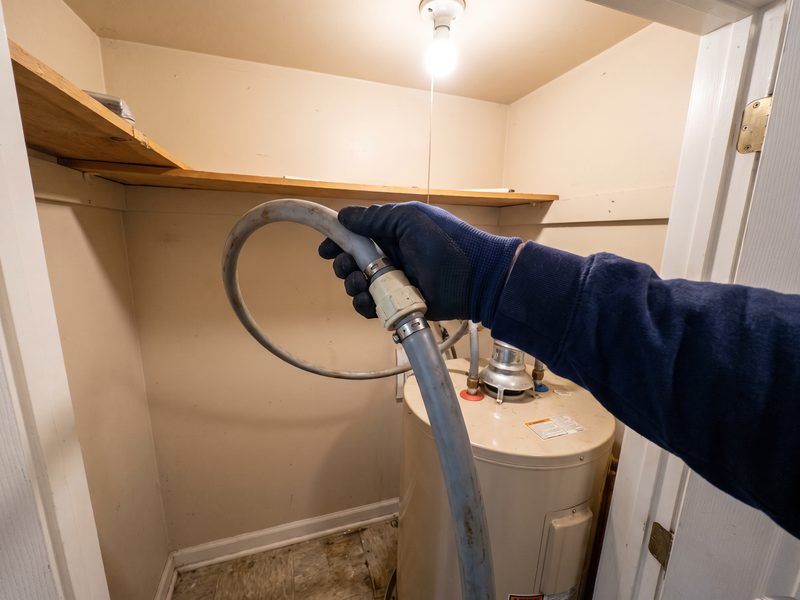
A braided stainless-steel supply hose wraps a flexible inner tube in a woven metal sleeve that resists the bulging, cracking, and blowouts that destroy old rubber hoses. At roughly $10 to $20 per hose, it's one of the highest-return upgrades in your entire home, because a burst rubber fill line is the leading cause of catastrophic washing machine overflow water damage.
Rubber hoses fail from the inside out. Constant water pressure, temperature swings, and years of small flex cycles weaken the rubber until it splits or blows off the fitting — often when nobody is home to notice. Braided steel hoses dramatically slow that failure mode and give you a visible, inspectable outer layer.
Install both a new hot and a new cold hose at the same time, don't overtighten the fittings, and leave a gentle loop so the hose isn't kinked against the wall. For even more protection, add an automatic shutoff or leak-detection valve that cuts water flow the moment it senses a leak. This 20-minute upgrade prevents far more damage than it costs.
- Buy braided stainless-steel hoses (about $10-$20 each) instead of rubber.
- Replace hoses in pairs — hot and cold together.
- Hand-tighten fittings, then a quarter turn with a wrench; don't crank them.
- Leave a relaxed loop; a kinked hose fails faster.
- Consider an auto-shutoff valve or a floor-level leak sensor for extra insurance.
- Note the install date so you know when to inspect and replace them again.

How much water damage can a washing machine overflow really cause?
A burst supply hose can release several gallons per minute at typical household pressure — enough to put hundreds of gallons on the floor before you notice. If it fails while you're at work or asleep, a single laundry-room flood can saturate flooring, wick up drywall, soak insulation, and drain into the level below.
The damage is rarely limited to the room where it started. Water follows gravity and capillary action: it slides under baseboards, spreads beneath floating floors, absorbs into the bottom plates of walls, and drips through the subfloor into ceilings and light fixtures downstairs. This is why a laundry-room overflow so often becomes a multi-room, multi-level restoration project.
Time is the deciding factor. Materials that could have been dried and saved in the first 24-48 hours often have to be removed once they've been wet long enough for delamination, swelling, and microbial growth to set in. Mold can begin colonizing damp organic materials within 24 to 48 hours, which is why fast professional extraction and drying protect both your home and your budget.
Is washing machine overflow water clean or contaminated?
It depends on the source. Water from a burst supply hose is Category 1 (clean) under the ANSI/IICRC S500 standard — it comes from a sanitary pressurized line. Water from a drain overflow is Category 2 (gray) because it contains detergent residue, lint, dirt, and bacteria from soiled laundry.
The category drives the cleanup protocol. Category 1 water mainly needs fast extraction and structural drying. Category 2 water requires extraction, antimicrobial treatment, and often removal of porous materials that soaked it up, because gray water carries contaminants that a fan alone won't neutralize.
Category is also time-sensitive. Clean water that sits degrades — as it absorbs contaminants from flooring, dust, and building materials and begins supporting microbial growth, Category 1 water can deteriorate to Category 2 or worse within a couple of days. That's another reason quick response protects your home. Our technicians follow ANSI/IICRC S500 to classify the water correctly and match the cleanup to what you actually have. Learn more on our /services/water-damage-restoration page.
- Category 1 (clean): burst supply hose — extract and dry.
- Category 2 (gray): drain overflow — extract, sanitize, and remove saturated porous materials.
- Standing clean water can degrade toward Category 2 within roughly 48 hours.
- Correct classification determines what can be saved versus what must be removed.

How do professionals dry out a laundry-room flood?
Professionals use psychrometry — the science of moisture in air and materials — to dry a structure back to a verified drying goal, not just to "looks dry." The process starts with mapping the true extent of moisture using moisture meters and thermal imaging, because water almost always spreads farther than the visible wet edge.
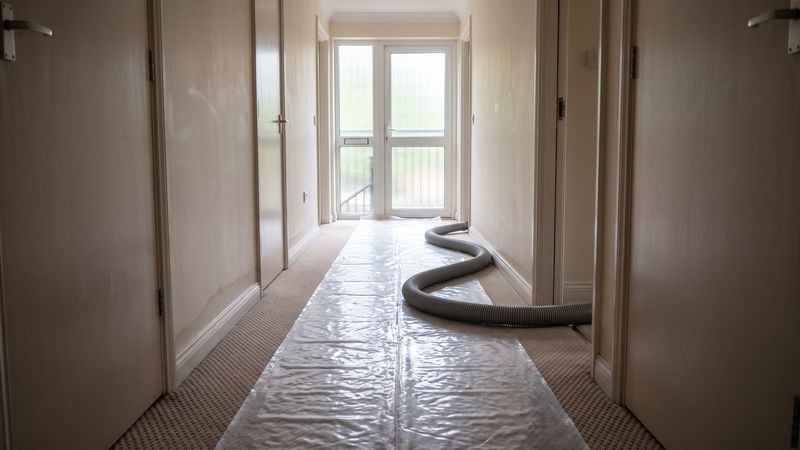
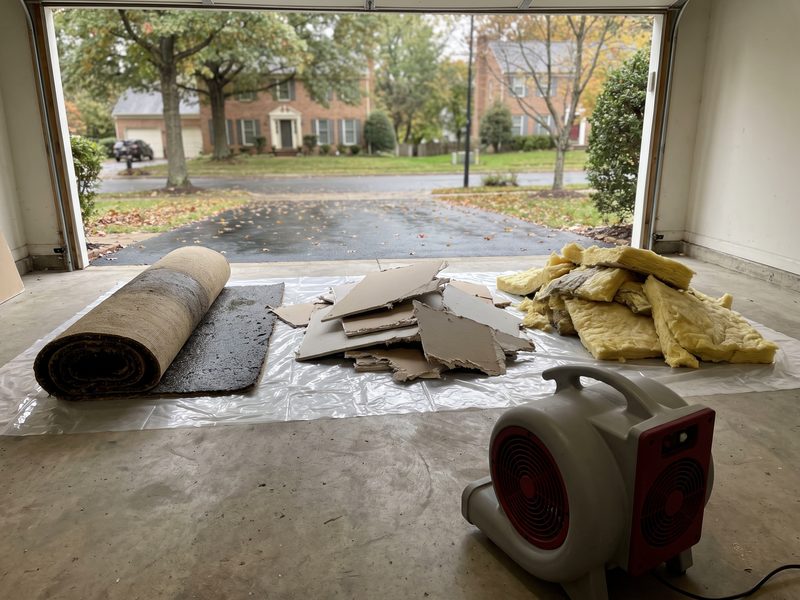
After extracting standing water, technicians set up a controlled drying system: air movers to accelerate evaporation off wet surfaces and dehumidifiers to pull that moisture out of the air so it can't re-absorb into walls and flooring. Moisture readings are logged daily and compared against dry, unaffected reference materials to confirm real progress. A typical structural dry-out takes about three to five days, monitored daily until materials reach the drying goal.
This documentation does double duty. Daily moisture logs, CompanyCam photos, and a full Xactimate scope create a clear record of the damage and the drying — which becomes the carrier-ready claim file we hand you. Restoration Doctor bills you, the homeowner, directly and gives you everything you need to file; we work for you, not your insurance company.
| Phase | What happens | Typical timing |
|---|---|---|
| Emergency response | Arrival, safety check, source verification | Fast 24/7 dispatch across VA, MD, and D.C. |
| Extraction | Remove all standing water | First visit |
| Setup | Air movers + dehumidifiers positioned by moisture mapping | Day 1 |
| Monitoring | Daily moisture readings logged against the drying goal | Days 1-4+ |
| Verification | Confirm materials reach the drying goal, remove equipment | Usually 3-5 days total |
Does homeowners insurance cover washing machine overflow water damage?
In most cases, yes — sudden and accidental water damage from a washing machine overflow, such as a hose that bursts without warning, is typically a covered peril under a standard homeowners policy. What insurers commonly exclude is damage from long-term seepage or neglected maintenance, like a slow leak you ignored for months.
Most of our customers end up filing an insurance claim, and the difference between a smooth claim and a fight usually comes down to documentation. Photograph the failed hose and standing water before cleanup, keep damaged items until the adjuster releases them, and start professional mitigation quickly — most policies require you to take reasonable steps to prevent further damage.
Restoration Doctor invoices you, the homeowner, directly and provides a complete, carrier-ready claim file: an Xactimate scope, CompanyCam photo documentation, and daily moisture logs. Because we work for you rather than your insurance company, our job is to document the full, legitimate scope of the loss. See /insurance-claims for how the process works.

How can I prevent washing machine water damage for good?
The most effective prevention is a layered approach: upgrade to braided steel supply hoses, add leak detection, and build a few simple habits. No single step is foolproof, but together they eliminate the overwhelming majority of laundry-room floods.
Avoid running the washer when you're away from home or asleep, since a burst supply hose does the most damage when it can run unnoticed for hours. Turn the supply valves off between wash days if your setup makes that easy, and keep the drain standpipe clear to prevent gray-water backups. A washing machine drain pan plumbed to a floor drain adds another layer of catch-and-drain protection.
Finally, inspect the hoses a couple of times a year for bulges, rust, cracking, or moisture at the fittings, and replace them proactively on the manufacturer's three-to-five-year schedule. If the worst happens, act fast — Restoration Doctor is available 24/7 at 1-888-293-5663, serving the Virginia, Maryland, and Washington, D.C. tri-state area.
- Upgrade to braided stainless-steel supply hoses and replace them on schedule.
- Install a leak-detection sensor or an auto-shutoff valve.
- Don't run the washer while away or asleep.
- Keep the drain standpipe clear to prevent overflow backups.
- Add a drain pan plumbed to a floor drain.
- Inspect hoses and fittings twice a year for bulges, rust, and moisture.