The Water Damage Restoration Timeline: What To Expect Day by Day
BY RESTORATION DOCTOR · NORTHERN VIRGINIA, MARYLAND & D.C.
A typical water damage restoration timeline runs about a week: emergency water extraction on Day 1, controlled demolition and drying setup on Day 2, and roughly 4.5 days of monitored structural dry-out to a verified dry standard. Reconstruction (drywall, flooring, paint) happens only after the structure is confirmed dry and can add days to weeks depending on scope. Restoration Doctor arrives on-site in a median of 47 minutes across Northern Virginia and documents every stage — Xactimate scope, CompanyCam photos, and daily moisture logs — so you have a carrier-ready claim file when the work is done.
Call 1-888-29-FLOODHow long does water damage restoration take from start to finish?
Most water damage restoration projects follow a predictable arc: the drying-and-mitigation phase typically takes about 5 to 7 days, with the core structural dry-out averaging roughly 4.5 days when monitored daily to a verified dry standard. Reconstruction — replacing drywall, flooring, trim, and paint — is a separate phase that begins only after the structure is confirmed dry, and it can add anywhere from a few days to several weeks depending on how much material was removed.
Understanding the water damage restoration timeline helps you plan, manage your household, and set realistic expectations with your insurance carrier. The mitigation clock starts the moment the water is stopped and extraction begins, which is why fast response matters so much. Restoration Doctor maintains a median on-site arrival of 47 minutes across Northern Virginia, with a goal of on-site within 60 minutes across our core service area, because every hour that water sits raises the odds of secondary damage and microbial growth.
Two variables drive everything: the category of water (how contaminated it is) and the class of water intrusion (how much material got wet and how porous it is). Those two factors, defined under the ANSI/IICRC S500 Standard for Professional Water Damage Restoration, determine how aggressively we dry, what has to be removed, and how long the process runs. The day-by-day breakdown below shows what a standard, well-run project looks like.
- Emergency response and extraction: Day 1 (often within hours of your call)
- Assessment, controlled demolition, and drying equipment setup: Day 1–2
- Monitored structural dry-out: about 4.5 days on average
- Verification against the dry standard and equipment removal: end of dry-out
- Reconstruction and rebuild: separate phase, days to weeks depending on scope
What happens on Day 1 — emergency response and water extraction?
Day 1 is about stopping the damage and removing standing water fast. As soon as our crew arrives, we identify and stop the water source if it is still active, assess safety hazards like electrical exposure, and begin extracting standing water with truck-mounted and portable extraction units. Rapid water removal is the single most important step for limiting how far damage spreads — extraction removes water hundreds of times faster than evaporation ever could.
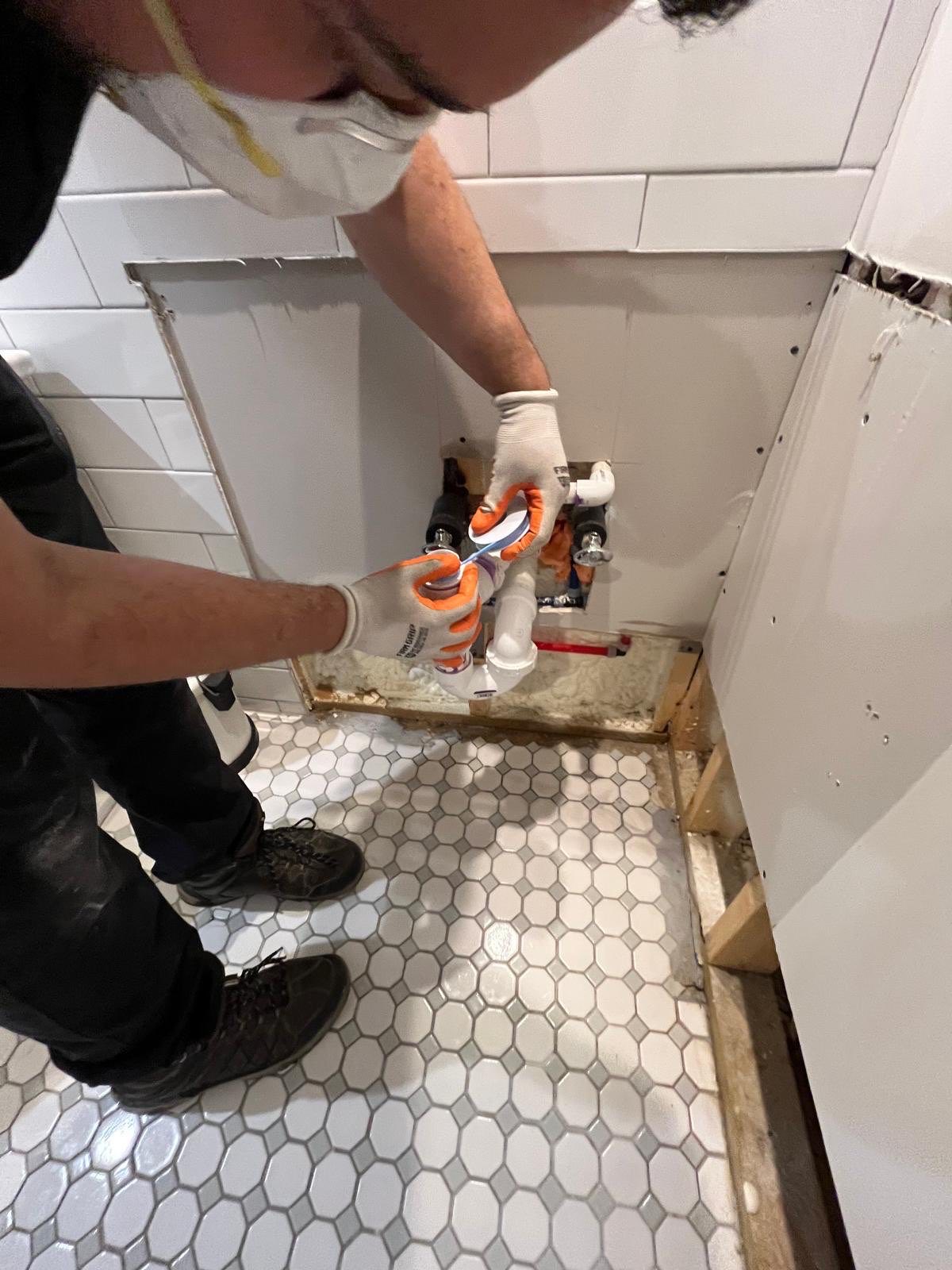
Before anything is moved or torn out, we document conditions thoroughly. This includes CompanyCam photo documentation of every affected room, moisture mapping with meters and thermal imaging to trace where water has migrated behind walls and under flooring, and an initial classification of the water category and class. That documentation becomes the backbone of a carrier-ready claim file later.
We also determine the water category on Day 1, because it dictates safety protocols and what can be salvaged. Under IICRC S500, Category 1 is clean water from a sanitary source like a supply line; Category 2 (often called gray water) carries significant contamination; and Category 3 (black water) is grossly contaminated — sewage, rising flood water, or water that has degraded over time — and triggers strict protective protocols. If you have an active emergency right now, our 24/7 emergency water damage response is the fastest way to start the clock in your favor.
| Category | What it is | Timeline impact |
|---|---|---|
| Category 1 | Clean water from a sanitary source, such as a broken supply line or overflowing tub | Most materials can often be dried in place |
| Category 2 | Gray water with significant contamination (appliance discharge, toilet overflow with urine only) | More materials removed; cleaning and disinfection required |
| Category 3 | Black water — sewage, rising flood water, or water that has sat and degraded | Extensive removal, strict contamination protocols, longest timeline |
What happens on Day 2 — assessment, demolition, and drying setup?
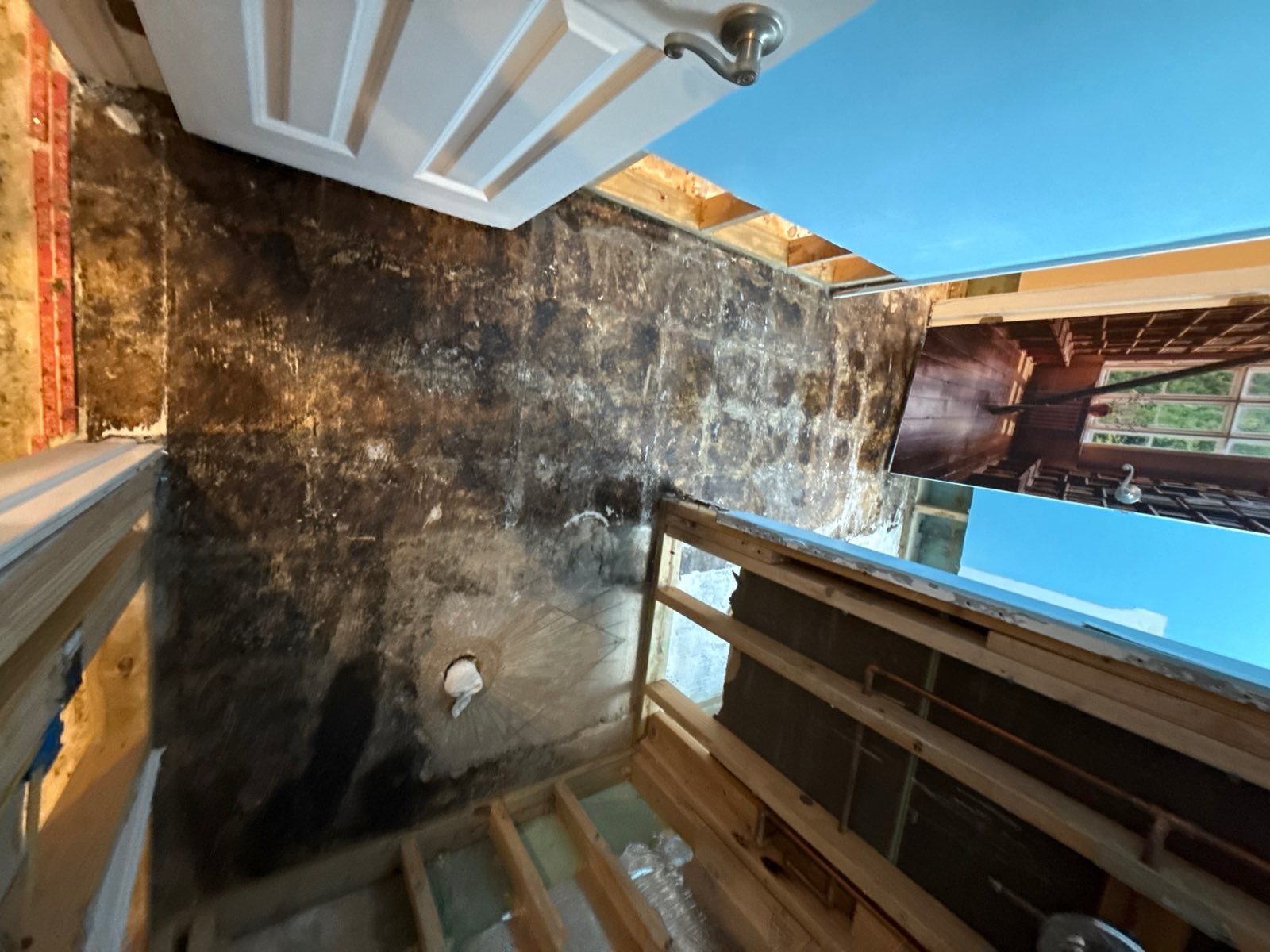
Day 2 focuses on removing unsalvageable materials and building the drying environment. Based on the moisture mapping from Day 1, our technicians perform controlled demolition — removing wet drywall, saturated insulation, delaminated flooring, and other porous materials that cannot be dried effectively or safely. Under IICRC S500, materials that hold contamination or will not return to a dry, structurally sound condition are removed rather than dried.
Next we design and install the drying system. This is applied psychrometry: we calculate the affected area's volume, the amount of moisture that has to be evaporated, and the right combination of air movers and dehumidifiers to move that water out of the materials and into the air, then out of the air entirely. Commercial air movers accelerate evaporation off wet surfaces, while dehumidifiers — typically low-grain refrigerant (LGR) or desiccant units — pull that moisture from the air so it cannot re-deposit into dry materials.
We also establish baseline moisture readings on Day 2 — the numbers that tell us exactly how wet each material is at the start. Every subsequent daily reading is measured against those baselines, so we can prove the structure is actually drying and know precisely when it reaches the dry standard. Containment barriers may go up here too, especially for Category 2 or 3 losses, to protect unaffected areas of the home.
What happens during Days 3–5 — structural dry-out and monitoring?
Days 3 through 5 are the heart of the process: the structure dries under continuous airflow and dehumidification while our technicians return daily to measure progress. A typical structural dry-out averages about 4.5 days, and it is monitored every day rather than left to run blind. This is where patience pays off — moisture trapped in framing, subfloor, and wall cavities has to come out completely to prevent mold and future rot.
Each daily monitoring visit follows the same discipline: we record temperature, relative humidity, and specific humidity in grains per pound (GPP) in the air, plus moisture-content readings in the affected materials themselves. Those daily moisture logs should show a steady downward trend as materials release water. If a room is drying slower than expected, we adjust — repositioning air movers, adding dehumidification capacity, or opening wall cavities and cabinet toe-kicks to reach hidden moisture.
It is normal for equipment to run 24 hours a day during this phase, and it is normal for the space to be loud and warm. Please don't turn the equipment off or move it, even overnight — every hour it runs is part of the calculated drying plan, and interruptions extend the timeline. If something seems wrong, call us at 1-888-293-5663 and we'll walk you through it. You can see how this phase fits the whole process on our water damage restoration service page.
- Air movers run continuously to speed evaporation off wet surfaces
- Dehumidifiers remove that moisture from the air so it can't reabsorb into materials
- Daily readings track temperature, relative humidity, GPP, and material moisture content
- Equipment is adjusted as needed to keep drying on schedule
- Daily moisture logs build the evidence trail for your insurance claim
How do you know when the property is actually dry?
A property is considered dry when the affected materials return to a documented drying goal — not when they simply feel dry to the touch. Under IICRC S500, technicians establish that goal, typically based on moisture readings from unaffected materials of the same type elsewhere in the home, and drying continues until the wet areas match that benchmark. Surfaces can feel dry on the outside while framing and subfloor still hold significant moisture, which is exactly why verification relies on meters, not intuition.
When readings confirm the materials have reached the drying goal, we end the drying phase, remove the air movers and dehumidifiers, and complete a final round of documentation. That closing package — the Xactimate scope, CompanyCam photos, and the full set of daily moisture logs — demonstrates that the structure was dried properly and completely. This matters not only for your peace of mind but for a clean insurance claim and for preventing hidden mold down the road.
EPA guidance is to dry water-damaged areas and items within 24 to 48 hours to prevent mold growth, and damp organic materials left past that window are at real risk. That's why we don't rush this step. If mold is already present when we arrive — common with losses that sat for days before discovery — we shift to remediation under the ANSI/IICRC S520 Standard for Professional Mold Remediation; you can read more on our mold remediation page.
What happens after dry-out — reconstruction and rebuild?
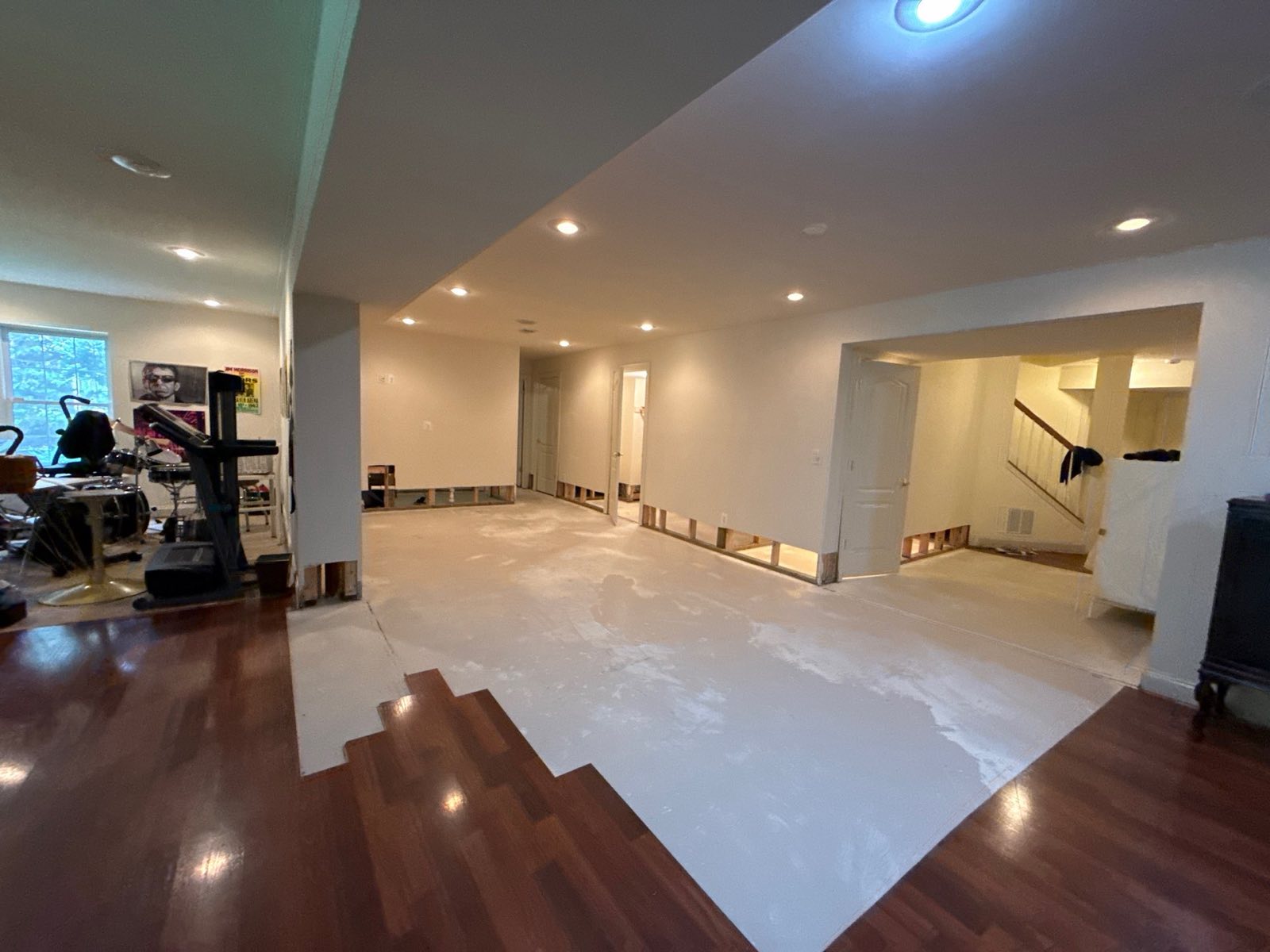
Once the structure is verified dry, the reconstruction phase puts your home back together. This includes reinstalling insulation, hanging and finishing new drywall, replacing flooring and trim, priming and painting, and reinstalling fixtures or cabinetry that were removed. Reconstruction is a distinct phase from mitigation, and its length depends entirely on how much material had to be removed during drying.
A small, contained loss — a section of drywall and some baseboard in one room — might be rebuilt in a few days. A larger loss involving multiple rooms, hardwood flooring replacement, or custom cabinetry can take several weeks, partly because of material lead times and the sequencing of trades (drywall before paint, paint before flooring, and so on). Setting expectations early prevents frustration: the drying phase is fast and standardized, while rebuild timing is scope-driven.
Reconstruction is also the phase most affected by material availability and any finish upgrades you choose. We provide a clear scope and sequence before work begins so you know what each week looks like, and the same documentation discipline continues throughout so your claim file stays complete and accurate.
How does the insurance claim fit into the restoration timeline?
The insurance process runs in parallel with restoration, not as a roadblock to it. Most of our customers file an insurance claim, and we build a carrier-ready claim file from Day 1 so you're never scrambling for documentation. Importantly, Restoration Doctor bills you, the homeowner, directly — we do not bill your insurance company. We work for you, not your carrier, and we hand you a complete, organized claim package to submit for reimbursement.
That claim file includes an Xactimate scope (the industry-standard estimating format carriers recognize), CompanyCam photo documentation of every stage, and daily moisture logs proving the drying was performed to standard. Because documentation starts before any material is removed, your adjuster gets a clear, defensible record of what was damaged and why each action was necessary — which tends to reduce disputes and speed approval.
Filing a claim generally does not delay mitigation. Emergency extraction and drying should begin immediately to prevent further damage, and most homeowners policies require you to take reasonable steps to protect the property from additional loss. We keep the paperwork organized behind the scenes while the crew works. For a deeper walkthrough, see our insurance claims resource, or reach us anytime at 1-888-293-5663.
What factors can make the restoration timeline longer or shorter?
The biggest timeline drivers are how fast water is removed, the water category, the volume and porosity of affected materials, and the environmental conditions inside the home. A clean-water loss caught within hours and extracted quickly can dry at the fast end of the range; a contaminated or long-neglected loss almost always takes longer because more material must be removed and the affected areas cleaned and disinfected.
Building materials matter too. Dense hardwood, plaster, and multi-layer subfloor assemblies hold moisture far longer than drywall or carpet pad, extending the dry-out. Temperature and humidity control the rate of evaporation, which is why we manage the indoor drying environment rather than relying on open windows. Hidden moisture behind cabinets, under stair stringers, or inside wall cavities can also extend the timeline if it isn't found early — one more reason thorough Day 1 moisture mapping pays off.
Serving the Virginia, Maryland, and Washington, D.C. tri-state area, we see the same pattern on every project: speed of response and disciplined daily monitoring are what keep restoration on schedule. The fastest way to shorten your own timeline is to stop the water, call for professional extraction immediately, and let the drying equipment run without interruption.
- Speed of extraction — the faster water is removed, the shorter the dry-out
- Water category — Category 3 losses require more removal and take longest
- Material type — hardwood, plaster, and thick subfloor assemblies dry slower
- Indoor climate — controlled temperature and humidity speed evaporation
- Hidden moisture — undetected wet cavities can extend the timeline
- Reconstruction scope — rebuild time scales with how much was removed