What Kills Mold Best? The Right Tool for Every Surface

BYSteve Jafari, General ManagerNORTHERN VIRGINIA, MARYLAND & D.C.
What kills mold best depends on the surface: undiluted white vinegar is the most reliable DIY option for hard, nonporous surfaces like tile, glass, and fiberglass, while 3% hydrogen peroxide works well on grout and natural stone. Bleach is rarely the right answer — it looks like it works, but on porous materials it only removes the stain while the root structures survive. And no spray, including vinegar or bleach, can truly remediate mold that has colonized drywall, insulation, or framing; under the ANSI/IICRC S520 standard, those materials are generally removed and replaced, not cleaned in place. The EPA's rule of thumb: patches under about 10 square feet on cleanable surfaces are DIY territory — anything bigger, recurring, or tied to a water problem belongs to a professional.
Call 1-888-29-FLOODWhat Kills Mold Best on Household Surfaces?
The single best all-purpose mold killer for most homeowners is undiluted white vinegar on hard, nonporous surfaces. Its acetic acid kills roughly 80% of common household mold species, it's cheap, it's low-toxicity, and unlike bleach it penetrates slightly porous surfaces instead of just bleaching what's on top. For a quick answer to "what kills mold best," vinegar is the right default for glazed tile, glass, fiberglass, and finished metal. One important exception: skip vinegar on natural stone like marble or granite, where the acid can etch the finish — use 3% hydrogen peroxide there instead.
That said, no single product is best for every situation. The correct question is not "what kills mold" but "what kills mold on this specific surface, and is this surface even salvageable?" A spray that works beautifully on bathroom tile can be useless — even counterproductive — on drywall, carpet pad, or insulation.
The reason comes down to porosity. Nonporous and semi-porous surfaces can be cleaned and disinfected because the mold sits on or near the surface. Porous materials absorb moisture and let mold hyphae (the root-like structures) grow deep inside, where no surface spray can reach. That distinction drives every recommendation in this guide, and it's the same distinction professional remediators use when deciding what to clean and what to remove.
Does Vinegar Really Kill Mold Better Than Bleach?
Yes — on most surfaces, white vinegar kills mold more effectively than bleach, even though bleach feels more powerful. Bleach is primarily a surface agent: it removes the color from mold and sanitizes the top layer, which makes the mold invisible, but it does not reliably kill the root structure on anything porous. Vinegar's acetic acid penetrates and disrupts mold at a cellular level, including slightly below the surface.
The persistent belief that bleach is the ultimate mold killer comes from how dramatic it looks. The black stain vanishes in seconds, so the job seems done. But on grout, wood, or drywall, the mold often returns within days or weeks, because the water content in household bleach soaks into the material and can actually feed the surviving hyphae while the chlorine dissipates off the top. You've removed the evidence, not the organism.
To use vinegar correctly, pour undiluted white vinegar into a spray bottle, saturate the moldy surface, and let it sit for at least one hour. Then scrub with a stiff brush and wipe clean. For stubborn areas, follow with a second application. Do not dilute it — the acidity is what does the work.
- Use undiluted (not diluted) white vinegar for mold on hard surfaces
- Let it dwell at least 60 minutes before scrubbing
- Never mix vinegar with bleach — the combination releases toxic chlorine gas
- Reapply if the stain or musty smell lingers after drying
- Follow with a thorough dry-out; residual moisture invites regrowth
When Should You Actually Use Bleach on Mold?
Bleach is only the right tool for mold on genuinely nonporous surfaces where you want both disinfection and stain removal — glazed ceramic tile, glass, fiberglass tubs, and similar hard finishes. On these surfaces the mold cannot root deeply, so bleach's weakness (poor penetration) doesn't matter. Even then, vinegar or hydrogen peroxide usually does the job with less risk and odor.
The EPA does not recommend the routine use of bleach or other biocides for mold cleanup, and for good reason. Chlorine bleach is corrosive, produces harsh fumes, can damage surfaces and fabrics, and creates dangerous gases if accidentally combined with ammonia or vinegar. It also gives homeowners false confidence — a bright white surface can hide a problem rather than solve it. The EPA's guidance emphasizes physically removing mold and fixing the moisture source, not just disinfecting what you can see.
If you do use bleach, dilute it to no more than about one cup per gallon of water, ventilate the area well, wear gloves and eye protection, and never combine it with any other cleaner. But understand its limit: a clean-looking surface is not the same as a remediated one if the material underneath is porous.
What Kills Mold Best on Grout, Caulk, and Tile?
For grout and caulk, 3% hydrogen peroxide is often the best mold killer, with vinegar as a strong second choice. Grout is porous, so you need something that penetrates and oxidizes the mold rather than just coating it. Spray 3% hydrogen peroxide directly on the grout lines, let it bubble and sit for 10–15 minutes, scrub with a grout brush, and rinse.
Glazed tile itself is nonporous and responds well to vinegar or a properly diluted bleach solution, but the grout and silicone caulk between tiles are the real problem areas because they hold moisture. If mold has grown deep into old, cracked, or discolored silicone caulk, cleaning rarely works for long — the better fix is to cut out the old caulk, let the area dry completely, and reapply fresh mold-resistant caulk.
A baking soda paste is a useful finishing step for grout. After killing the mold, make a paste of baking soda and water, scrub it into the lines, and rinse. It's mildly abrasive, deodorizing, and leaves a light alkaline residue that discourages regrowth. On natural stone counters and shower surrounds, stick with hydrogen peroxide or a stone-safe cleaner — both vinegar and bleach can dull or etch the finish.
| Surface | Porosity | Best Agent | Notes |
|---|---|---|---|
| Glazed tile / glass | Nonporous | Vinegar or diluted bleach | Easy to disinfect fully |
| Grout | Porous | 3% hydrogen peroxide | Let it bubble, then scrub |
| Silicone caulk | Semi-porous | Replace if colonized | Cleaning rarely lasts |
| Natural stone (sealed) | Semi-porous | 3% hydrogen peroxide | Vinegar and bleach can etch stone |
| Finished metal | Nonporous | Vinegar | Dry immediately after |
| Drywall / insulation | Porous | None — remove and replace | No spray reaches internal growth |
Can Any Spray Fix Moldy Drywall or Insulation?
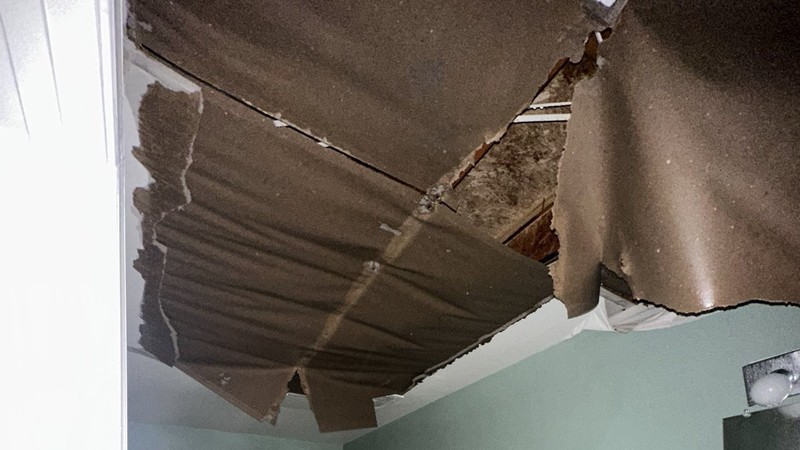
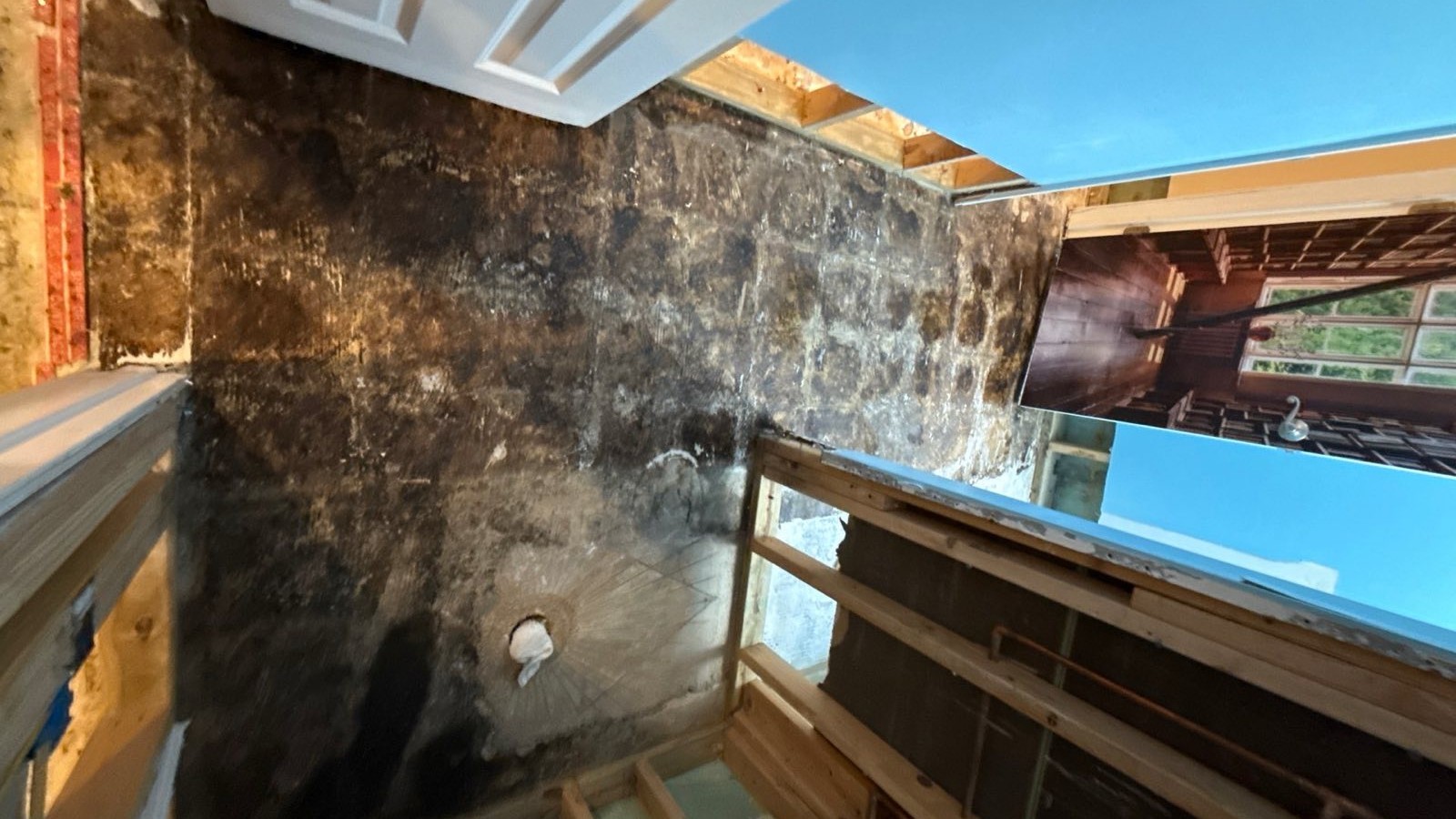
No. No spray — not vinegar, not bleach, not hydrogen peroxide, not a store-bought "mold bomb" — can truly fix mold that has colonized drywall, insulation, carpet padding, or structural framing. These are porous materials, and once mold establishes a root network inside them, surface treatment only addresses what you can see while the colony continues growing within.
This is the single most important and most misunderstood point about killing mold. Spraying moldy drywall can make the visible stain disappear and give the appearance of success, but the paper facing and gypsum core remain contaminated. Under the ANSI/IICRC S520 standard — the industry reference for professional mold remediation — porous materials with actual mold growth (what the standard calls Condition 3) are generally removed and replaced, not cleaned in place.
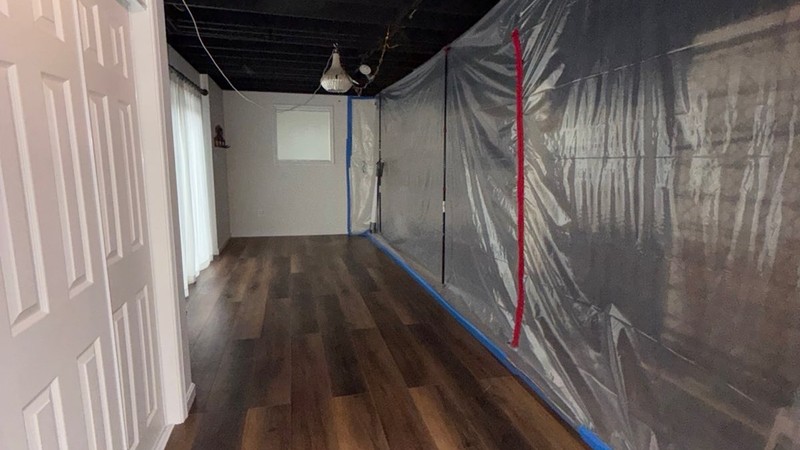
The correct process for colonized drywall is physical removal: cutting out the affected material under containment with negative air pressure, HEPA vacuuming and air filtration to capture spores disturbed by the work, cleaning the exposed cavity and framing, verifying the structure is dry to standard with moisture meters, and then rebuilding. This is exactly the kind of work our team handles through professional mold remediation, because a spray bottle simply cannot reach or repair what's inside the wall.
How Much Mold Is Too Much to Clean Yourself?
The EPA's general guideline is that you can usually handle mold covering less than about 10 square feet (roughly a 3-by-3-foot patch) yourself, provided it's on a cleanable, nonporous surface and there's no underlying water problem. Anything larger, anything on porous structural materials, or anything tied to ongoing moisture should be handled professionally.
Size isn't the only factor. If you can smell a strong musty odor but can't find the source, see mold returning after you clean it, notice it spreading across walls or ceilings, or have anyone in the home with asthma, allergies, or a compromised immune system, the job has moved beyond DIY. Hidden mold behind walls or under flooring is extremely common after water damage, and finding it requires moisture mapping with meters and thermal imaging — not guesswork.
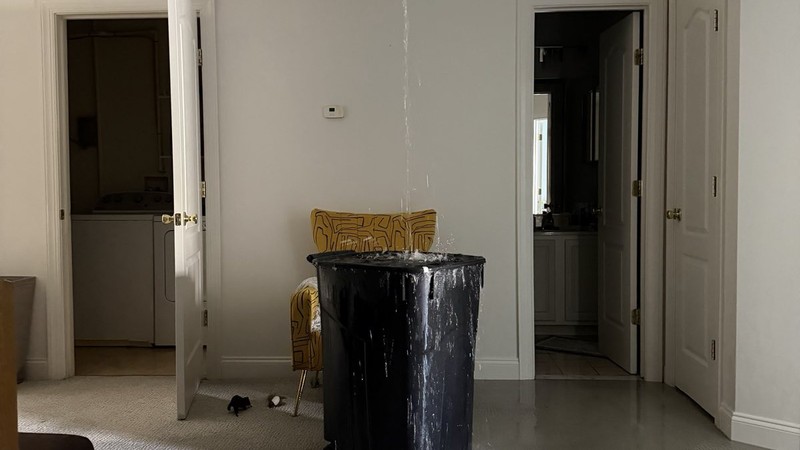
Mold is also a symptom, not the root cause. It only grows where there is excess moisture. If you kill visible mold but never fix the leak, condensation, or water intrusion feeding it, it will come back — which is why professional remediation always pairs removal with structural drying verified against documented moisture goals.
- DIY-appropriate: under ~10 sq ft on nonporous, cleanable surfaces
- Call a pro: mold on drywall, insulation, framing, or carpet
- Call a pro: recurring mold or a musty smell with no visible source
- Call a pro: any mold linked to a flood, sewage backup, or Category 3 water
- Call a pro: occupants with asthma, allergies, or immune issues
What Protects You and Prevents Mold From Coming Back?
The best long-term mold killer is actually moisture control, because mold cannot grow without a water source. After you clean any mold, the priority is eliminating the humidity, leak, or condensation that created the conditions in the first place. Keep indoor relative humidity below 50%, fix plumbing and roof leaks promptly, and ventilate bathrooms and kitchens to the outside.
When you do clean mold yourself, protect your health. Wear an N95 respirator (not a cloth or surgical mask), nitrile gloves, and eye protection, and open windows or run a fan exhausting outdoors. Disturbing mold releases spores into the air, so even small jobs deserve basic containment and ventilation.
For recurring or widespread moisture problems, address the mechanics: run a dehumidifier in damp basements, insulate cold pipes to stop condensation, direct downspouts away from the foundation, and dry any spill or leak within 24–48 hours — the window before mold can establish on wet materials. The same drying science we use on jobsites — psychrometry, dehumidification, and daily moisture readings logged against a drying goal — applies at home: a surface isn't safe until the material beneath it is verifiably dry.
When Should You Call Restoration Doctor Instead of Scrubbing?
Call a professional the moment mold is tied to water damage, covers more than about 10 square feet, keeps coming back, or involves structural materials you can't simply wipe down. Restoration Doctor follows ANSI/IICRC S520 mold remediation protocols and the S500 water-damage standard, serving homeowners and business owners across the Virginia, Maryland, and Washington, D.C. tri-state area.
We offer 24/7 emergency response — which matters because mold after a leak or flood can begin growing within 24–48 hours. Our technicians locate hidden moisture with meters and thermal imaging, contain the affected area under negative air pressure, remove colonized porous materials, run HEPA air filtration, and dry the structure to verified moisture goals with daily monitoring until the readings prove it's done.
If you plan to file an insurance claim, we make that straightforward: we bill you, the homeowner, directly and hand you documentation you may share with your insurer — Xactimate scope, CompanyCam photo documentation, and daily moisture logs. We are hired by the property owner under a written agreement. If you've found mold you're not sure how to handle, contact us or call 1-888-293-5663 for a straight answer.