Bathtub Overflow Downstairs Ceiling: A Homeowner's Guide

BYSteve Jafari, General ManagerNORTHERN VIRGINIA, MARYLAND & D.C.

A bathtub overflow downstairs ceiling problem happens when clean water from an overflowing tub runs across the bathroom floor, through subfloor gaps and around plumbing penetrations, and pools inside the ceiling cavity below. Left overnight it can travel two full floors in a colonial, saturate insulation and drywall, and degrade from Category 1 to Category 2 water under the ANSI/IICRC S500 standard. Act fast: stop the water, cut power to the affected circuit, relieve a bulging ceiling safely so it drains in a controlled way, and get professional structural drying started within hours to prevent mold growth and a collapsed ceiling.
Call 1-888-29-FLOODHow does a bathtub overflow reach the downstairs ceiling?
A bathtub overflow reaches the downstairs ceiling because water follows gravity and the path of least resistance — not the walls of the bathroom. When a tub fills past its overflow drain (or that drain is clogged), water sheets across the bathroom floor, finds the gaps around the toilet flange, tub drain, and baseboard seams, and pours straight into the joist cavity underneath. From there it spreads horizontally along the subfloor and drips down through the ceiling drywall of the room below.
In a typical Northern Virginia colonial, the upstairs bathroom sits directly above a living room, dining room, or foyer. The floor system between them is usually dimensional wood joists, a plywood subfloor, and a layer of half-inch drywall on the underside forming the downstairs ceiling. That drywall is the last thing holding the water back, and it is the weakest link. Saturated drywall loses strength fast, sags into a visible bulge, and can rupture without warning.
Five minutes of overflow is genuinely enough to cause a two-story problem. A running tub faucet typically delivers roughly 4 to 7 gallons per minute, so a short overflow can dump 20 to 35 gallons before you notice. That water does not evaporate on its own — it hides inside the structure and keeps migrating for hours after the tap is shut off.
This is also why the damage often looks worse the morning after. Homeowners frequently shut off the tub, mop the bathroom floor, and assume the event is over — only to find a spreading brown stain or a sagging pocket on the downstairs ceiling the next day. The bathroom floor was never the real storage tank; the joist cavity was.

How far can the water actually travel in a colonial?
Water from an upstairs tub overflow can travel two full floors down and several feet horizontally from the source. Gravity pulls it down through every penetration in the subfloor, but it also wicks sideways along the top of the ceiling drywall and rides along joists, wiring, and HVAC runs until it finds another opening.
In practice we regularly document overflow water that started in a second-floor bathroom, pooled in the first-floor ceiling, then found the stair chase or an interior wall cavity and continued down into a finished basement. The visible stain downstairs is almost never the full footprint of the damage — moisture meters and thermal imaging routinely reveal a wet area two to three times larger than the ceiling stain suggests.
This is why chasing the water matters. Restoration Doctor uses moisture mapping in line with the ANSI/IICRC S500 standard to trace the true boundary of the wet materials before any drying equipment is placed, so nothing hidden is left behind to feed mold growth inside the structure.
- Downward: through the tub drain gap, toilet flange, and subfloor seams into the ceiling cavity
- Horizontally: along joists and the top face of the ceiling drywall, often 3 to 8 feet from the tub
- Deeper: down stair chases, interior wall cavities, and plumbing runs into lower floors and basements
- Into systems: soaking blown-in or batt insulation, which holds water for days and dramatically slows drying
What should I do in the first 10 minutes?
In the first 10 minutes, stop the water source, kill the power to the affected area, and safely relieve pressure on a bulging ceiling so it drains in a controlled way instead of collapsing. Fast, calm action here is the single biggest factor in how large — and how expensive — the loss becomes.
Turn off the tub and open the drain. If the ceiling below is sagging or you see a growing brown bulge, that pocket is holding water and can fail suddenly. From a safe position — never standing directly under it — puncture the low point of the bulge with a screwdriver over a bucket to let it drain slowly. This relieves the load on the surrounding drywall and reduces the mess when the water comes down on your terms instead of all at once.
Do not turn on ceiling lights or fans in the wet room until power to that circuit is off at the breaker — water pooling around electrical fixtures in a ceiling is a genuine shock and fire hazard. Then move furniture, rugs, and electronics out from under the drip zone and photograph everything before you clean up. Those photos become part of your claim documentation later.
Because water keeps migrating inside the structure for hours after the visible dripping stops, this is the moment to call for professional help. Our emergency line runs 24/7 and our median on-site arrival across Northern Virginia is 47 minutes.
- Shut off the tub and open the tub drain immediately
- Cut power to the affected room's circuit at the breaker
- Relieve a bulging ceiling from a safe angle and drain it into a bucket
- Move and photograph belongings before cleanup
- Call 1-888-293-5663 for 24/7 emergency response

Is bathtub overflow water clean or contaminated?
Fresh bathtub overflow water usually starts as Category 1 (clean) water, but it does not stay that way. Under the ANSI/IICRC S500 standard, water is categorized by its source and by how it degrades over time and travel. Clean water that sits, passes through building materials, or absorbs contaminants can deteriorate to Category 2 — often within roughly 24 to 48 hours depending on temperature and conditions.
This matters because the category drives the entire scope of work. Category 1 water that is extracted and dried quickly may allow much of the drywall and insulation to be saved. Once the same water has soaked through a ceiling cavity — picking up dust, drywall gypsum, and whatever contamination sits in the joist bay — it becomes Category 2, and more porous materials must be removed rather than dried in place.
If the tub water mixed with a toilet overflow, or if it sat long enough to support significant microbial growth, the loss can reach Category 3 — which triggers contaminated-water protocols and disposal of affected porous materials. That is why documenting the timeline honestly for your restoration team and your insurer matters so much: the difference between a fast Category 1 dry-out and a Category 3 removal is a fundamentally different job.
| Category | Description | Typical scope |
|---|---|---|
| Category 1 | Fresh, clean overflow caught early | Extract and dry in place; often save drywall and framing |
| Category 2 | Clean water degraded over ~24–48 hours or after travel through building materials | Remove wet insulation and sagging drywall; clean and apply antimicrobial as needed |
| Category 3 | Grossly contaminated or sewage-mixed water | Contaminated-water protocols, disposal of affected porous materials, full cleaning and sanitizing |
Should I replace or dry the downstairs ceiling?
Whether the ceiling can be dried or must be replaced depends on how saturated it is, how long it stayed wet, and the water category. A lightly stained ceiling caught within hours can sometimes be dried in place; a ceiling that sagged, bubbled its paint, or held a full water pocket almost always needs a section cut out and replaced.
Half-inch drywall loses its structural integrity once fully saturated. Even if it eventually dries, the paper facing delaminates and the gypsum core stays soft, so it never regains its strength or a clean finish. Sagging, cracking, or a visible bulge is a clear signal that the drywall is compromised and should come out.
The bigger drying problem is usually hidden above the ceiling. Wet insulation in the joist bay acts like a sponge, holding moisture against the subfloor and framing for days. Restoration Doctor typically opens a controlled access point, removes saturated insulation, and dries the cavity, subfloor, and joists to a verified drying goal rather than sealing wet materials behind a fresh ceiling — which is the fastest way to grow mold you will not see until it stains through the new paint.
Our typical structural dry-out runs about 4.5 days, monitored daily with moisture meters until the framing and subfloor hit documented dry standards. Learn more about the full process on our water damage restoration page.

How long until mold becomes a problem?
Mold can begin growing on wet ceiling drywall, insulation, and framing within 24 to 48 hours, especially in the warm, dark, poorly ventilated space of a ceiling cavity. That short window is why drying speed matters so much — and why closing up a wet cavity is such a costly mistake.
A ceiling joist bay is close to ideal for mold: cellulose in the drywall paper and settled dust for food, no light, no airflow, and trapped humidity from saturated insulation. Once colonies establish, the job shifts from simple drying to containment, HEPA filtration, and removal under the ANSI/IICRC S520 mold remediation standard — a larger, more disruptive project.
The good news is that mold is largely preventable when the structure is dried quickly and verified dry rather than assumed dry. If your ceiling has been wet for more than a couple of days, or you notice a musty odor, get a professional mold assessment before you close everything back up. Our mold remediation team can confirm whether growth has started and scope the safe removal.
What gets billed, and who do you pay?
A bathtub overflow ceiling loss is typically billed as a scope of line items — emergency water extraction, controlled demolition of unsalvageable drywall and insulation, structural drying equipment, daily monitoring, antimicrobial treatment where the category calls for it, and reconstruction — priced in Xactimate, the same estimating platform insurers use. Every service cost is a range, never a flat fee, because square footage, water category, and how far the water traveled all change the scope.
Restoration Doctor bills the homeowner directly. We do not bill your insurance company — we work for you, not your carrier. What we hand you is a carrier-ready claim file: a full Xactimate scope, CompanyCam photo documentation of every affected area, and daily moisture logs proving the structure was dried to standard. You submit that file to your insurer, and it is built to support a fair payout.
About 83% of our customers file an insurance claim, and a sudden, accidental tub overflow is generally the kind of event homeowners policies are designed to cover. Gradual seepage or neglected maintenance is treated very differently by carriers, which is another reason documenting the sudden nature of the event helps. Our insurance claims resource walks through how to strengthen your claim file step by step.
With over 10,000 restoration projects completed across the Virginia, Maryland, and Washington, D.C. tri-state area, our estimates are built to hold up to carrier review while keeping you — the homeowner we actually work for — in control of the process.
- Emergency extraction and water removal
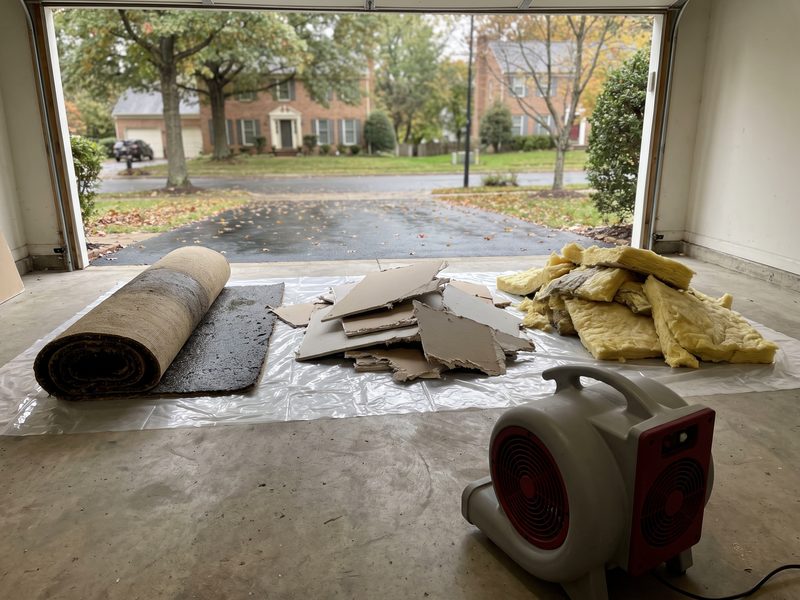
- Controlled removal of sagging drywall and saturated insulation
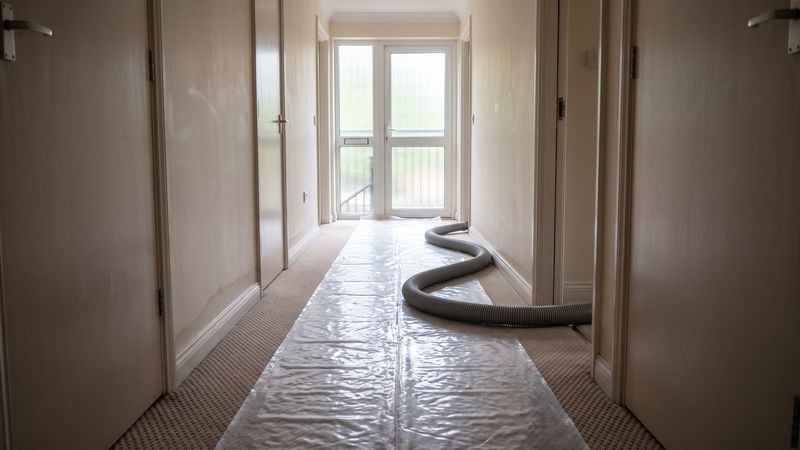
- Structural drying: air movers, dehumidifiers, daily moisture monitoring
- Antimicrobial and cleaning treatment based on water category
- Reconstruction: new drywall, texture, and paint to match
- Documentation package: Xactimate scope, CompanyCam photos, daily moisture logs

How can I prevent a tub overflow from wrecking the ceiling again?
The most effective prevention is keeping the tub's overflow drain clear and never leaving a filling tub unattended. The overflow drain is the built-in backup that fails when it clogs with hair and soap scum — and a tub filling unattended past a blocked overflow is the single most common cause of this exact two-story loss.
Beyond habits, a few small upgrades meaningfully reduce risk. Reseal the caulk line where the tub meets the floor and walls annually so surface water cannot slip into the subfloor. Add a simple water alarm on the bathroom floor — a low-cost sensor that sounds the moment water pools, buying back the minutes that separate a mopped floor from a demolished ceiling. If your upstairs bath sits over a finished, high-value room, that early warning is well worth it.
Finally, know where your water shutoffs are before you need them. Every second counts once water is moving through your structure, and a homeowner who can stop the source in 30 seconds instead of five minutes changes the entire outcome of the loss.
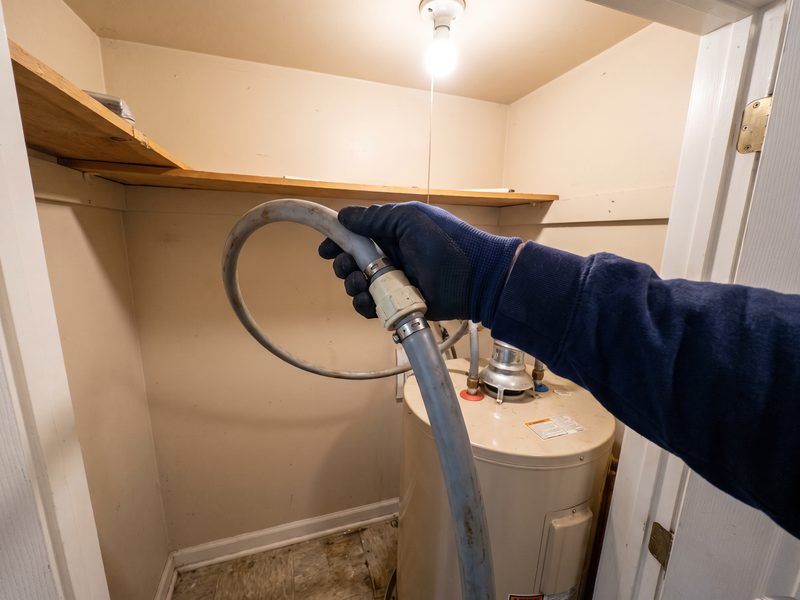
- Clear the tub overflow drain of hair and soap buildup regularly
- Never walk away from a filling tub
- Re-caulk tub-to-floor and tub-to-wall seams once a year
- Install an inexpensive water leak alarm on the bathroom floor
- Know your water shutoff locations in advance