Dishwasher Leak Water Damage: A Homeowner's Guide

BYSteve Jafari, General ManagerNORTHERN VIRGINIA, MARYLAND & D.C.

Dishwasher leak water damage is most dangerous where you can't see it — under the cabinet base, toe-kick, and subfloor, where trapped moisture quietly rots wood and holds materials wet well past the 24-to-48-hour window for preventing mold growth. The moment you spot pooling, warped flooring, or a musty smell near the unit, shut off the dishwasher's water supply, cut power to the appliance, and get the hidden cavity professionally dried to verified moisture standards before decay sets in. Dishwasher water starts as clean Category 1 water under the ANSI/IICRC S500 standard, but it degrades toward Category 2 or 3 the longer it sits trapped in a warm, dark cabinet cavity. Restoration Doctor responds 24/7 across the Virginia, Maryland, and Washington, D.C. tri-state area — call 1-888-293-5663 for an emergency assessment.
Call 1-888-29-FLOODWhat causes dishwasher leak water damage?
Dishwasher leak water damage happens when water escapes the appliance and migrates into the surrounding cabinet, flooring, and subfloor — usually from a failed door gasket, a cracked or loose water supply line, a worn drain hose, a clogged or corroded pump, or a door seal that no longer closes tightly. Because most of these failures are slow and low-volume, the water rarely announces itself with a dramatic flood. Instead, it seeps out at the base of the unit and wicks sideways into porous materials where no one is looking.
The single most common failure point is the connection where the supply line meets the inlet valve. A drip of even a few tablespoons a day, repeated over weeks, is enough to saturate the plywood subfloor beneath the appliance and the adjacent cabinet toe-kick. Hard-water mineral buildup, aging rubber seals, and vibration from normal wash cycles all loosen these fittings over time.
Other frequent culprits include a stuck or failed float switch that lets the tub overfill, the wrong detergent foaming over and defeating the door seal, a drain hose that kinks or backs up under the sink, and a corroded tub that develops a pinhole near the base. In each case, the leaked water is typically clean at the source — Category 1 under the ANSI/IICRC S500 Standard for Professional Water Damage Restoration — but the longer it sits trapped in a warm, dark cabinet cavity, the faster it degrades toward Category 2 or Category 3 contamination as it picks up bacteria, food residue, and microbial growth.
Why is the hidden under-cabinet and toe-kick water the real problem?
The water you can see on the kitchen floor is almost never the real damage. The real damage is the water you can't see, trapped under the cabinet base and behind the toe-kick where it has nowhere to evaporate. A dishwasher sits recessed inside a cabinet run, so a leak drains straight down into the enclosed cavity beneath the unit and the adjacent base cabinets — hidden from view and shielded from airflow.
This matters because of how building materials behave when they stay wet. Plywood and OSB subfloor, particleboard cabinet boxes, and MDF toe-kicks are all highly absorbent. Once saturated, they swell, delaminate, and lose structural integrity. A hardwood or laminate floor above will cup, crown, or buckle as moisture pushes up from below — and by the time you see that surface distortion, the substrate has often been wet for weeks.
Trapped moisture also has nowhere to go. When water spills in the open on a tile floor, it evaporates and the problem largely resolves itself. Under a dishwasher, the water is sealed inside a cabinet cavity with the appliance sitting on top of it, so the relative humidity in that pocket stays near saturation. That is exactly the microclimate mold needs — sustained moisture, an organic food source, and stagnant air — which is why appliance leaks so often become mold remediation jobs before the homeowner realizes anything is wrong.
Left alone, a silent dishwasher leak can rot a subfloor until the flooring feels soft and spongy underfoot, compromise the cabinet run that supports your countertop, and spread moisture into the wall cavity behind the counter. What started as an inexpensive hose or fitting failure can turn into a full floor-and-cabinet replacement.

How do I know if my dishwasher has been leaking silently?
You can often catch a silent dishwasher leak before major damage sets in by watching for a small cluster of early warning signs around the base of the appliance and the neighboring cabinets. Most of these clues appear at floor level, so you have to get down and look — the problem is rarely visible from standing height.
The most reliable early indicator is a persistent musty or earthy smell in the kitchen that gets stronger near the dishwasher. That odor is microbial growth feeding on wet wood, and it usually shows up before any visible warping. Discoloration or dark staining along the toe-kick, at the seam where the cabinet meets the floor, or on the flooring directly in front of the unit is another strong signal.
If you notice any of the following, treat it as a probable hidden leak and investigate promptly:
- A musty or moldy smell that intensifies near the dishwasher or under the adjacent sink cabinet
- Warped, cupped, or lifting flooring — especially hardwood, laminate, or vinyl plank — in front of the unit
- Soft, spongy, or discolored spots on the floor when you press with your foot
- Peeling, swelling, or dark stains on the cabinet toe-kick or the bottom of the cabinet box
- Curling floor caulk or a gap opening between the floor and the cabinet base
- Visible moisture, rust, or mineral crust around the water supply fitting or drain connection
- A recurring puddle that returns after you wipe it up
| What you notice | Likely cause | Urgency |
|---|---|---|
| Musty smell near unit | Wet subfloor / early mold growth | High — investigate now |
| Warped floor in front of dishwasher | Subfloor saturated from below | High — likely weeks of leaking |
| Rust or mineral crust at supply line | Slow drip at the fitting | Medium — tighten or replace, then verify the area is dry |
| Puddle returns after wiping | Active leak in progress | High — shut off the water supply |
| Peeling or swollen toe-kick | Prolonged moisture wicking | High — the hidden cavity is wet |
What should I do immediately when I find a dishwasher leak?
The moment you confirm a dishwasher leak, stop the water at its source and stop running the appliance — do not start another cycle hoping it drains. Shut off the dishwasher's dedicated hot-water supply valve, which is usually under the adjacent sink, or turn off the main shutoff if you can't locate it. Then unplug the unit or switch off its breaker to eliminate any electrical hazard around standing water.
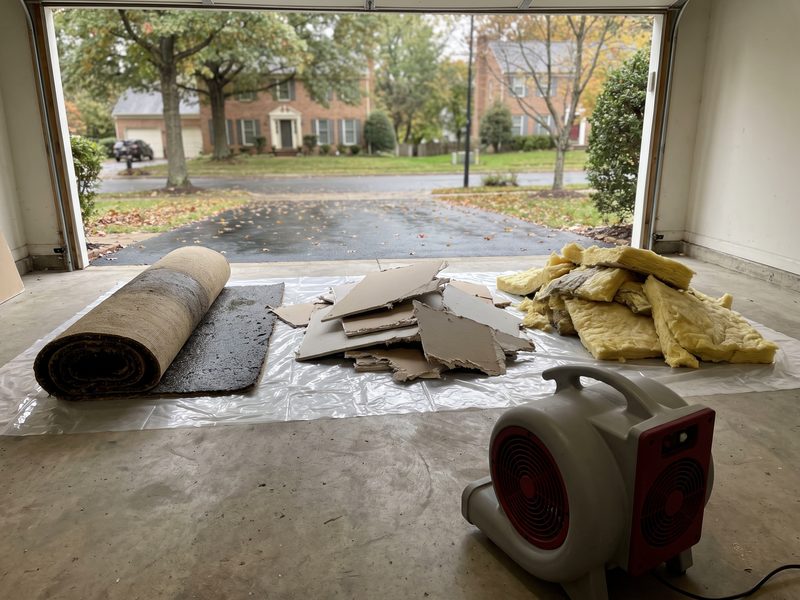
Next, remove standing water with towels and a wet/dry vacuum, and open the cabinet doors and dishwasher door to start air movement. If you can safely pull the dishwasher forward — many units slide out once the mounting screws under the countertop and the supply and drain lines are disconnected — do so, because that exposes the hidden cavity that holds the real damage. Do not force it if the lines are still connected or the floor has buckled around the unit.
Document everything before you clean up. Photograph the appliance, the connections, the floor, the toe-kick, and any visible staining. Most homeowners dealing with appliance leaks end up filing an insurance claim, and clear early photos of the loss as you found it make that process far smoother.
Here is the fast, safe sequence:
- Shut off the dishwasher water supply valve (under the sink) or the main shutoff.
- Turn off power to the unit at the breaker or unplug it.
- Extract standing water with towels and a wet/dry vacuum.
- Open the cabinet and appliance doors to promote airflow.
- Photograph all damage before cleanup to support your claim.
- Pull the dishwasher forward only if the lines are disconnected and it moves freely.
- Call a licensed restoration provider to assess and dry the hidden cavity to verified standards.

How does a professional dry out a dishwasher leak?
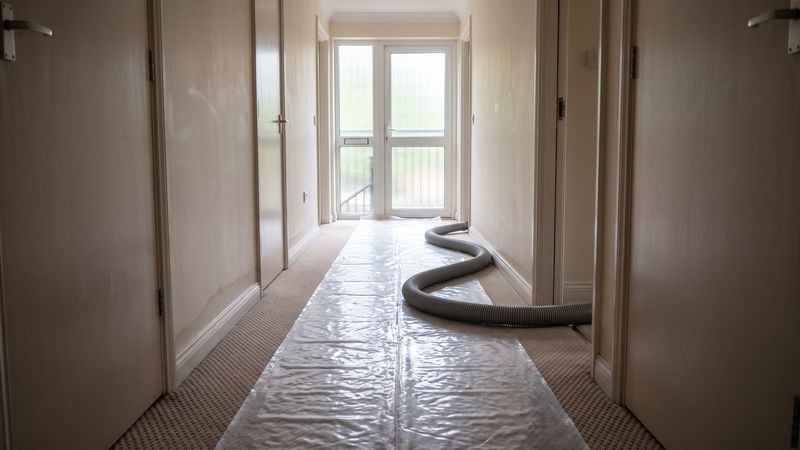
A professional dries a dishwasher leak by first mapping the true extent of the moisture with meters and thermal imaging, then setting up controlled drying — air movers paired with dehumidification — and monitoring the affected materials daily until they reach a verified drying goal. The goal is not just a dry surface but a dry substrate, because the damage lives in the subfloor and cabinet base you can't touch.
At Restoration Doctor, our technicians follow the ANSI/IICRC S500 standard for professional water damage restoration. We use pin and pinless moisture meters to trace where the water traveled, thermal imaging cameras to reveal temperature anomalies that indicate wet material behind cabinets and walls, and psychrometric readings — temperature, relative humidity, and grain depression — to size the right drying equipment for the space. If the appliance is trapping moisture beneath it, we pull it and dry the cavity directly rather than trying to dry around a sealed pocket.
Because trapped cabinet and subfloor moisture can't evaporate through a closed cabinet face, we often create controlled airflow paths — removing the toe-kick, drilling discreet vent holes into the cavity, or using specialized drying mats and injection drying systems for hardwood floors. We take moisture readings daily and log them, so drying continues until the numbers confirm the structure has reached its drying goal — not until it merely looks dry.
A typical structural dry-out runs three to five days, monitored daily against documented drying goals. A job that wraps up much faster than that usually means the hidden cavity was never fully addressed. You can learn more about our full process on our water damage restoration service page.
Will a dishwasher leak cause mold, and how fast?
Yes — a dishwasher leak can cause mold, and in the warm, enclosed, poorly ventilated cavity under a dishwasher, materials that stay wet past 24 to 48 hours are at real risk for growth. Because appliance leaks are usually slow and hidden, most of the dishwasher-related mold jobs we see involve growth that has been developing quietly for weeks or months before anyone noticed the smell.
Mold needs moisture, an organic food source, and a stagnant environment — and the sealed cabinet base beneath a dishwasher supplies all three. Cabinet particleboard, plywood subfloor, and the paper facing on drywall behind the unit are all excellent food sources. Once the relative humidity in that pocket stays elevated, colonization is only a matter of time.
This is why simply mopping up the visible water is not enough. If materials stayed wet long enough for growth to start, drying alone won't remove it, and remediation guided by the ANSI/IICRC S520 Standard for Professional Mold Remediation is the appropriate path — containment, removal of affected porous materials, HEPA air filtration and vacuuming, and verification that the work area is clean. If you see or smell mold during cleanup, stop disturbing it and review our mold remediation services before going further, since disturbing colonies spreads spores through the kitchen and the rest of the home.

Does insurance cover dishwasher leak water damage?
Most homeowners insurance policies cover water damage from a dishwasher leak when the leak is sudden and accidental — for example, a supply line that bursts or a fitting that fails without warning. Coverage becomes contested when the insurer decides the damage resulted from long-term seepage, gradual leakage, or deferred maintenance — which is exactly the scenario a slow, hidden dishwasher leak creates. Many policies contain specific exclusions for damage that occurred over an extended period, so the timeline of discovery matters.
That is why documentation matters so much with appliance leaks. Because the water was hidden, you need clear evidence of when the damage was discovered and professional readings that establish its extent. Restoration Doctor builds a carrier-ready claim file for you: an Xactimate scope of work, CompanyCam photo documentation, and daily moisture logs that record the loss objectively from day one.
Here is an important distinction in how we work: we bill you, the homeowner, directly, and we hand you a documented claim file you can submit to your carrier. We work for you, not your insurance company — our job is to restore your home to a verified dry standard and give you the paperwork that supports your claim. You can read more about how this works on our insurance claims page.
One more expectation to set: insurance almost never pays to replace the dishwasher itself or repair the failed part — that is considered a maintenance issue. The resulting damage to floors, cabinets, drywall, and structure is typically where coverage applies.
How much does dishwasher leak restoration cost?
Dishwasher leak restoration cost depends on how far the water traveled and how long it sat, so the honest answer is a range rather than a single number. A small, freshly discovered leak that only wet the cabinet base and a few square feet of subfloor sits at the low end. A long-hidden leak that rotted the subfloor, ruined a cabinet run, and started mold growth sits at the high end — often several times more.
The main cost drivers are the square footage of affected material, whether the water degraded to Category 2 or 3 contamination, whether cabinets or flooring must be removed and replaced, and whether mold remediation under the S520 standard is required. Every one of those factors gets worse the longer a silent leak goes undetected — which is the entire reason early action saves money.
Because we can't see your specific loss from here, we won't quote a fixed price. What we can promise is a documented, itemized scope so you know exactly what each line item covers and why it's necessary. To get an accurate assessment, contact us for an on-site evaluation — we respond 24/7 across the Virginia, Maryland, and Washington, D.C. tri-state area and can usually evaluate a kitchen leak the same day.
The pattern across the restoration jobs we complete is consistent: homeowners who called at the first musty smell paid far less than those who waited for the floor to buckle.

How can I prevent dishwasher leak water damage?
Most dishwasher leaks are preventable with a few minutes of inspection each season and a couple of inexpensive upgrades. The connections and seals that fail are all accessible, and catching a weeping fitting early is the difference between tightening a nut and replacing a floor.
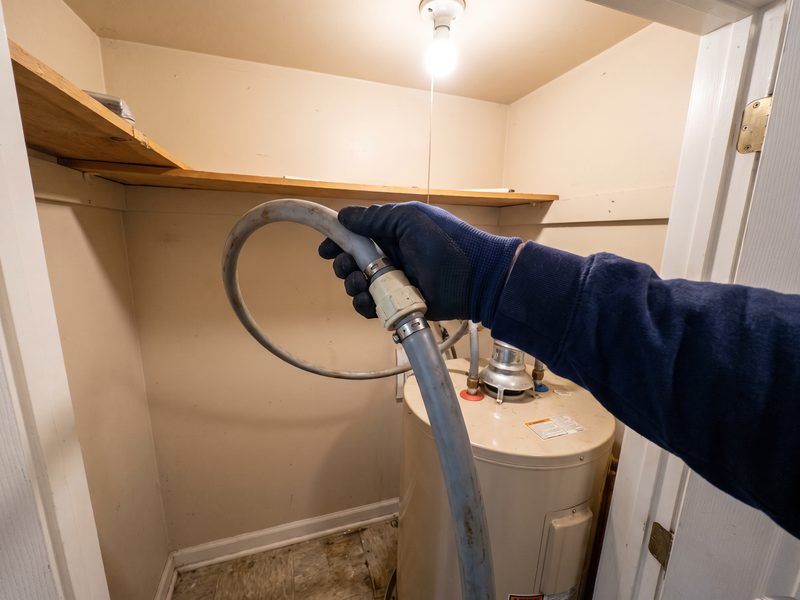
Start with the water supply line. If your dishwasher still runs on a plain rubber or plastic supply hose, replace it with a braided stainless steel line — they resist bursting and abrasion far better and are a low-cost upgrade. While you're under the sink, check the shutoff valve for crust or corrosion and confirm it actually turns, because a seized valve is useless in an emergency.
Then build these habits into your routine:
- Inspect the supply line, inlet fitting, and drain hose connection at least twice a year for drips, rust, or mineral crust.
- Check the door gasket for cracks, brittleness, or debris, and wipe it clean regularly so it seals tightly.
- Use only dishwasher-rated detergent in the correct amount — excess suds can force water past the door seal.
- Clean the filter and check the drain for clogs so wash water doesn't back up and overflow.
- Place an inexpensive water leak alarm or smart leak sensor on the floor of the cavity or the adjacent sink cabinet — it will catch a slow drip long before your nose does.
- Every few years, pull the toe-kick or slide the unit forward to visually inspect the floor beneath it for staining or moisture.