Do I Need Professional Water Damage Restoration, or Can I DIY?

BYSteve Jafari, General ManagerNORTHERN VIRGINIA, MARYLAND & D.C.

You do not always need professional water damage restoration. A small, fresh clean-water spill you can fully dry within 24-48 hours is DIY-safe. But if the water is contaminated (Category 2 or 3), has soaked into drywall, subfloor, or cabinets, has been sitting more than a day, you need a licensed IICRC-trained professional to dry the structure to a verified standard and prevent mold.
Call 1-888-29-FLOODDo I need professional water damage restoration, or can I DIY?
Whether you need professional water damage restoration comes down to three questions: how clean the water is, how far it spread, and how long it has been sitting. If a clean-water spill is small, caught within minutes, and confined to a hard, non-porous surface, you can almost certainly handle it yourself with towels, fans, and a wet/dry vacuum. If the water is contaminated, has soaked into porous building materials like drywall or subfloor, or has been present for more than 24 hours, you should call a professional.
The reason the line matters is simple: water damage is a race against the clock. The ANSI/IICRC S500 Standard for Professional Water Damage Restoration — published by the Institute of Inspection, Cleaning and Restoration Certification — is built around rapid response and controlled drying, because the longer materials stay wet, the more damage shifts from cosmetic to structural. EPA guidance is to dry water-damaged areas and items within 24 to 48 hours to prevent mold growth, and once moisture wicks behind walls or under flooring, a household box fan simply cannot reach it.
This guide gives you an honest, category-by-category framework so you can decide with confidence. When the answer is clearly "DIY," we will tell you. When it is not, we explain exactly what a professional does differently — and why it protects your home. If you are unsure and want a second opinion, our team offers 24/7 guidance at 1-888-293-5663.
What water damage can I safely clean up myself?
You can safely DIY water damage cleanup when the water is clean (Category 1), the affected area is small — generally under about 10 square feet — and you can start drying within minutes to a couple of hours. Think of an overflowing sink, a knocked-over glass, a small appliance drip on a tile floor, or rainwater tracked in near a door. These are nuisance events, not restoration events.
The key is that the water has not had time to migrate into porous materials and has not touched anything that stays wet on the inside. Hard surfaces like sealed tile, finished hardwood (if dried promptly), laminate countertops, and glass forgive fast cleanup. Extract the standing water, dry the surface, run air movement, and monitor the spot for a day or two for any warping, musty odor, or discoloration.
- A clean-water spill caught within an hour or two on a hard, non-porous surface
- A small toilet-tank (not bowl) or supply-line leak that is clean water only
- Condensation or minor rainwater near a threshold, wiped and dried promptly
- A spill under 10 square feet with no soaked drywall, carpet pad, or subfloor
- Any situation you can fully dry and verify within 24 to 48 hours
| Situation | DIY-safe? |
|---|---|
| Clean water, small area, caught fast, hard surface | Yes |
| Water sitting more than 24 hours | No — call a pro |
| Water touched drywall, carpet pad, insulation, or subfloor | No — call a pro |
| Any sewage, toilet-bowl overflow, or flood water | No — call a pro |
| You smell musty odor or see discoloration | No — call a pro |

When does water damage require a professional?
Water damage requires a professional whenever the water is contaminated, has spread into porous or structural materials, has been sitting long enough to risk mold, or is extensive enough that household equipment cannot dry it. In those cases, drying is no longer about wiping a surface — it is about pulling moisture out of the building assembly itself and proving it is gone.
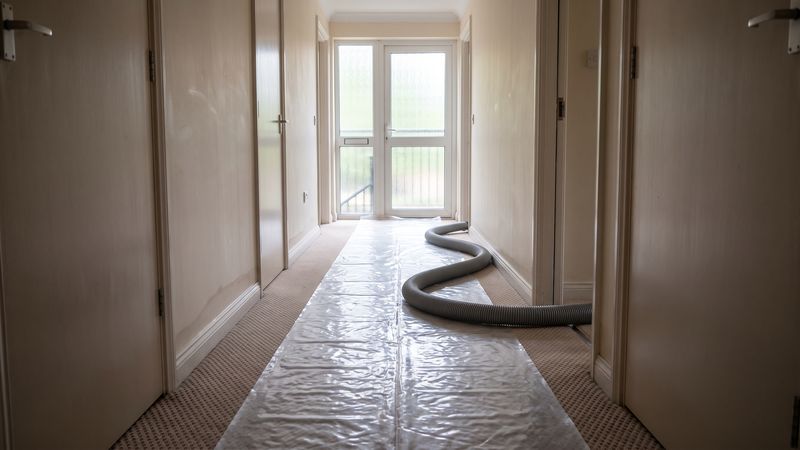
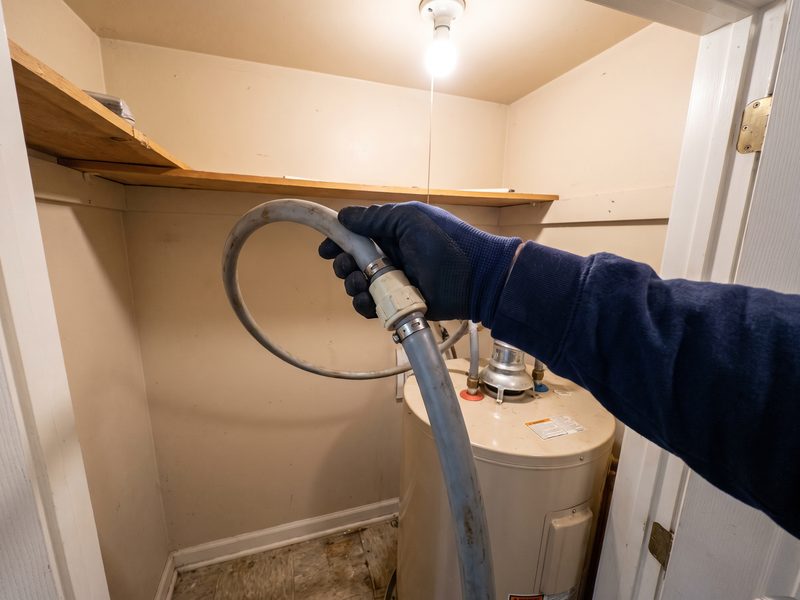
A restoration professional brings truck-mounted extraction, commercial air movers, and LGR (low-grain refrigerant) dehumidifiers that remove far more moisture per hour than any consumer fan or hardware-store dehumidifier. Just as important, they carry moisture meters and thermal imaging to find water you cannot see, and they document the drying against a verified dry standard rather than guessing. Our typical structural dry-out runs about 4.5 days, monitored daily with moisture logs until materials read dry.
- The source was contaminated — dishwasher/washer discharge, toilet, sump backup, storm or ground water
- Water reached drywall, baseboards, insulation, cabinetry, subfloor, or ceilings
- More than 24 hours have passed since the water intrusion
- The affected area is larger than roughly 10 square feet or spans multiple rooms
- There is a musty smell, visible staining, bubbling paint, or sagging drywall
- The water contacted electrical outlets, HVAC, or the ceiling below an upstairs leak
- You need documentation of the water damage and the drying
| Factor | DIY territory | Professional territory |
|---|---|---|
| Water category | Clean (Cat 1) | Cat 2 (gray) or Cat 3 (black) |
| Area affected | Small, <10 sq ft | Large or multi-room |
| Materials wet | Hard, non-porous | Drywall, subfloor, insulation, cabinets |
| Time elapsed | Under a few hours | Over 24 hours |
| Drying equipment | Fans, wet/dry vac | LGR dehumidifiers, air movers, extraction |
| Verification | Visual/touch | Metered to a verified dry standard |
What are the water categories, and why do they matter?
Water damage is classified into three categories under IICRC S500, and the category is the single biggest factor in whether DIY is safe. Category 1 is clean water from a sanitary source. Category 2 ("gray water") carries significant contamination and can cause discomfort or illness if contacted or consumed. Category 3 ("black water") is grossly contaminated and can contain sewage, harmful bacteria, and other pathogenic or toxigenic agents.
Category matters because contaminated water is not just a drying problem — it is a decontamination and health problem. Category 3 water requires biohazard protocols, PPE, antimicrobial treatment, and often the removal and disposal of porous materials that cannot be safely cleaned. You cannot sanitize your way out of black water with household cleaner and a mop, and materials that soaked it up usually have to go. Category also deteriorates over time: clean water left sitting can degrade to Category 2 or 3 as it sits, warms, and contacts contaminants in the building.
- Category 1 (clean): supply lines, tub/sink overflow with no additives, rainwater — DIY may be fine if small and fresh
- Category 2 (gray): washing machine or dishwasher discharge, toilet overflow with urine but no solids, sump pump discharge — professional recommended
- Category 3 (black): sewage, toilet backflow with solids, river or storm flooding, ground water, and standing water gone stagnant — always professional, biohazard protocols required

How do I know if water spread where I can't see it?
You often cannot know by looking — and that is exactly why hidden moisture is the most common reason a DIY cleanup fails. Water follows gravity and capillary action, wicking under baseboards, behind drywall, beneath flooring, and into wall cavities where the surface looks dry but the interior is soaked. Professionals confirm this with moisture meters and infrared thermal imaging that reveal cool, wet zones invisible to the eye.
There are warning signs you can watch for at home. A persistent musty or earthy smell almost always means trapped moisture. Cool or damp spots on a wall, bubbling or peeling paint, buckling or cupping floorboards, and drywall that feels soft or looks stained are all signals that water went deeper than the surface. If you dry the visible area but the smell or dampness returns, water is still hiding in the assembly and you need professional detection and drying.
This matters most with upstairs leaks and appliance failures, where water can travel across a ceiling, down a wall cavity, and into the floor below before a single stain appears. If you suspect hidden moisture, our water damage restoration team can map the full extent before it becomes a mold problem.
- Musty, earthy, or damp smell that lingers after cleanup
- Cool or soft spots on walls, ceilings, or baseboards
- Bubbling, peeling, or discolored paint
- Cupping, buckling, or squeaking floors
- Stains that reappear or slowly spread
- Higher humidity or condensation in the affected room
What's the risk of DIY water damage cleanup gone wrong?
The biggest risk of DIY gone wrong is mold: damp organic materials left wet past 24 to 48 hours are at risk for growth, often inside walls and under floors where you never treated it. A cleanup that seemed finished with a mop and a box fan can resurface weeks later as a mold remediation and demolition project costing many times more — after the drywall is already colonized.
Beyond mold, there are real safety and structural risks. Water and electricity together create shock and fire hazards, especially near outlets and in ceilings above light fixtures. Contaminated water exposes you to bacteria and pathogens without proper PPE. And prolonged moisture weakens subfloor, joists, and drywall, leading to sagging ceilings, rotted framing, and warped floors. Under the ANSI/IICRC S520 mold remediation standard, actual mold growth calls for containment so spores do not spread to clean parts of the home — something a homeowner with a trash bag and a bottle of bleach cannot achieve.
- Hidden moisture in walls and under flooring left past the 24-48 hour drying window
- Electrical shock or fire hazard where water meets wiring
- Illness from handling Category 2 or 3 contaminated water without PPE
- Structural rot in subfloor, joists, and framing from prolonged moisture
- Spreading mold spores to clean areas by disturbing growth without containment

How does professional water damage restoration work, and how fast?
Professional restoration follows a structured, standards-based process: emergency extraction, controlled structural drying, monitoring to a verified dry standard, and repairs. The goal is not just to remove standing water but to return building materials to their normal moisture content and prove it with data. Speed is the priority — the faster drying begins, the less damage becomes permanent.
At Restoration Doctor, our median on-site arrival across Northern Virginia is 47 minutes, backed by on-site arrival in as little as 60 minutes across the Northern Virginia core, 24/7. Once on site, we extract water, set commercial air movers and LGR dehumidifiers based on psychrometric calculations, and take daily moisture readings until materials hit dry standard — typically about 4.5 days for a structural dry-out. Throughout, we document everything with CompanyCam photos, an Xactimate scope, and daily moisture logs. We have completed over 10,000 restoration projects across the Virginia, Maryland, and Washington, D.C. tri-state area. Response times vary based on crew availability and demand.
- Inspection and moisture mapping with meters and thermal imaging
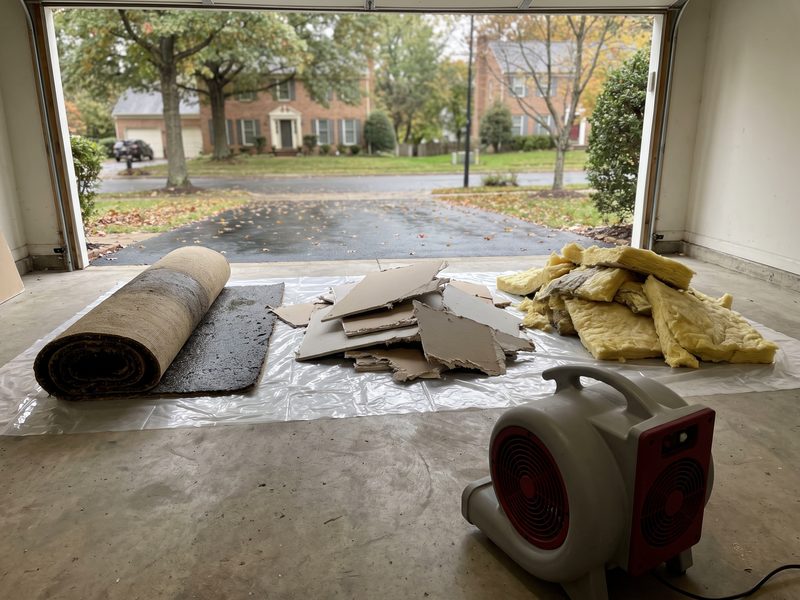
- Emergency water extraction and removal of unsalvageable materials
- Antimicrobial treatment for Category 2/3 water
- Structured drying with air movers and LGR dehumidifiers, sized by psychrometry
- Daily monitoring and moisture logs to a verified dry standard
- Reconstruction and repairs to restore the space
Who decides whether insurance applies to professional restoration?
Coverage depends on your policy and your insurer's decision. Questions about coverage belong with your insurer, your agent, or a licensed public adjuster or attorney. We document the work with dated photos, a written scope, and moisture readings.
Restoration Doctor invoices the property owner and provides documentation you may share with your insurer — Xactimate scope, CompanyCam photo documentation, and daily moisture logs. We are hired by the property owner under a written agreement. That documentation is difficult to reconstruct after a DIY cleanup is finished and the materials are already dry or discarded. Learn more on our insurance claims page.

How much does professional water damage restoration cost?
Professional water damage restoration cost depends on the water category, the size of the affected area, how many materials must be removed, and how long drying takes — so any honest answer is a range, not a fixed price. Small, clean-water jobs in a single room sit at the low end of that range, while multi-room Category 3 events requiring demolition, biohazard protocols, and reconstruction sit much higher.
Rather than quote a number that will not fit your situation, we assess on site and build a line-item Xactimate scope that shows what each step costs. We invoice the property owner for the whole scope, and we provide documentation you may share with your insurer. For a spill you truly caught early and can dry yourself, the smart move may be to skip the pro entirely; for anything involving contaminated water, hidden moisture, or structural saturation, professional drying almost always costs less than the mold and rot repairs that follow a failed DIY attempt.
If you are weighing the decision right now, call 1-888-293-5663 for 24/7 guidance or reach out through our contact page. We would rather help you decide correctly than have you pay twice.