
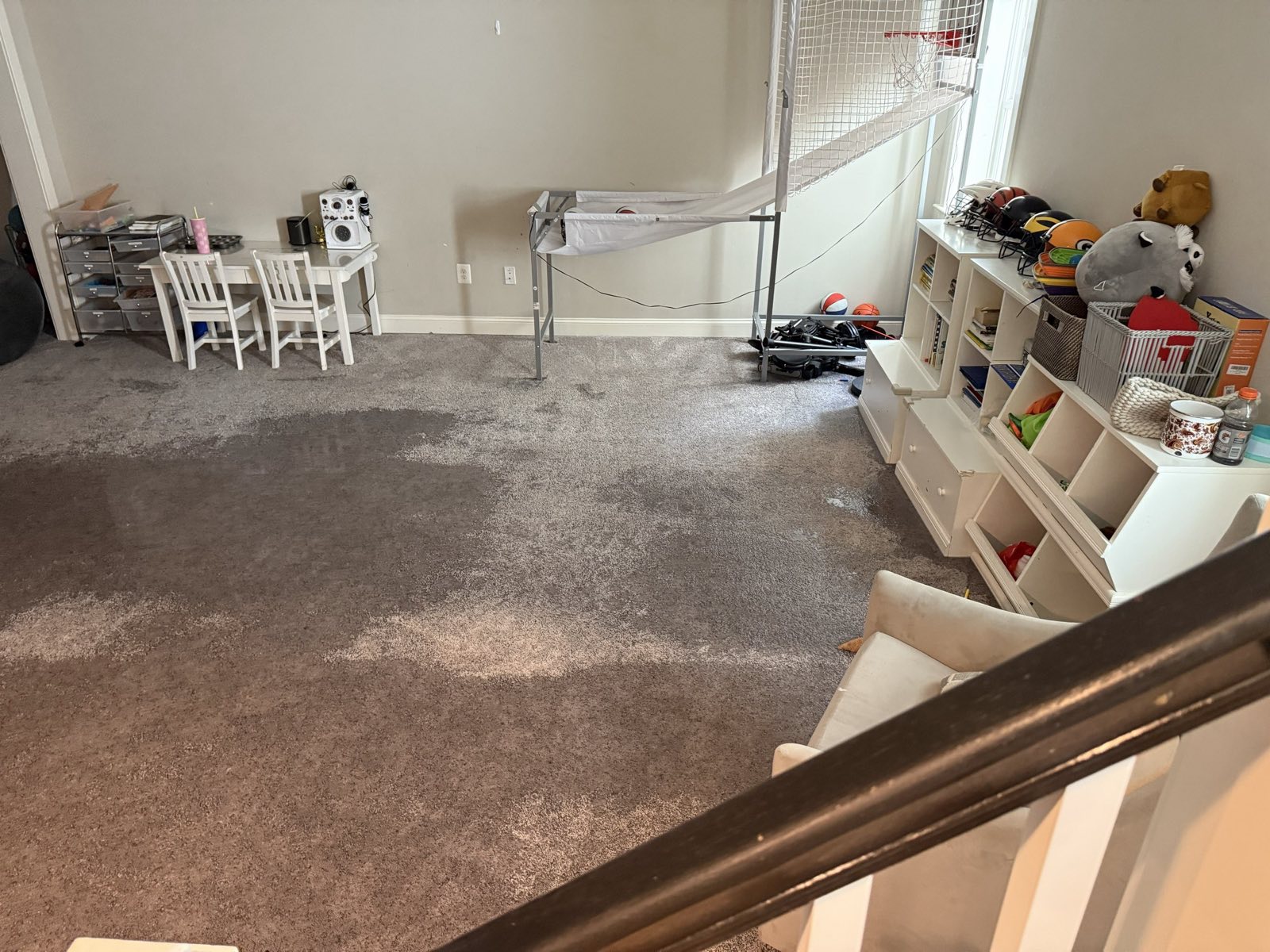
Flooded Basement Cleanup in Northern Virginia
Restoration Doctor removes standing water from flooded Northern Virginia basements with truck-mounted extraction, then dries the structure to documented moisture readings. We handle the water and drying. Waterproofing and source repair are a separate scope.
*Response times vary based on crew availability and demand.
| Metric | Value | Notes |
|---|---|---|
| Median on-site arrival time | 47 minutes* | Measured median arrival across dispatched emergency projects — the middle value, not an average. Distinct from the on-site arrival in as little as 60 minutes below. Response times vary based on crew availability and demand. |
| Restoration projects completed to date | 10,000+ | Aggregate count of completed restoration projects to date across the VA / MD / D.C. tri-state service area. |
| Customers who file through insurance | 83% | Share of CUSTOMERS who use insurance. Restoration Doctor works for the homeowner — you pay us directly, and we build documentation you may share with your insurer, documented to IICRC S500 with a line-item Xactimate estimate, which you submit to your insurer when you seek reimbursement. |
| Average structural dry-out time | 4.5 days | Average time to bring a structure to documented dry standards; monitored daily with moisture readings. Individual projects vary by saturation class. |
| On-site arrival in as little as (NoVA core) | 60 minutes* | The fastest on-site arrival across the NoVA core, distinct from the measured 47-minute median arrival. Response times vary based on crew availability and demand. |
| Google rating (live) | 4.9★ | 4.9★ is the Vienna, VA Google listing average. The review count changes nightly and is served live at /api/reviews-summary — never hardcoded. |
*Response times vary based on crew availability and demand.
What a flooded basement cleanup includes
A flooded basement job has four parts. First comes safety: electrical hazards in or near the water have to be dealt with before anyone works in it. Second, the standing water comes out. For a flooded basement or a multi-room loss we bring truck-mounted extractors, which pull water at a far higher rate than portable units and get the structure out of standing water fast. Third, the crew inspects what the water reached: carpet and pad, drywall, insulation, framing, the slab, stored belongings. Fourth, the structure is dried with air movers and dehumidifiers and checked with moisture meters until the readings reach documented targets.
Basement water is time sensitive. Restoration Doctor runs 24/7 emergency dispatch and can be on-site in as little as 60 minutes across the Northern Virginia core. Response times vary based on crew availability and demand.
The water source sets the scope
Two questions decide how much of a basement can be saved: where the water came from and how long it sat. A failed supply line or water heater puts clean Category 1 water on the floor. A sump pump or washing machine overflow, or clean water that has sat long enough to begin degrading, is Category 2. Water that rose from the ground outside or came back up a drain is Category 3, grossly contaminated, and porous materials it touched generally have to be removed rather than cleaned.
Clean water does not stay clean. Under the IICRC S500 standard, Category 1 water begins degrading toward Category 2 in roughly 48 hours and toward Category 3 within 72, so a basement found days after a leak can be a bigger job than the same leak caught the first night. We put the category call in writing at the inspection, with moisture data behind it.
What we remove and what we dry in place
The table below shows the general decision logic for common finished-basement materials. It is the starting point for the inspection, not a promise about any one basement. Readings and the water category on the day decide each item.
How drying is verified
Drying is finished when the materials reach documented targets, not when the calendar says so. We log a pre-drying baseline, take daily moisture readings and move equipment as the numbers fall. The targets this site publishes are drywall and carpet at 0%, framing lumber in the 10 to 15% range and masonry at 5% or below. A typical structural dry-out with Restoration Doctor runs about 4.5 days, and a deeply saturated basement can take longer.
Every phase is photographed in CompanyCam with date and time stamps, and you receive the photos, the moisture readings and the equipment records. The method behind the readings is explained on our structural drying page.
Where our scope ends: waterproofing and source repair
This page describes mitigation: removing the water, drying the structure and documenting the result. Fixing why the basement flooded is a separate job. Exterior grading, downspout extensions, sump pump installation, interior drain systems and foundation sealing are waterproofing and repair work, and they are not part of the cleanup described here. Repairs after drying are a separate scope under their own written agreement.
Doing them in the right order matters. Restoration is what you need today, because it removes the water and heads off mold. Waterproofing is what you invest in afterward so water does not return. If the cause is not corrected, a dried basement can flood again at the next storm. Our basement waterproofing versus restoration article walks through the decision.
Common basement materials by water category
General guidance based on IICRC S500 categories. The inspection and the readings decide each item.
| Material | Clean (Category 1) | Gray (Category 2) | Black (Category 3) |
|---|---|---|---|
| Carpet and pad | Often dried in place or extracted | Pad is usually removed; carpet may be cleaned | Removed |
| Drywall | Dried in place if not swollen | Flood-cut above the waterline if wicked | Cut out and discarded |
| Insulation | Often removed if saturated | Removed | Removed |
| Framing and subfloor | Dried in place | Dried and cleaned | Dried, cleaned and treated |
| Concrete slab | Dried | Dried and cleaned | Dried, cleaned and treated |
| Hardwood or engineered flooring | Often dried with specialty equipment | Case by case | Usually removed |
Stored belongings follow the same logic: porous items that touched Category 3 water are generally not restorable.
Documented projects
Real project files from Northern Virginia, each photographed in CompanyCam. More are on the projects page.


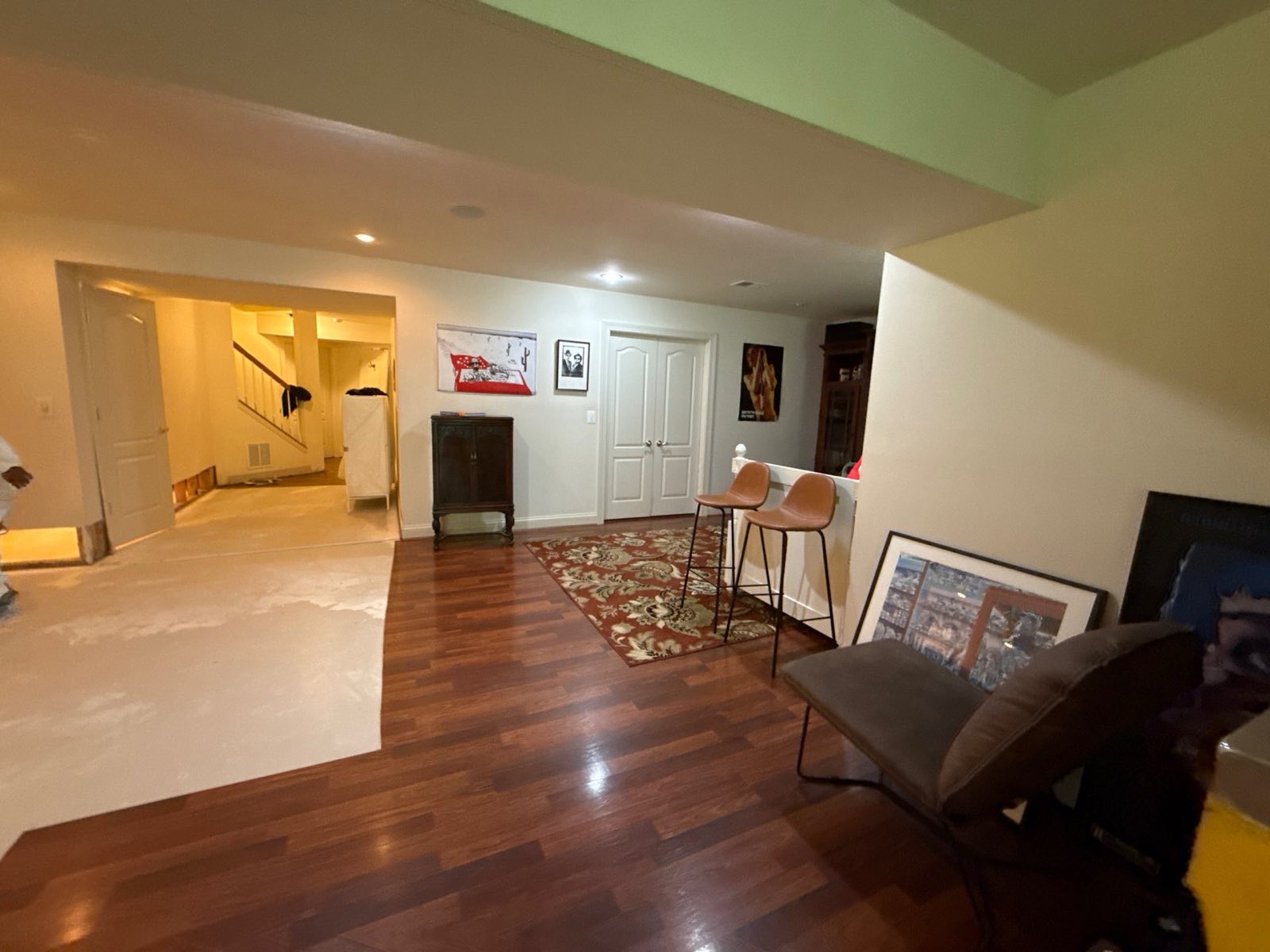
McLean Finished-Basement Dry-Out
Water pooling under finished basement flooring in McLean was pulled with truck-mounted extraction, then dried in place with LGR dehumidification instead of a gut-out — saving the finishes and shortening the homeowner's rebuild.
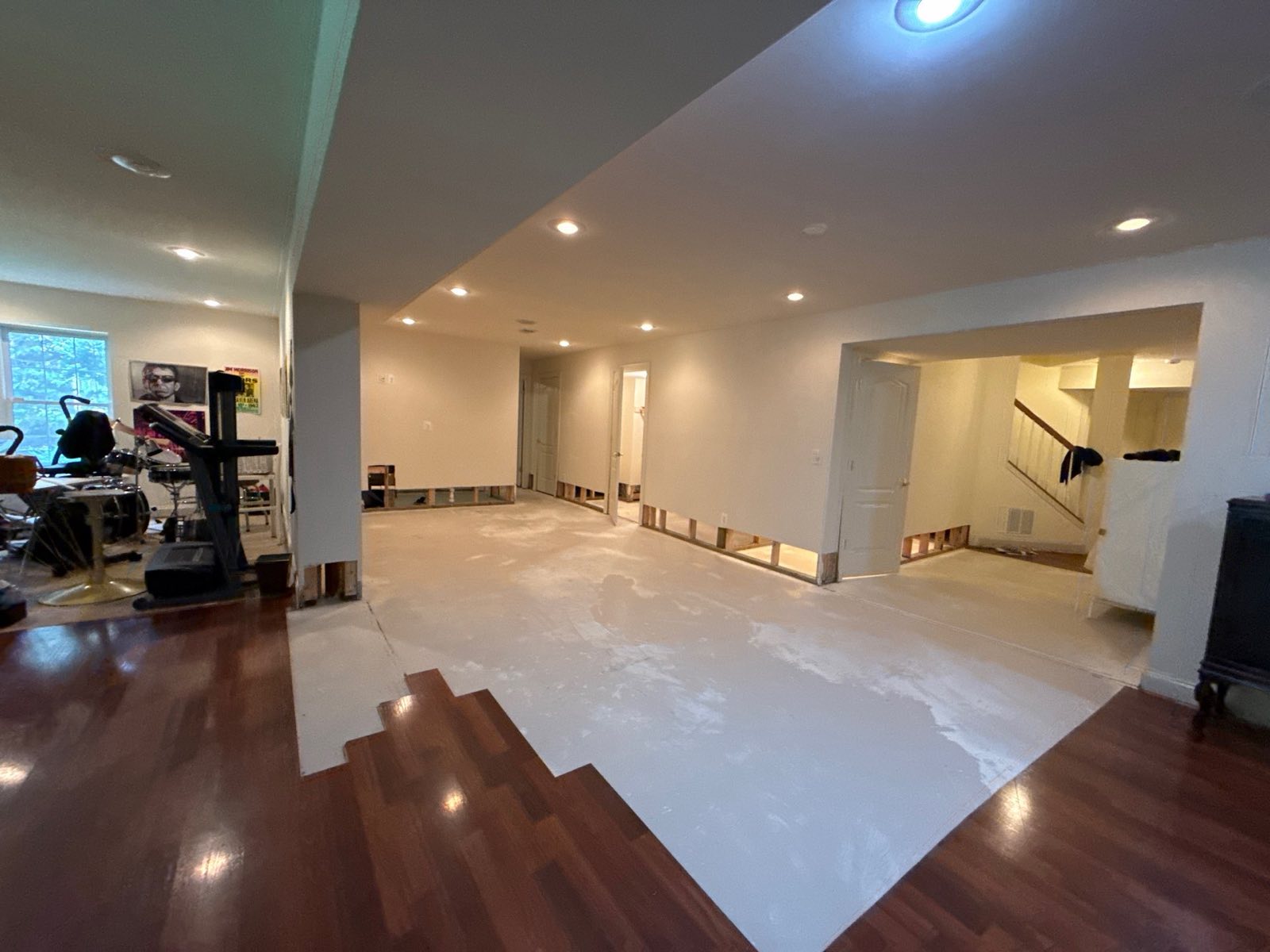
Leesburg Basement Water Extraction
A finished Leesburg basement took on water at the slab. We extracted, lifted and dried what could be saved, and monitored daily until framing and finishes hit documented dry standards.
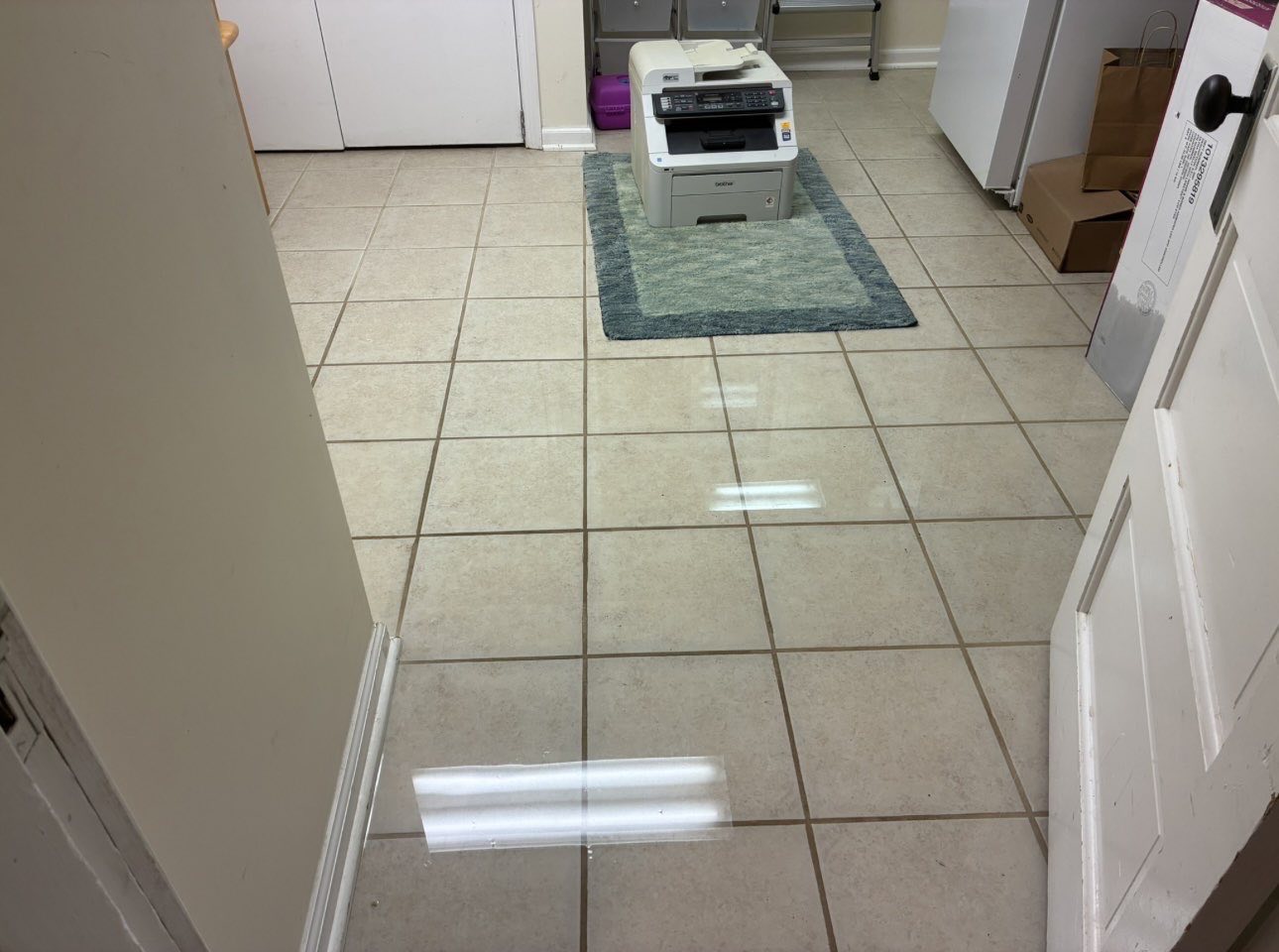

Arlington Basement Dry-Out
Before: a water-damaged Arlington basement. After: dried in place with the finishes preserved rather than gutted.
Woodbridge Finished-Basement Dry-Out
Before: water through a finished Woodbridge lower level. After: extracted and dried to verified targets with the finished space intact.
Related guides and pages
- A documented McLean basement case: room-air humidity readings, equipment on site and photos from one finished-basement job.
- Flooded basement in Northern Virginia: what to do first: the step-by-step emergency guide for the first hours.
- Flooded basement help: the fast call-and-dispatch page for an active flood.
- Structural drying and dehumidification: how drying is planned, monitored and signed off.
- Basement waterproofing vs restoration: which job you need first, and why order matters.
- Water damage restoration: the full water-loss service this page belongs to.
Still happening right now? Emergency response for a basement that is flooding right now
Frequently asked
Active water, mold, fire, or sewage event?
Connect directly with the Restoration Doctor team for your region. Crews are on standby 24/7 with documented response protocols.