
Hardwood Floor Drying in Northern Virginia
Restoration Doctor dries water-damaged hardwood floors in Northern Virginia: moisture mapping across the boards and subfloor, controlled drying equipment and meter readings before any refinishing. Salvage depends on how fast drying starts and on the water category, and we do not promise every floor can be saved.
*Response times vary based on crew availability and demand.
| Metric | Value | Notes |
|---|---|---|
| Median on-site arrival time | 47 minutes* | Measured median arrival across dispatched emergency projects — the middle value, not an average. Distinct from the on-site arrival in as little as 60 minutes below. Response times vary based on crew availability and demand. |
| Restoration projects completed to date | 10,000+ | Aggregate count of completed restoration projects to date across the VA / MD / D.C. tri-state service area. |
| Customers who file through insurance | 83% | Share of CUSTOMERS who use insurance. Restoration Doctor works for the homeowner — you pay us directly, and we build documentation you may share with your insurer, documented to IICRC S500 with a line-item Xactimate estimate, which you submit to your insurer when you seek reimbursement. |
| Average structural dry-out time | 4.5 days | Average time to bring a structure to documented dry standards; monitored daily with moisture readings. Individual projects vary by saturation class. |
| On-site arrival in as little as (NoVA core) | 60 minutes* | The fastest on-site arrival across the NoVA core, distinct from the measured 47-minute median arrival. Response times vary based on crew availability and demand. |
| Google rating (live) | 4.9★ | 4.9★ is the Vienna, VA Google listing average. The review count changes nightly and is served live at /api/reviews-summary — never hardcoded. |
*Response times vary based on crew availability and demand.
Why hardwood needs its own drying method
Hardwood is dense, and it dries slowly. Water gets under and between the boards and into the subfloor, where fans blowing across the surface barely reach it. That is why a floor can look recoverable and still be holding water that cups boards or grows mold underneath. Standard air movers and dehumidifiers are part of the answer, but a wood floor often also needs a way to pull moisture from below the boards.
Timing decides most outcomes. Hardwood floor water damage can often be saved if drying begins within 24 to 48 hours. After that, the odds of buckling and staining rise.
How we dry a wood floor
The inspection comes first. We map moisture with meters and thermal imaging across the boards and the subfloor, classify the water category, and note what the floor is: solid or engineered, over a slab or over joists, finished in place or glued down. Those facts change what can be done.
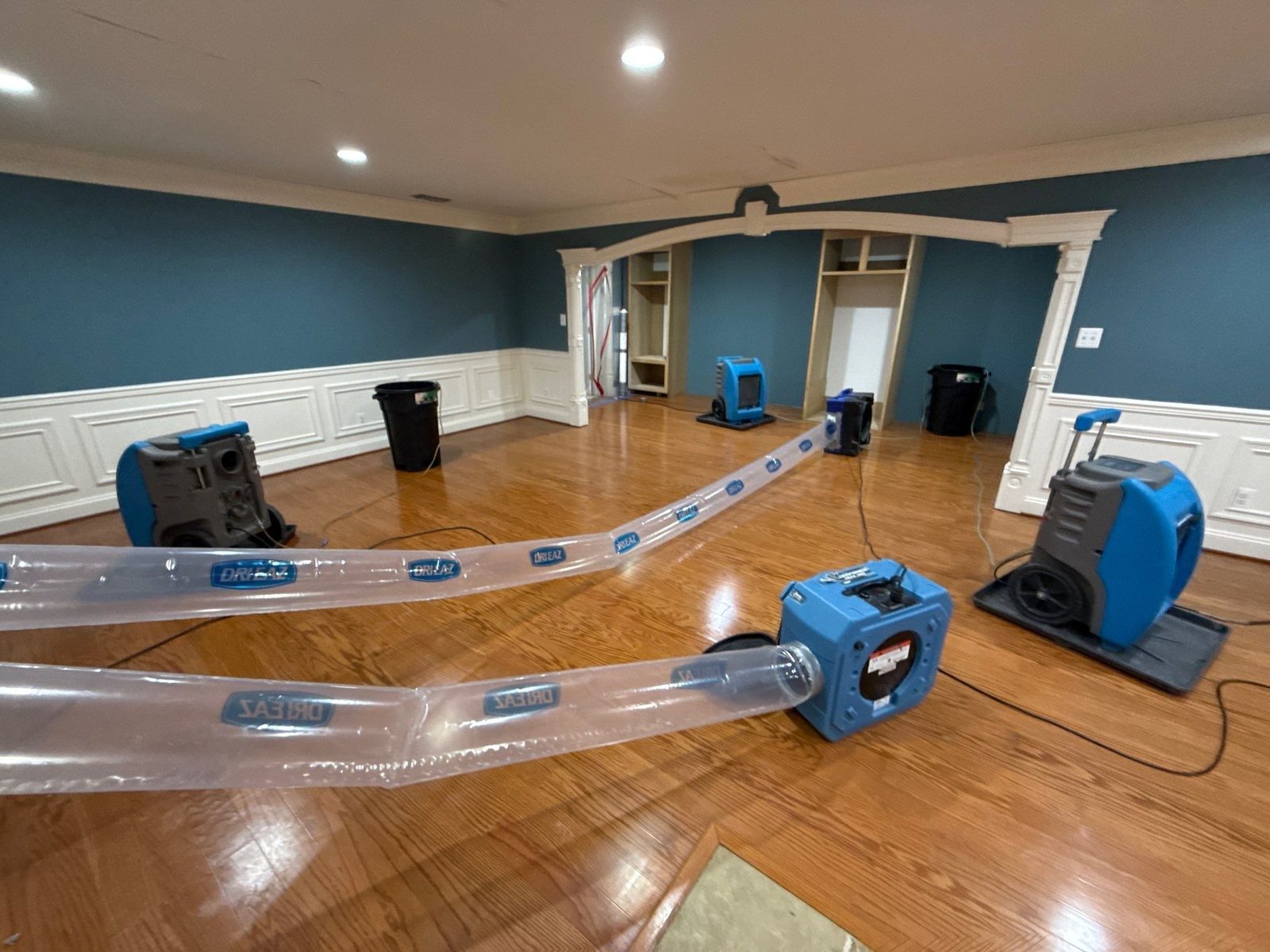
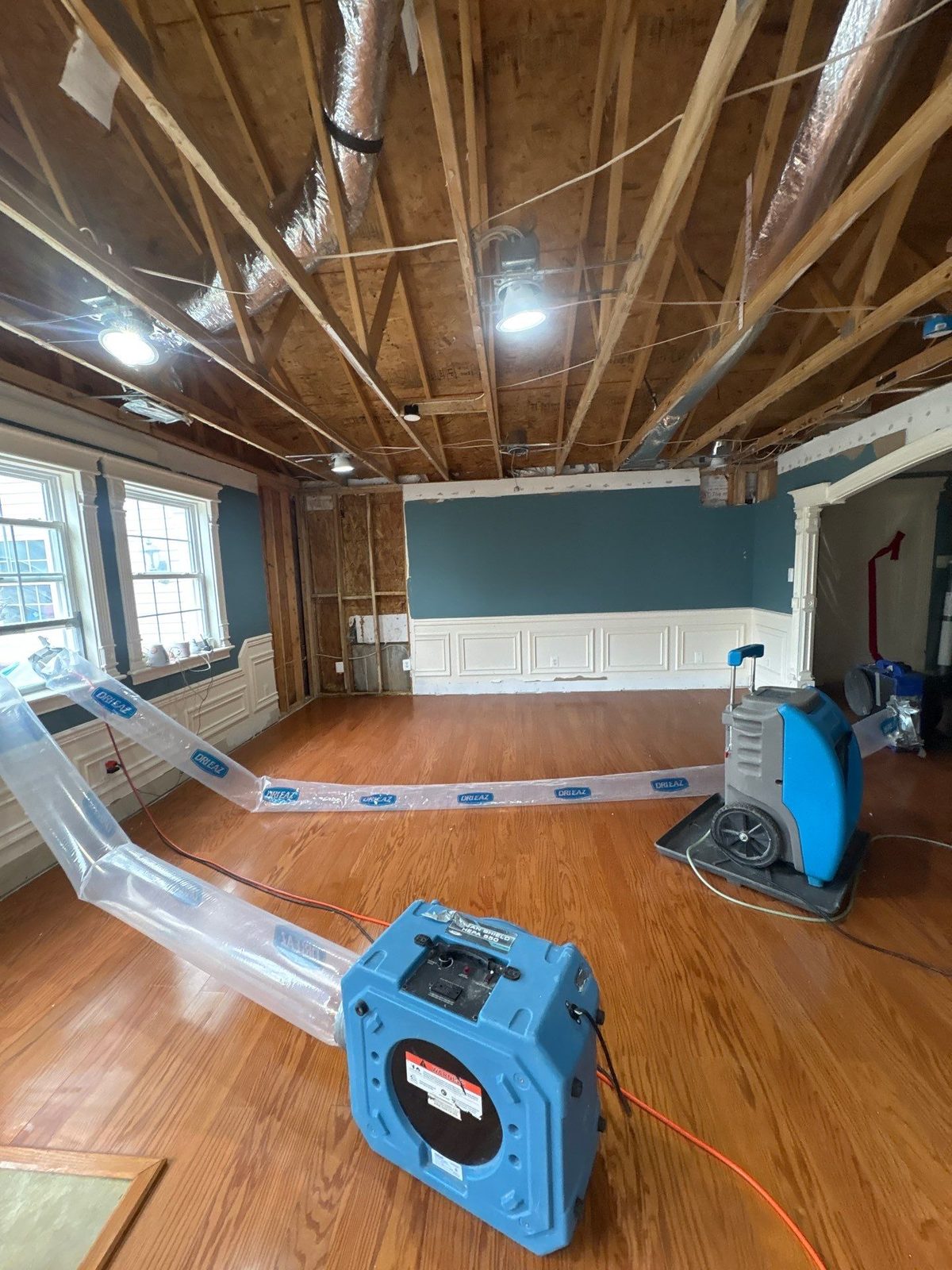
Some floors are dried with specialty floor-drying mats and injection drying, which pull moisture from the boards and subfloor. Others are dried with ducted units and dehumidifiers set up across the floor, as the Manassas photos below show. Which method fits depends on the floor, and the readings decide when equipment moves or stops. Where a floor cannot be saved, we say so after the inspection, with the reading or the category behind the call, and remove it so the subfloor can be dried.
An oak plank floor job in Manassas
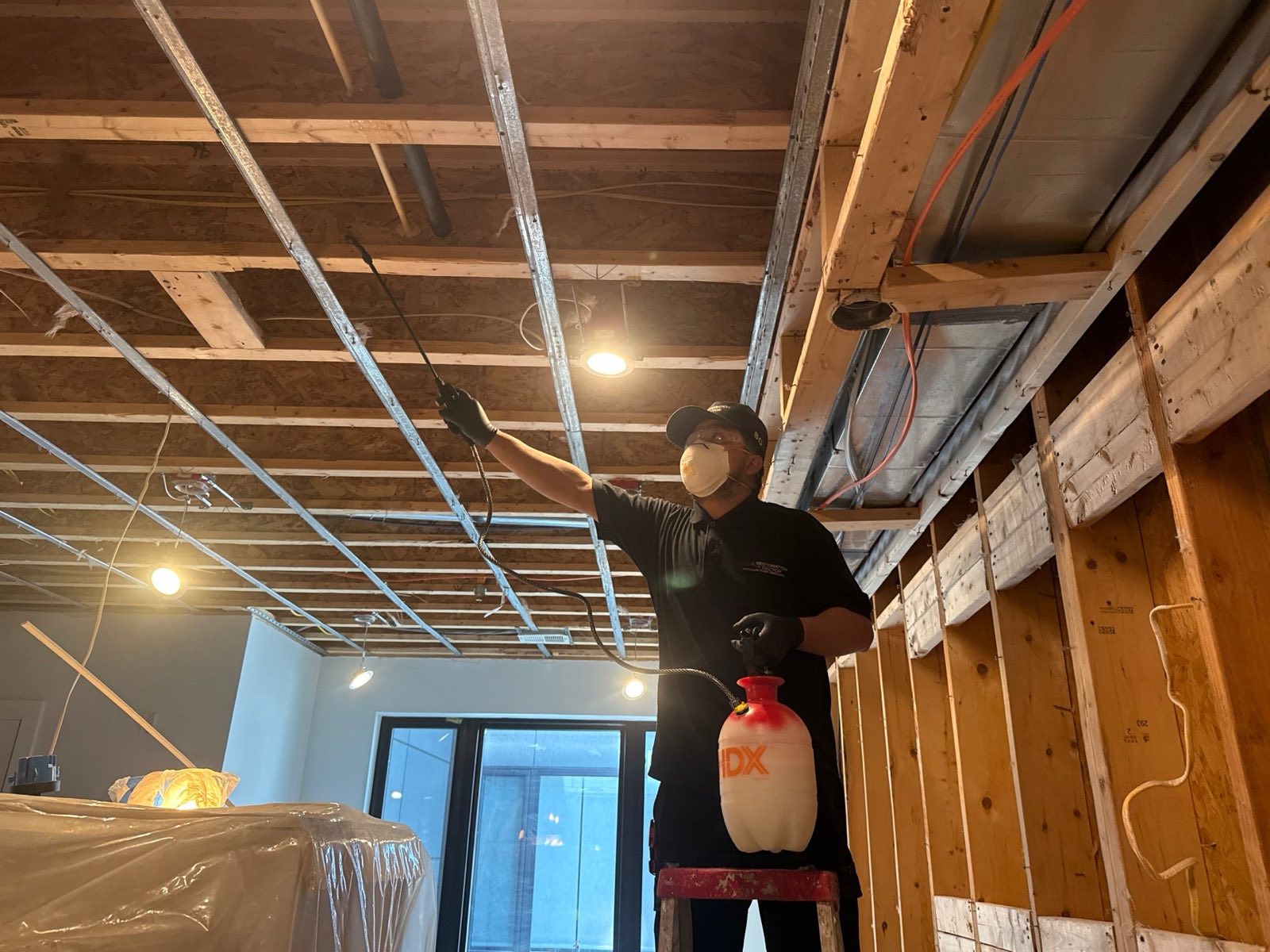
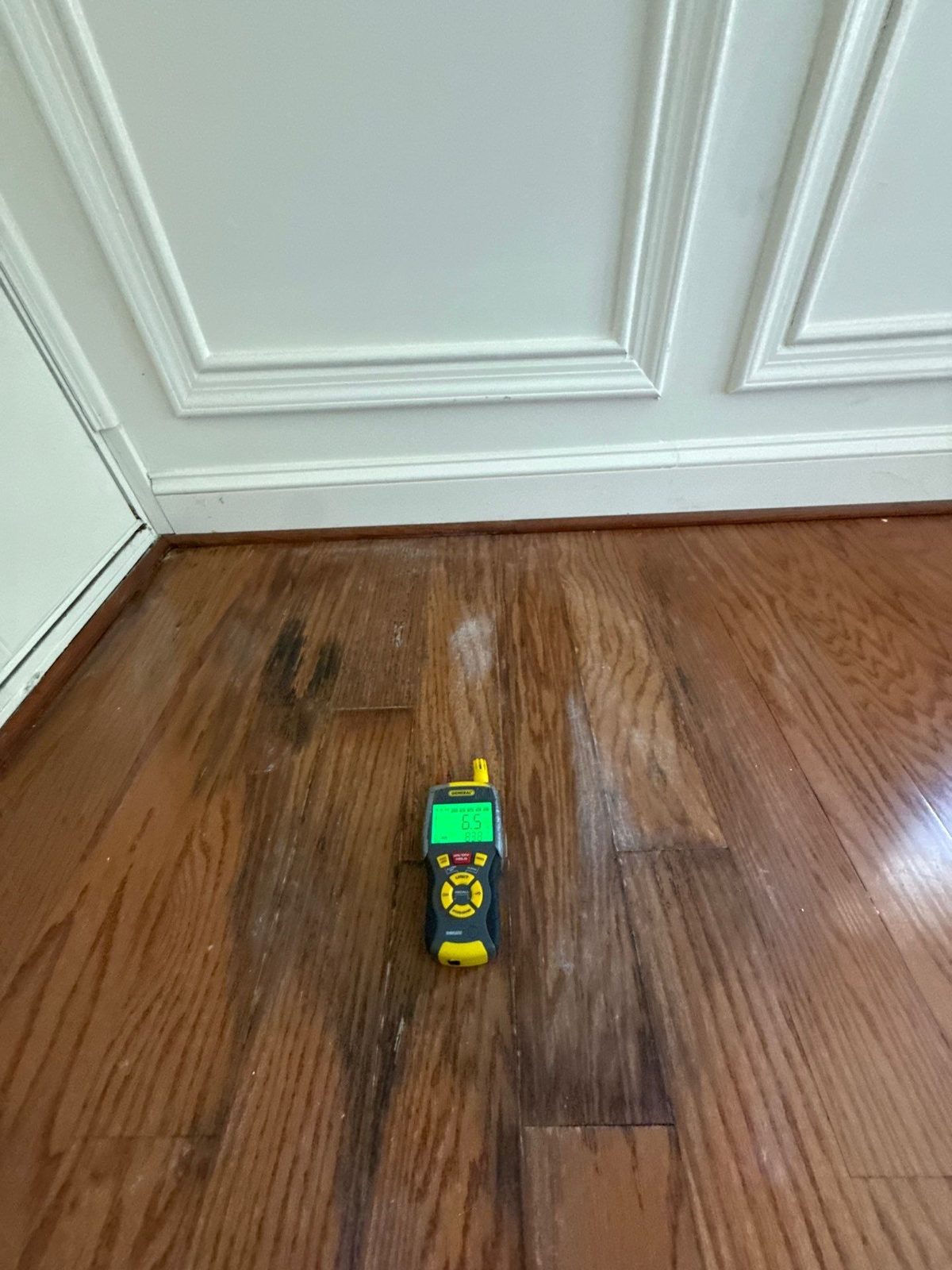
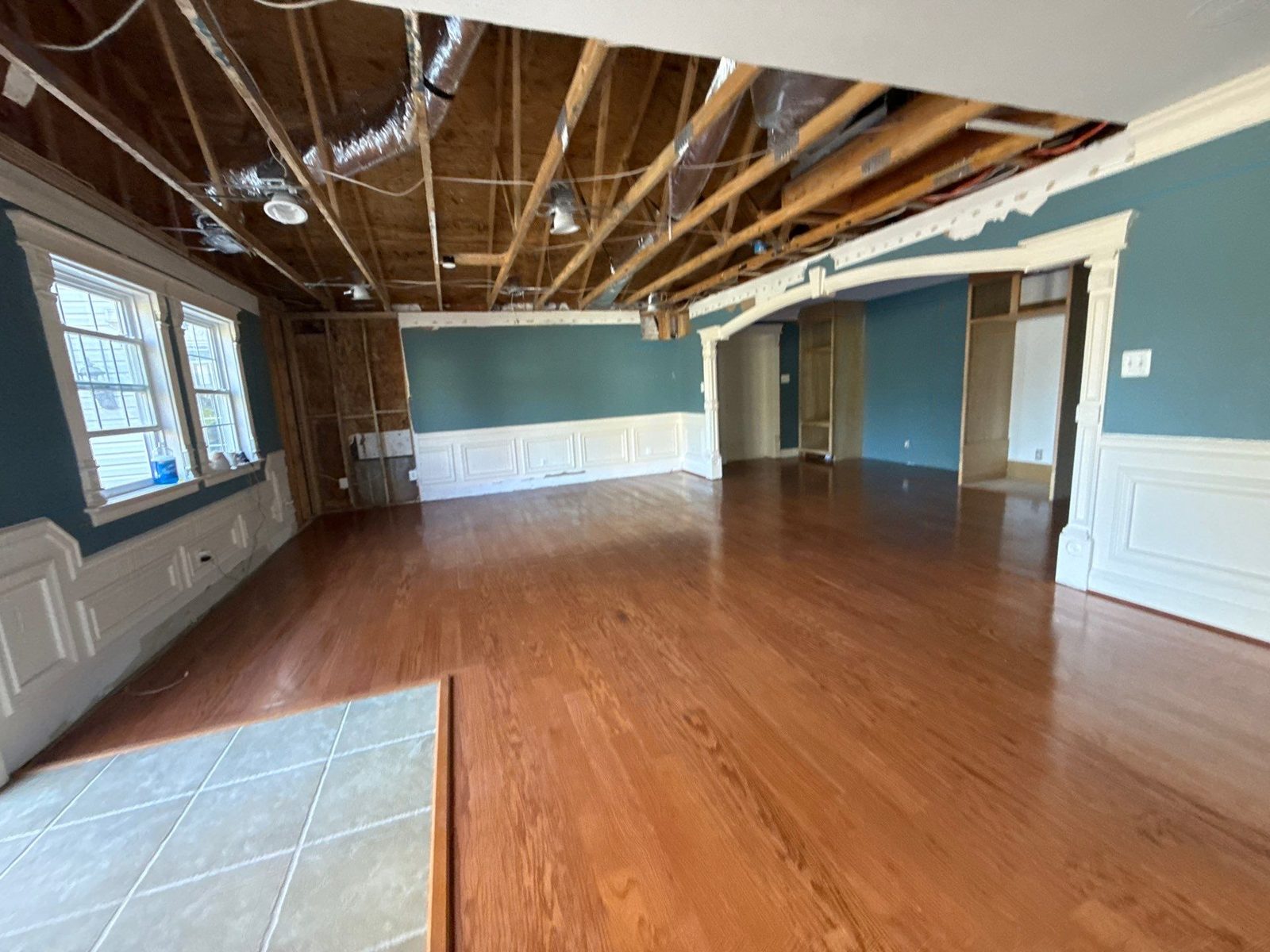
Our project records include an oak plank floor job in Manassas, VA. It is logged in 241 CompanyCam photos taken on eight days between March 31 and April 11, 2026. The photos show ducted units and dehumidifiers set up on the boards with tubes run across the floor, the ceiling above the room opened to the joists, and a handheld moisture and humidity meter resting on the boards. Meter photos appear on more than one day of the job.
That file is the extent of what we publish about it. We do not post the readings, the customer or the street, so this page states no drying time and no result for that floor. The record shows what the work looked like and that it was documented, not that every wood floor follows the same timeline or ends the same way.
Salvage or replace: the general decision
General guidance. The inspection, the readings and the water category decide each floor.
| Condition | What it usually means | Why |
|---|---|---|
| Mild cupping, caught early | Often saved with drying | Cupping frequently flattens as the wood returns to its normal moisture content. |
| Buckling or lifting boards | Often replaced | Boards that have lifted from the subfloor rarely return to flat. |
| Blackened boards | Usually replaced | Dark staining points to prolonged wetting or mold. |
| Category 3 water | Usually replaced | Contaminated water in porous flooring is generally removed rather than cleaned. |
| Floor dried to readings, then finished | Refinish only after documented readings | Crowning is often caused by sanding a floor before it is verified dry. |
Photos from the Manassas oak plank floor job
Manassas, VA, March and April 2026. The job record holds 241 CompanyCam photos. These four show the floor, the equipment and the room. We do not publish the street, the customer or any readings.
Related guides and pages
- Hardwood floor water damage: can it be saved?: the full guide to what decides whether a floor survives.
- Hardwood floor cupping: will it flatten?: what cupping means and how long to wait.
- Structural drying and dehumidification: how drying is planned, monitored and signed off.
- Moisture detection: how wet boards and subfloor are found before drying starts.
- Documented projects: Northern Virginia project files, each logged in CompanyCam.
- Manassas: water damage restoration in Manassas, VA.
Still happening right now? Emergency response for a wet floor in Northern Virginia
Frequently asked
Active water, mold, fire, or sewage event?
Connect directly with the Restoration Doctor team for your region. Crews are on standby 24/7 with documented response protocols.