
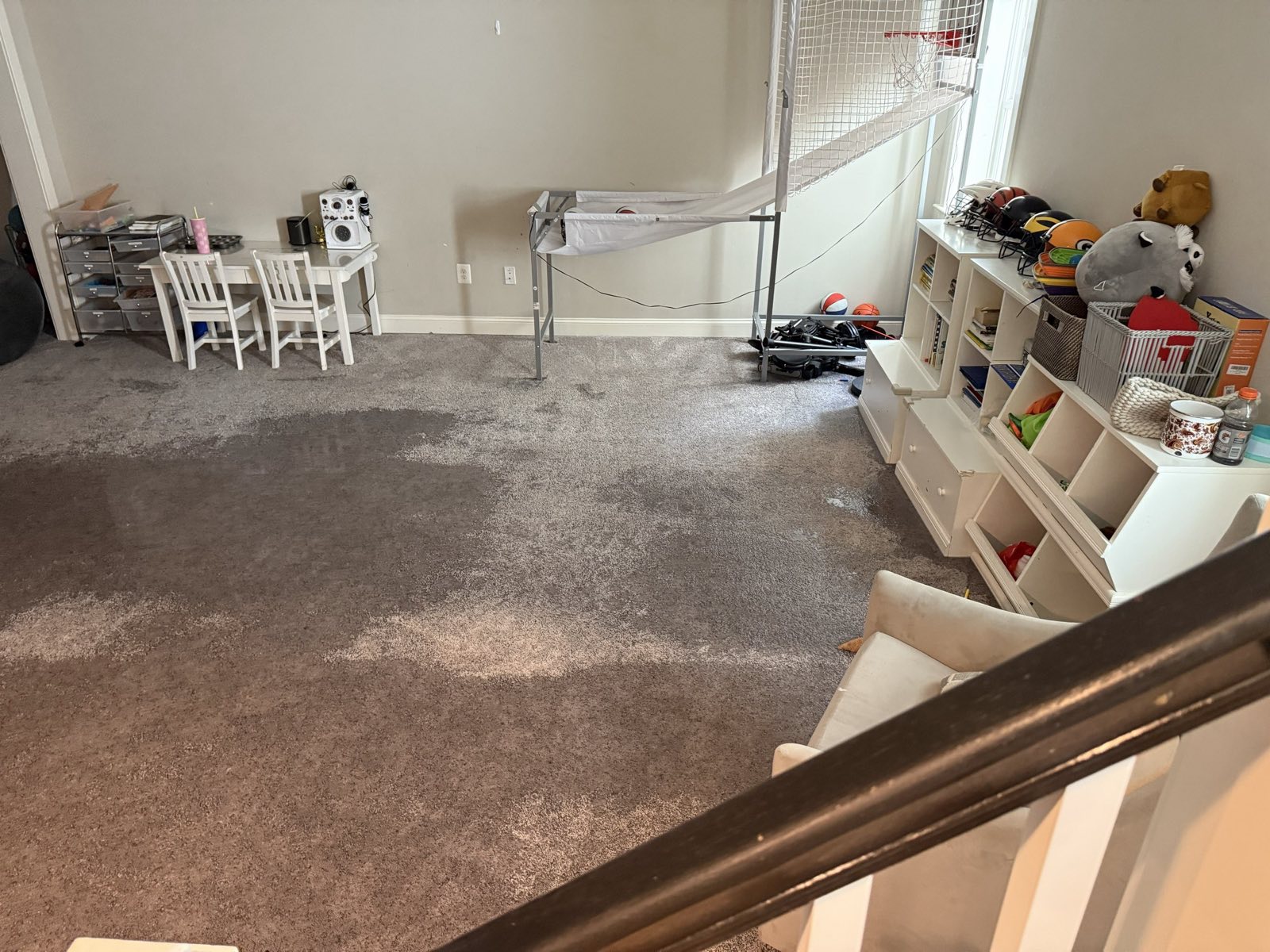
Structural Drying and Dehumidification in Northern Virginia
Restoration Doctor dries water-damaged structures in Northern Virginia after the standing water is gone: air movers and dehumidifiers placed from a moisture map, daily readings, and sign-off only when materials hit documented targets. A typical structural dry-out runs about 4.5 days.
*Response times vary based on crew availability and demand.
| Metric | Value | Notes |
|---|---|---|
| Median on-site arrival time | 47 minutes* | Measured median arrival across dispatched emergency projects — the middle value, not an average. Distinct from the on-site arrival in as little as 60 minutes below. Response times vary based on crew availability and demand. |
| Restoration projects completed to date | 10,000+ | Aggregate count of completed restoration projects to date across the VA / MD / D.C. tri-state service area. |
| Customers who file through insurance | 83% | Share of CUSTOMERS who use insurance. Restoration Doctor works for the homeowner — you pay us directly, and we build documentation you may share with your insurer, documented to IICRC S500 with a line-item Xactimate estimate, which you submit to your insurer when you seek reimbursement. |
| Average structural dry-out time | 4.5 days | Average time to bring a structure to documented dry standards; monitored daily with moisture readings. Individual projects vary by saturation class. |
| On-site arrival in as little as (NoVA core) | 60 minutes* | The fastest on-site arrival across the NoVA core, distinct from the measured 47-minute median arrival. Response times vary based on crew availability and demand. |
| Google rating (live) | 4.9★ | 4.9★ is the Vienna, VA Google listing average. The review count changes nightly and is served live at /api/reviews-summary — never hardcoded. |
*Response times vary based on crew availability and demand.
Extraction removes the puddle; structural drying removes the water in the building
Extraction pulls standing water and as much water as possible out of carpet, pad and floors. It does not finish the job. Water that has wicked into drywall, baseboards, sill plates, subfloor and wall cavities stays there until it evaporates, and evaporation has to be managed. Structural drying is the controlled process of moving that moisture out of the materials and out of the building.
Materials that feel dry can still hold enough moisture to grow mold and weaken framing. Mold can begin growing on wet materials within 24 to 48 hours, which is why a structure that is wet inside is not finished when the floor looks dry.
How the drying plan is built
Every project opens with an IICRC S500 inspection. We classify the water category and the saturation class, then map moisture room by room with pinless meters and thermal imaging. Thermal cameras show cold, wet patches behind walls and under floors that look normal to the eye. Thermal patterns are a screening tool: they tell us where to measure, and the meter readings are what we record.
From the map we set the drying system. Air movers sweep moisture off surfaces. Low-grain refrigerant (LGR) or desiccant dehumidifiers pull that moisture out of the air and exhaust it. Equipment goes where the moisture is, rather than blanketing a room. Where hardwood or dense assemblies are involved we add specialty systems such as floor-drying mats and injection drying instead of tearing out material that can be saved.
Monitoring: what is measured and why
Drying is not set and forget. We log a pre-drying baseline and take daily moisture readings, then reposition equipment as the numbers fall. Air conditions matter as much as the materials, because dehumidifiers can only pull moisture out of the air if the air can take it.
How we decide it is dry
Materials are dry when they reach documented targets. The targets this site publishes are drywall and carpet at 0%, framing lumber in the 10 to 15% range and masonry at 5% or below. The calendar does not decide it. Our average structural dry-out time is about 4.5 days, and individual projects vary with the saturation class, the materials and how long the loss sat before we arrived.
We only remove what cannot be dried in place. Controlled drying saves finishes, and it shortens the repair phase that follows. When a material cannot reach target, such as wet insulation or drywall that has wicked too high, it is removed and the cavity is dried.
What you receive at the end
The drying record is the product. You receive the date-stamped photos, the daily moisture readings against the baseline, and the equipment record. The documented projects below show the kind of loss each file covers.
What gets monitored during drying
| Measure | What it tells us | How often |
|---|---|---|
| Material moisture content | Whether drywall, framing, subfloor and masonry are moving toward target | Baseline, then daily |
| Room air temperature and humidity | Whether the air can still take moisture from the materials | Daily |
| Equipment placement | Whether air movers and dehumidifiers match the wet areas as they shrink | Adjusted at each visit |
| Photos | A date-stamped record of conditions, readings and equipment | Every phase |
Individual projects vary by saturation class and materials.
Documented projects
Real project files from Northern Virginia, each photographed in CompanyCam. More are on the projects page.

Oakton Moisture Mapping & Drying
A room-by-room moisture map set the drying plan for this Oakton loss, with a logged baseline and daily readings driving equipment placement until the numbers came down.


McLean Flood-Cut & Structural Drying
Where drywall had wicked water too high to save, we made clean flood cuts, removed the saturated material, and set a controlled drying system on the exposed cavities — demolishing only what genuinely could not be dried.


Arlington Flood Response
Before: standing water and saturated finishes on arrival. After: extracted, demolished where required, and dried to documented targets.
Related guides and pages
- What is structural drying?: the short answer, with the terms defined.
- Structural drying help: the fast call-and-dispatch page for an active loss.
- Flooded basement cleanup: drying applied to the most common Northern Virginia loss.
- A documented McLean basement case: room-air humidity readings from four days of a finished-basement job.
- Hardwood floor drying: drying wood floors, with an oak plank floor job from Manassas.
- Restoration Doctor by the numbers: the operating figures, with their notes.
Still happening right now? Emergency response for an active water loss in Northern Virginia
Frequently asked
Active water, mold, fire, or sewage event?
Connect directly with the Restoration Doctor team for your region. Crews are on standby 24/7 with documented response protocols.