AC Leak Water Stain on Ceiling: A Homeowner's Summer Guide

BYSteve Jafari, General ManagerNORTHERN VIRGINIA, MARYLAND & D.C.

An AC leak water stain on your ceiling is almost always caused by a clogged or overflowing condensate drain line under an attic or upper-floor air handler. Turn the AC off, put a bucket under the stain, and inspect the drain pan right away — a clog you could clear with a wet/dry vacuum can quietly soak drywall for weeks before the ceiling sags or fails. Condensate starts as Category 1 (clean) water under the IICRC S500 standard, but drywall and insulation that stay wet longer than 24–72 hours become prime territory for mold growth. If the stain is soft, spreading, or larger than a dinner plate, treat it as active water damage: fix the HVAC cause, then have the ceiling cavity professionally dried and documented. Restoration Doctor serves the Virginia, Maryland, and Washington, D.C. tri-state area 24/7 at 1-888-293-5663.
Call 1-888-29-FLOODWhat causes an AC leak water stain on the ceiling?
An AC leak water stain on the ceiling is most often caused by a clogged condensate drain line on an attic or upper-floor air handler. As your system cools humid summer air, it pulls moisture out of that air — often several gallons a day, and on a muggy Virginia afternoon potentially 5 to 20 gallons. That water is supposed to collect in a pan and drain safely outside through a small PVC line. When algae, dust, or biofilm clog that line, the pan overflows and water finds the path of least resistance: straight down onto your drywall.
This is the classic summer surprise. The failure point is a blockage you could clear yourself in minutes, but the damage it causes can run into thousands of dollars because the leak is slow, hidden, and steady. Water wicks across the ceiling gypsum, spreads along joists, and darkens into a telltale brown or yellow ring long before anyone hears a drip.
Other common culprits include a rusted-through or cracked drain pan, a disconnected or improperly sloped drain line, a frozen evaporator coil that thaws all at once and overwhelms the pan, or a failed float switch that should have shut the unit off when the pan filled. In every case, the stain you see on the ceiling is only a fraction of the water actually sitting in the cavity above it — insulation, joist tops, and the back side of the drywall soak up water long before it shows on the paint.
- Clogged primary condensate drain line (the #1 cause in summer)
- Rusted, cracked, or overflowing drain pan
- Frozen evaporator coil that thaws and dumps water at once
- Disconnected, sagging, or wrongly sloped drain line
- Failed or missing safety float switch that never shut the unit off
How do I know if a ceiling water stain is from my AC?
You can usually tell an AC leak stain from a roof or plumbing leak by its location and timing. AC stains appear directly below or near an attic air handler and show up during cooling season, not after rain. If the stain is under a bathroom, kitchen, or roof valley, the source is more likely plumbing or roofing. If it's under or beside your HVAC unit and it's June through August, condensate is the prime suspect.
Timing is your best clue. A roof leak worsens during and after storms. A plumbing leak often coincides with running water or flushing. An AC condensate leak tends to appear or grow on hot, humid days when the system runs hardest — and may seem to pause overnight when the unit cycles off. Touch the stain gently: an active AC leak feels cool and damp, and the drywall may already feel spongy.
To confirm, go to the air handler (safely, on stable footing) and check the drain pan. Standing water in the pan, algae or slime in the drain line, drips from the secondary drain stub, or a tripped float switch all point squarely at condensate. A moisture meter reading across the ceiling — something our technicians bring to every call — removes the guesswork by mapping exactly how far the water has traveled beyond the visible stain.
| Clue | AC Condensate Leak | Roof Leak | Plumbing Leak |
|---|---|---|---|
| Location | Under/near HVAC air handler | Under roof valley, chimney, vent | Under bathroom, kitchen, pipe run |
| Timing | Hot, humid days; cooling season | During and after rain | When water is running or flushing |
| Stain feel | Cool, damp, sometimes musty | Damp after storms | Damp; may smell foul if a drain line |
| Confirming check | Standing water in drain pan | Wet roof deck, missing shingles | Wet supply or drain pipe |

What should I do the moment I spot the stain?
First, turn the AC system off at the thermostat. Every hour the system keeps running, it keeps manufacturing water and feeding the leak. Shutting it down is uncomfortable on a hot day, but it's the single fastest way to stop the damage from growing while you investigate.
Second, protect the room below. Move furniture, electronics, and rugs out from under the stain and set a bucket or tarp beneath it. If the ceiling is visibly bulging or sagging with trapped water, do not stand directly under it. A controlled relief hole — a small puncture at the lowest point of the bulge, with a bucket ready — lets the water drain in one place instead of the ceiling releasing it all at once. If you're not comfortable doing that, keep everyone out of the room and call for help.
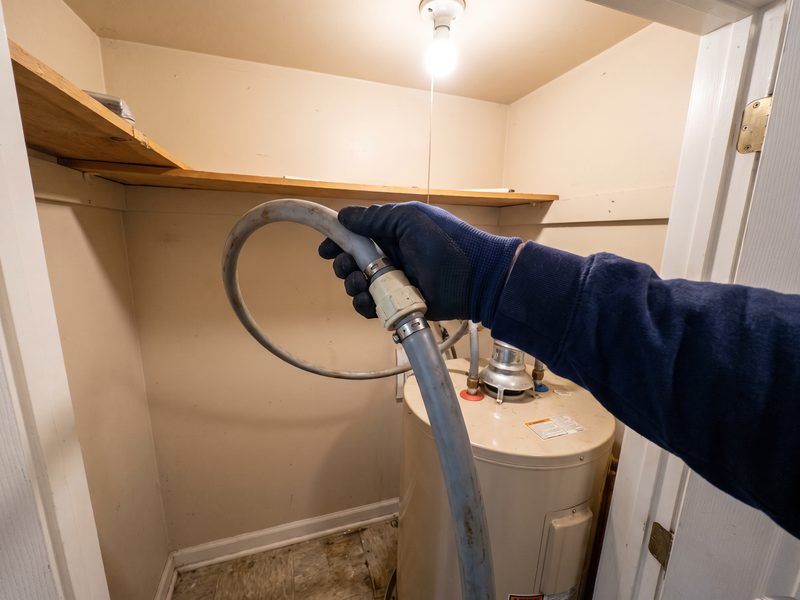
Third, find and address the source. Check the drain pan at the air handler. If the primary drain line is clogged, a wet/dry vacuum applied to the outdoor end of the condensate line will often pull the blockage free. Empty standing water from the pan. If the pan is cracked or rusted through, or the coil has been freezing, you'll need an HVAC technician before the system runs again. Fixing the mechanical cause stops new water; it does nothing about the water already in your ceiling — that's the part homeowners most often skip, and it's where mold problems start. For a broader step-by-step, see our guide on what to do about ceiling water damage.
- Turn the AC off at the thermostat immediately
- Move belongings and place a bucket or tarp under the stain
- Relieve a bulging ceiling with a small controlled hole — never let it pool
- Clear the condensate line or call an HVAC tech for pan/coil failures
- Remember: stopping the leak does not dry the ceiling cavity
Will the stain lead to mold or a ceiling collapse?
Both are real risks, and both are driven by time. Under the IICRC S500 standard, fresh AC condensate is Category 1 water — clean water that poses no immediate health hazard. But categories degrade: water that sits in a warm attic cavity, saturating dusty insulation and paper-faced drywall, deteriorates toward Category 2 as microorganisms multiply. And under typical summer conditions, drywall and insulation that stay wet past 24 to 72 hours are at risk for mold growth. A condensate leak that has been dripping for two or three weeks — which is common, because these leaks are silent — has almost always crossed that window.
Collapse risk comes down to saturation. Drywall is gypsum held together by paper facing; when it stays wet, it loses structural integrity and sags under its own weight plus the weight of the trapped water. A stain that's flat and dry is a cosmetic problem. A stain that's soft to the touch, bubbling, bulging, or actively dripping is a structural one, and a saturated ceiling section can come down with little warning. Wet blown-in insulation above the drywall adds significant weight and holds moisture against the gypsum for days.
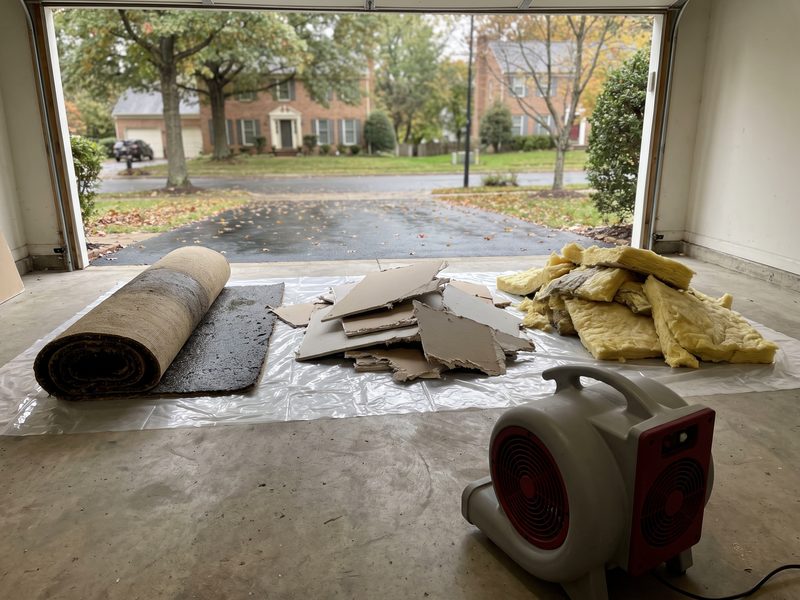
The warm, dark, unventilated space between your ceiling and the attic floor is close to ideal for mold. That's why professional response focuses on the cavity, not the paint: removing wet insulation, opening the ceiling where needed, and running air movers and dehumidifiers with daily moisture readings until the structure hits verified dry standards. If you're weighing how fast you need to act, our article on how fast mold grows after water damage lays out the timeline in detail.

Can I just paint over the water stain?
Only after two things are true: the source is fixed, and the ceiling is verified dry. Painting over a stain while the cavity above it is still wet traps moisture, feeds mold behind the paint film, and guarantees the stain bleeds through again — usually within weeks. Paint is the last step of the repair, never the fix itself.
Once the ceiling is genuinely dry (a moisture meter should confirm readings consistent with unaffected drywall elsewhere in the home), a small, firm, flat stain can be sealed with a stain-blocking primer — an oil-based or shellac-based blocker, not standard latex primer, which water stains bleed straight through — and then repainted to match. This is a reasonable DIY finish for minor, fully dried stains.
If the drywall is soft, sagging, crumbling, or the stain covers a large area, sealing and painting isn't enough: the damaged section needs to be cut out and replaced, and any wet insulation above it removed. Drywall that has been saturated doesn't regain its strength when it dries. For help deciding which side of that line you're on, see our guide on whether water-damaged drywall should be repaired or replaced.
What does repair cost, and will homeowners insurance cover it?
Costs vary with how far the water traveled and how long it sat. Clearing a condensate line yourself can cost nothing but an afternoon; an HVAC service visit to clear the line, treat it, and test the float switch is typically a modest service-call range. On the restoration side, a small, contained ceiling repair — cutting out and replacing a section of drywall, matching texture, priming, and painting — commonly runs in the low hundreds to around a thousand dollars or more. If the cavity needs professional drying with air movers and dehumidification, wet insulation removal, and antimicrobial treatment, mitigation for an affected room typically lands in a range from roughly one thousand to several thousand dollars, and grows if mold remediation is required. Every situation is different, which is why we scope in Xactimate line by line rather than quoting flat prices.
Insurance coverage hinges on 'sudden and accidental' versus 'gradual.' Most homeowners policies cover the resulting water damage when a leak is sudden and accidental — for example, a drain pan that cracks and dumps water. They generally exclude damage from long-term seepage, deferred maintenance, or a clog that visibly leaked for months. Nearly all policies also exclude repairing the HVAC equipment itself; the policy responds to the damaged ceiling, not the failed pan. Documentation of when the leak was discovered and how quickly you acted matters enormously to how a claim is received.
One important note about how we work: Restoration Doctor bills you, the homeowner, directly — we never bill your insurance carrier. What we do provide is a complete, carrier-ready claim file: a detailed Xactimate scope, time-stamped CompanyCam photo documentation, and daily moisture logs from first reading to verified dry. That file makes it straightforward for you to submit and support your own claim. We work for you, not your insurance company. For a deeper dive on coverage questions, read our guide to whether homeowners insurance covers water damage.

How do I prevent AC condensate leaks next summer?
Prevention is cheap and mostly about the drain line. Flush the condensate line at the start of each cooling season — many homeowners pour a cup of distilled white vinegar into the line's access port every month or two during summer to keep algae from establishing. Pair that with an annual HVAC tune-up where the technician clears the line, inspects the pan for rust or cracks, checks the line's slope, and tests the float switch.
Speaking of float switches: if your attic air handler doesn't have one, have one installed. A float (or wet) switch sits in or above the drain pan and shuts the system off automatically when water rises, turning a would-be ceiling disaster into a no-cool service call. It's one of the highest-value, lowest-cost protections available for any air handler mounted above finished living space. A secondary (emergency) drain pan under the unit with its own drain line is the other layer of defense — if you ever see water dripping from that secondary line's outlet, usually stubbed out over a window or eave on purpose, that's your unit telling you the primary drain has failed.
Finally, make a habit of glancing at the ceiling below your air handler a few times each summer, and step into the attic once or twice during peak season to look at the pan. Hidden leaks reward early detection: the difference between a stain you seal and paint versus a ceiling you replace is usually measured in days, not months. If you do find water, Restoration Doctor answers 24/7 across the Virginia, Maryland, and Washington, D.C. tri-state area at 1-888-293-5663, from our office at 8609 Westwood Center Dr, Ste 110-1062, Vienna, VA 22182.
- Flush the condensate line with distilled vinegar during cooling season
- Get an annual HVAC tune-up that includes the drain pan and line slope
- Install a float switch on any air handler above finished space
- Know where your secondary drain line exits — dripping there means the primary failed
- Visually check the ceiling under the air handler a few times each summer